

Blog
Introduction of PT2399 Reverberation Plate
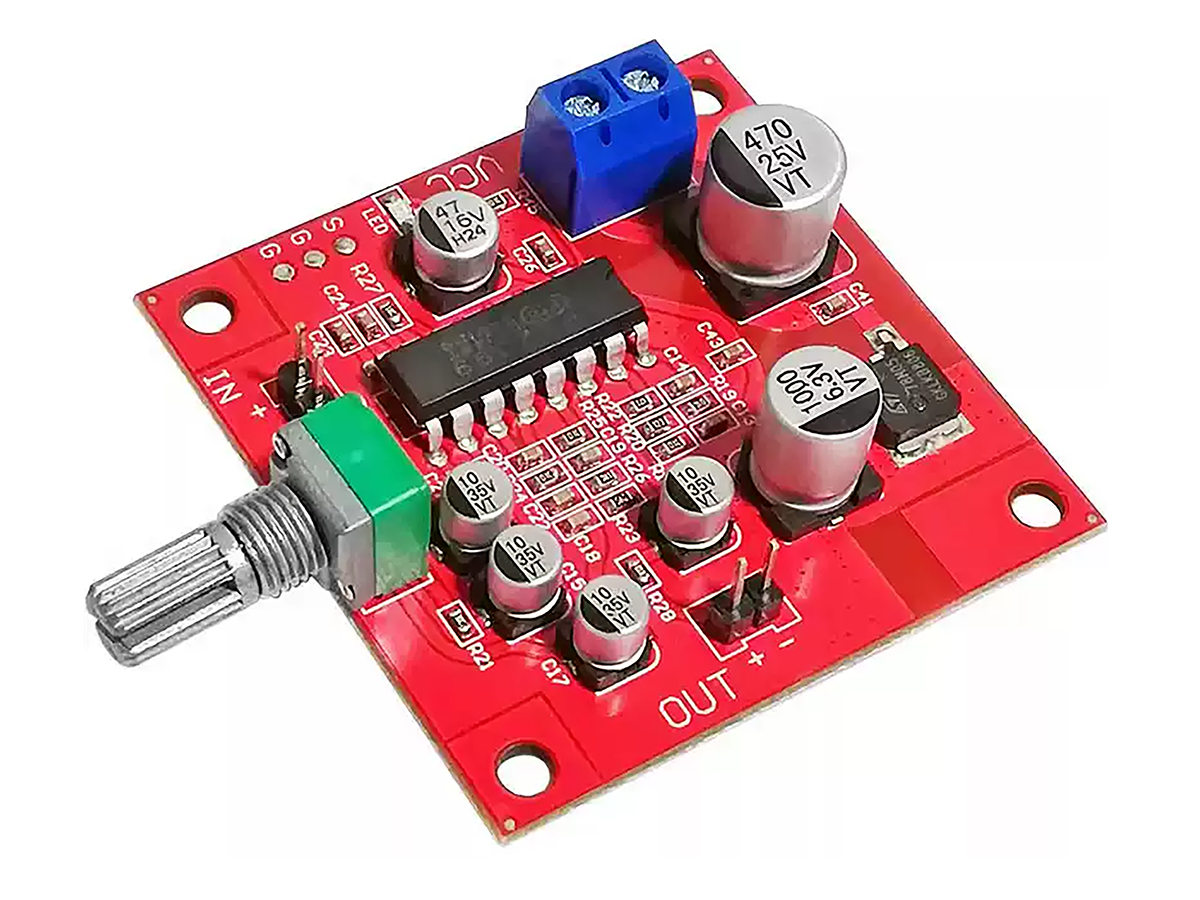
Basic Introduction to the PT2399 Reverb Board
The PT2399 Reverb Board refers to a module that uses the PT2399 chip, paired with peripheral circuits and adjustment circuits, to control reverb effects. The PT2399 chip is essentially a delay module, so it generates analog reverb through delay. It is suitable for entry-level effect pedals and DIY audio setups.
Basic Introduction to the PT2399 Chip
The PT2399 is a single-chip digital delay processor launched by Princeton Technology. It integrates an analog-to-digital converter (ADC), digital-to-analog converter (DAC), digital delay memory, low-pass filter, and clock control circuit. It is positioned as a low-cost, easy-to-use audio delay module.

Below is its detailed specification data:
1.Power Supply and Power Consumption Parameters
| Parameter | Value |
|---|---|
| Operating Voltage (VDD) | 4.5V – 5.5V (Typical 5V) |
| Maximum Allowable Voltage | 6.5V (Absolute Maximum) |
| Operating Current | ≈ 30 mA (Typical) |
| Standby Current | ≈ 15–20 mA |
| Power Consumption | ≈ 150 mW |
2.Audio interface parameters
Input:
| Parameter | Value |
|---|---|
| Input Type | Analog audio |
| Input Impedance | ≈ 50 kΩ |
| Input Level (Typical) | 100 mVrms |
| Maximum Input Level | ≈ 300 mVrms (distortion may occur if exceeded) |
| Input Bias | Internal 2.5 V bias |
Output
| Parameter | Value |
|---|---|
| Output Type | Analog audio |
| Output Impedance | ≈ 2 kΩ |
| Maximum Output Level | ≈ 1 Vpp |
| Output Bias | Internal 2.5 V bias |
3.Delay Clock Correlation Parameter
| Parameter | Value |
|---|---|
| Delay Range | 30 ms – 340 ms |
| Recommended Delay Range | 40 ms – 300 ms |
| Clock Frequency | 2 MHz – 10 MHz (internal VCO) |
| Delay Control Method | External resistor adjustment (Pin 6) |
4.Audio Performance Parameters
| Parameter | Value |
|---|---|
| Signal-to-Noise Ratio (SNR) | ≈ 90 dB (short delay) |
| Total Harmonic Distortion + Noise (THD+N) | ≈ 0.5% (short delay) |
| Frequency Response Range | 20 Hz – 10 kHz (varies with delay) |
| Delay Jitter | Becomes more noticeable as delay increases |
Typical Peripheral Circuit Design

The delay time can be adjusted by modifying resistor R; a 10kΩ resistor is commonly used in designs.
Module Design
The finished module is shown in the figure.

Typically, the module retains the R adjustment function. While a surface-mount resistor is usually pre-soldered, a potentiometer pad is reserved for easy effect modification. As shown in the diagram:
1.Remove R27.
2.Solder a 10kΩ–50kΩ potentiometer to the pad below for adjustment.
Module Application Instructions
The PT2399 Reverb Board only provides delay reverb functionality and no audio amplification. Therefore, the recommended connection order is:Microphone → Microphone Preamplifier → Microphone Reverb Board → Power Amplifier.
Without following this order, the module may work abnormally or not at all. When purchasing the reverb board, check if it includes a preamplifier function; if not, you will need to buy one separately for pairing.
What Applications Is the PT2399 Reverb Board Suitable For?
The PT2399 Reverb Board is suitable for entry-level applications such as guitar effect pedals, vocal processing, karaoke, and audio DIY projects. It is not ideal for professional recording studios, as it is designed for entry-level effects.
Preview video
FAQ
What are the differences between PT2399 and genuine reverb chips like FV-1?
| Item | PT2399 | FV-1 (Spin Semiconductor) |
|---|---|---|
| Core Type | Digital delay IC | DSP audio effects processor |
| Reverb Principle | Multiple short delays with analog feedback | Algorithmic reverb (Room, Hall, Plate, etc.) |
| Programmable | ❌ No | ✅ Yes |
| Reverb Realism | Low–Medium | High |
| Reverb Density | Low–Medium | Medium–High |
| Maximum Reverb Time | ≈ 340 ms (delay-based) | Several seconds |
| Sound Character | Warm, lo-fi, “analog-like” | Clean, detailed, hi-fi |
| Noise Level | Increases at long delay times | Low noise floor |
| High-Frequency Response | Rolls off at long delays | Good HF preservation |
| External Components | Very simple | More complex (crystal, EEPROM) |
| Development Difficulty | Very low | Medium–High |
| Cost | Low | Medium–High |
| Supply Voltage | 5 V | 3.3 V |
| Typical Applications | DIY pedals, simple reverb/delay | Commercial pedals, studio effects |
| Beginner Friendly | ✅ Yes | ❌ Not ideal |
What is the Typical Input Level for the PT2399 Reverb Board?
- For the reverb board: DC 6V–15V is acceptable.
- For the PT2399 chip itself: Only 5V input is allowed (per its design).
What causes whistling or self-excitation?
There are a few possible reasons:
1.The gain is too high.
2.The feedback is too strong.
When using the module, do not set the gain to maximum; adjust it gradually for optimal performance.