

Blog
Say Goodbye to Temperature Fluctuations – W3001 Makes Precision Control Effortless!
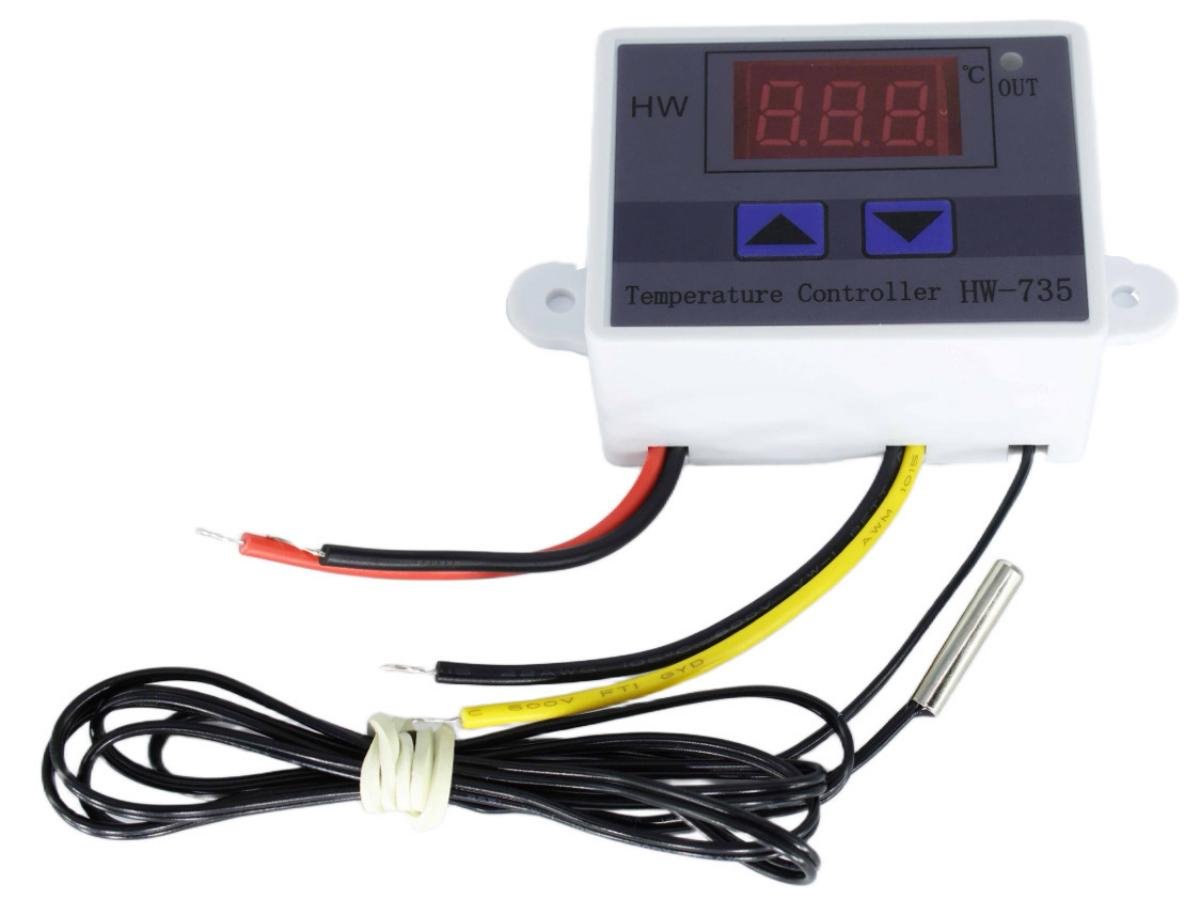
Introduction
The W3001 microcomputer digital temperature controller module measures the ambient temperature in real-time using a temperature sensor and sends the data to the microcontroller. The microcontroller adjusts the power to heating or cooling devices based on the set temperature range using a PID control algorithm, maintaining stable temperature. Users can set the target temperature, and the system automatically regulates it while providing over-temperature alarm functions to ensure precise and safe temperature control.
What is digital temperature controller
A digital temperature controller is an advanced electronic device used to regulate and maintain a specific temperature within a system or environment. It works by measuring the current temperature using a temperature sensor and comparing it to a preset target temperature. When the measured temperature deviates from the set value, the controller activates or deactivates a connected heating or cooling device, such as a heater, fan, or refrigeration unit, to bring the temperature back to the desired level. Digital temperature controllers often feature a user-friendly interface, allowing users to easily set and adjust temperatures. They also include alarms and alerts to notify users when the temperature exceeds or drops below safe levels. These controllers are widely used in applications like home appliances, industrial equipment, laboratory environments, and temperature-sensitive processes.
Key features
- TemperatureSensing :It uses sensors to monitor the current temperature of a system or environment.
- Digital Display : It typically features a digital display, showing the current temperature, setpoint temperature, and sometimes additional parameters such as error codes or system status.
- Control Mechanism : Based on the temperature difference (known as the “error”), the controller activates or deactivates heating or cooling devices (such as heaters, fans, or refrigeration units) to bring the temperature closer to the desired level.
- Setpoint Adjustment: Users can adjust the desired temperature through buttons, a touch interface, or remote control, depending on the model.
- Feedback and Adjustment : The controller continuously monitors the temperature and adjusts the heating or cooling devices as needed to maintain the set temperature.
What is the NTC
An NTC (Negative Temperature Coefficient) thermistor is a type of temperature sensor whose resistance decreases as the temperature increases. It is commonly used for temperature measurement and control in a variety of applications. The key characteristic of an NTC thermistor is that its resistance is inversely proportional to the temperature — as the temperature rises, the resistance drops, and as the temperature falls, the resistance increases.
Mode of Connection
12/24V wiring method
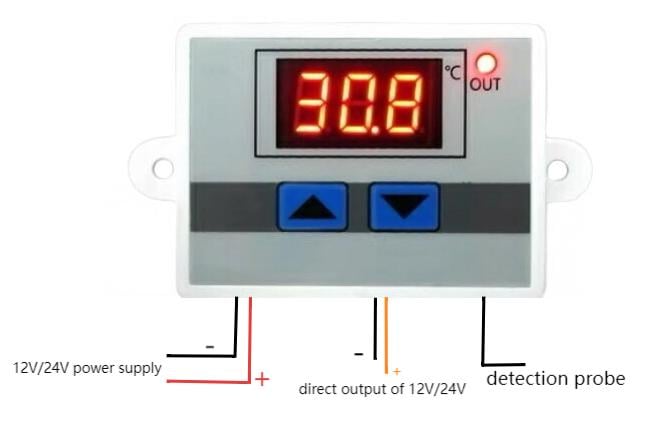
Attention: The W3001 power supply of 12/24V can be provided by a transformer or a DC power supply with a 12/24V output.
Note: W3001 is a direct output. Therefore, do not power on it when the load is not properly connected at the output end to prevent the two poles of the wire from touching and sparking.
220V wiring method

What is direct output:
The input and output of this thermostat are synchronous. That is to say, when the thermostat is in operation (with the indicator light on), the output voltage is exactly the same as the input voltage. When the temperature controller is in an intermittent operation (the indicator light is off), there will be no voltage output at the output terminal.
How does a digital temperature controller work
A digital temperature controller is a sophisticated device designed to maintain a precise temperature within a specified range by automatically adjusting heating or cooling devices based on real-time temperature readings. It works by using a temperature sensor to continuously monitor the temperature of a system, such as a refrigerator, oven, or incubator. The controller compares the measured temperature with the preset target and activates or deactivates heating or cooling equipment accordingly. Users can easily set and adjust the desired temperature via a digital interface. The controller also includes safety features like alarms to notify users when the temperature exceeds a safe range, ensuring optimal conditions for sensitive environments or processes.
Applications and Examples
1.Household appliances
Refrigerators and freezers: Digital thermostats are often used in refrigerators and freezers to maintain the optimal storage temperature for food and other perishable items. For instance, refrigerators typically operate between 3°C and 5°C, while freezers are kept at -18°C to ensure the safety of food. In ovens and stoves, electric oven, digital temperature controller to ensure that the oven maintain a constant temperature in the whole process of cooking, roasted, baked or grilled. This enables users to set and maintain a specific temperature to achieve precise cooking results.
2.Industrial applications
Manufacturing process: In industries such as plastics, pharmaceuticals or food processing, digital temperature controllers are crucial for maintaining precise temperatures during the production process. For instance, during the plastic injection molding process, maintaining the correct temperature can ensure the quality of the final product. Hvac system: digital thermostat used in hvac system, adjust the indoor climate conditions, maintain a comfortable temperature in a commercial or residential building and energy saving.
3. Laboratories and research
Incubator: In biological or medical laboratories, incubators are used for cell culture. Digital thermostats ensure stable temperatures to guarantee reliable research results. Environmental test case: is used for simulating under different temperature conditions of environmental test cases and administered by the digital temperature controller, to ensure that temperature changes within the set range.
4.Agriculture and animal husbandry
Greenhouse: Digital thermostats are used in greenhouses to create ideal growth conditions for plants. By regulating the temperature, they help maximize plant growth, especially in areas with large outdoor temperature fluctuations. Animal farm, in the farm, digital temperature controller to keep the best environment for animal health conditions, such as to regulate the temperature of the birdhouse or piggery, prevent animals by stress or illness.
Relative Information
FAQ
- how to adjust refrigerator temperature control digital?
The digital temperature control system of modern refrigerators is used to precisely regulate the temperature of refrigerators and freezers. It continuously monitors the internal temperature of the refrigerator through built-in sensors, and users can easily set the desired temperature through the digital control panel. If the actual temperature deviates from the set temperature, the system will automatically adjust the cooling equipment (such as the compressor) to bring the temperature back to the set value, ensuring that food remains at the optimal storage temperature. Many refrigerators also offer a temperature alarm function. If the temperature exceeds the safe range, the system will issue a reminder to prevent food from spoiling. The digital temperature control system is precise and responsive, allowing refrigerators to both keep food fresh and save energy.
- How to control the temperature in the livestock farm?
Controlling the temperature in a livestock farm is essential for the health and productivity of animals. Temperature regulation can be achieved through a combination of proper ventilation, insulation, and climate control systems such as fans, heaters, and cooling systems. Automated temperature controllers and sensors can be used to maintain optimal conditions by adjusting the environment in response to temperature fluctuations. In addition to physical controls, the temperature needs of specific species should be considered, such as providing extra warmth for young animals or ensuring cooling systems are in place during hot weather. Regular maintenance and monitoring systems further ensure that temperature control is consistent, preventing extreme conditions that could stress or harm the animals.