Product Introduction
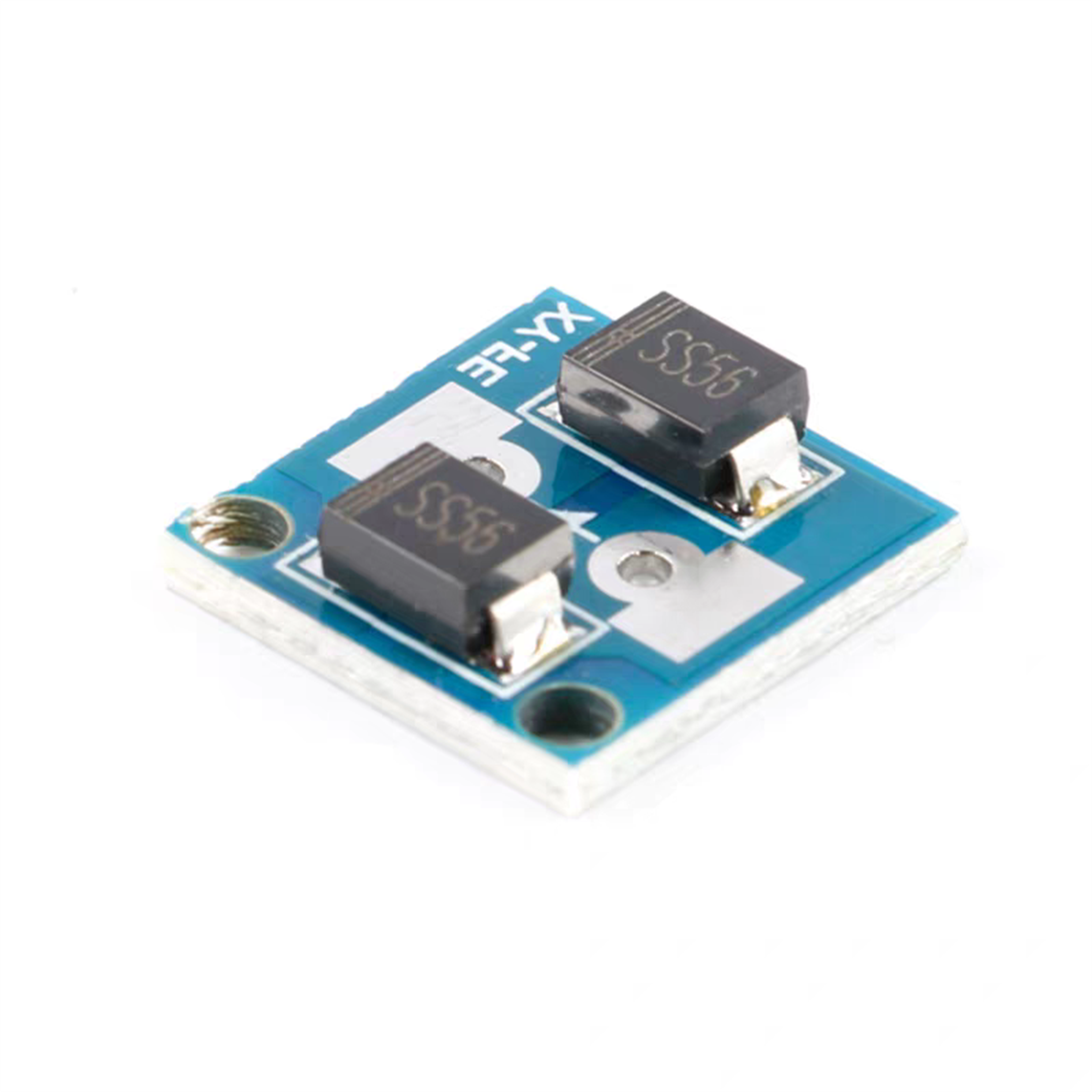
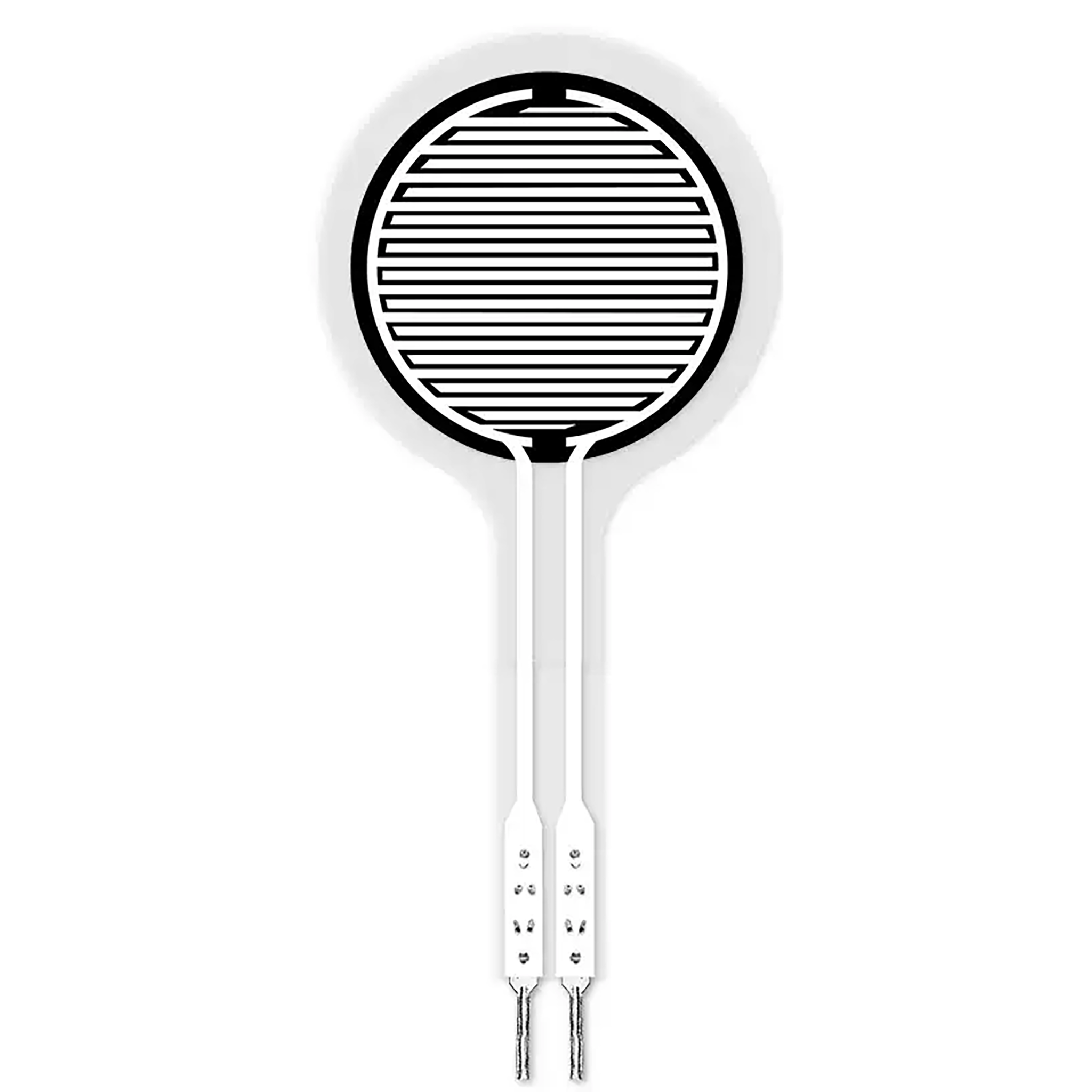
The thin-film pressure sensor is a device designed to measure pressing pressure and squeezing pressure. Due to its operating characteristics, it cannot accurately measure specific pressure values but can conveniently track pressure trends. When used with a voltage conversion module, it allows adjustment of the force threshold—once the threshold is exceeded, the sensor outputs a voltage value. Therefore, although it cannot be directly used for precise measurement, it is suitable for monitoring force trends and setting thresholds to achieve digital output.
Performance Indicators
| Item | Specification |
|---|
| Model | MD30-60@30kg |
| Range | 200g–30 kg |
| Thickness | ≤ 0.6 mm |
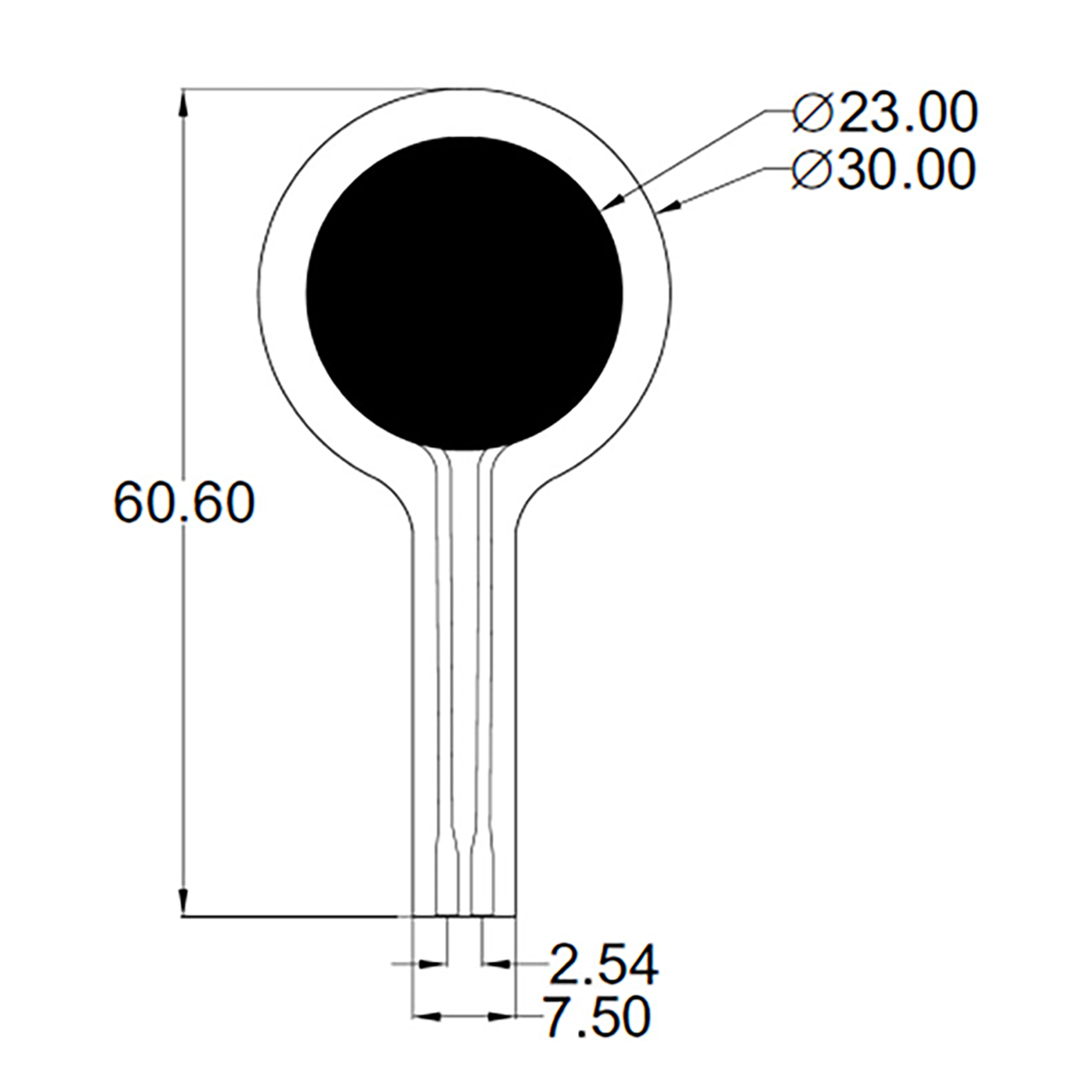
| Dimensions | Refer to dimensional specifications |
| Response Point¹ | ≤ 0.5 kg |
| Repeatability | ±3% (50% load) |
| Consistency² | ±10% (same model batch) |
| Hysteresis | +10% (RF+ − RF−) / RF+ |
| Durability | > 1 million cycles |
| Initial Resistance | > 10 MΩ (no load) |
| Response Time | < 1 ms |
| Recovery Time | < 15 ms |
| Test Voltage | Typical DC 3.3 V |
| Operating Temperature | −20°C to +60°C |
| EMI | Does not generate |
| ESD | Not sensitive |
SIZE
Notes
1. The thin-film pressure sensor will not be damaged if the pressure exceeds its rated range.
2. The marked range is calibrated in the manufacturer’s laboratory and is for reference only.
3. In the actual application scenario of a project, the range is related to the contact area, contact material, and direction of the force. It is recommended to conduct actual tests for evaluation.
4. The thin-film pressure sensor is not suitable for tests requiring high precision (such as weight measurement) and cannot be used for weighing purposes. It is only applicable for testing pressure changes.
Precautions
(1) The thin-film pressure sensor cannot perform precise measurement and must not be used for weighing; it is only suitable for measuring pressure trend changes. The sensor cannot withstand direct impact or vibration, as this may affect the elastic substrate and metal film, thereby impairing measurement accuracy.
(2) The sensor should be installed on the surface of the measured object, and excessive bending or folding of the sensor should be avoided.
(3) The sensor should be used in an environment with a suitable temperature; avoid excessively high or low temperatures and conduct measurements within the normal operating temperature range.
(4) When wiring the sensor, pay attention to short-circuit isolation protection for the pins; otherwise, the electrical performance of the sensor may be affected.
(5) When the sensor is applied to human skin, since skin is conductive, isolation measures should be taken for the sensor pins to prevent abnormal value readings. Long-term short circuits may cause damage to the sensor.
(6) The sensor is not waterproof; avoid using it in an environment with liquids, and do not allow liquids to come into contact with the sensor.
(7) The sensor must not be pressed by sharp objects. Shear force or pressure exceeding 10N/mm² may also damage the sensor.
(8) Do not overuse the sensor or exceed its designed service life; otherwise, its measurement accuracy may decrease or the sensor may be damaged.
Usage Recommendations
Set reasonable expectations: the thin-film pressure sensor is not a strain gauge or load cell and cannot achieve precise measurement. Therefore, it is necessary to optimize the consistency of the measurement and triggering system, as well as the repeatability of the manufacturing process, to minimize the accuracy range to 6% to ±30% as much as possible.
Choose a sensor of appropriate size: the size and shape of the thin-film pressure sensor significantly affect the measurement result. When evaluating the sensor, a suitable mechanical actuation system must be selected—changing the actuation method can achieve different response characteristics.
Design a mechanical action system with consistent repeatability: when designing the triggering mechanism, follow the guidelines below to achieve optimal repeatability:
1. Apply a consistent force to the sensor. The response of the thin-film pressure sensor is highly sensitive to the uniform distribution of the applied force. Do not evaluate the sensor performance using only weight, as it is difficult to place the weight in the exact same position. Achieving consistent weight (force) distribution is more challenging than simply obtaining a consistent total applied weight (force). However, consistent force distribution will maximize the sensor’s repeatability. Be sure to use a thin elastomer between the applied force and the thin-film pressure sensor; this can absorb errors caused by inconsistent force distribution.
2. Maintain consistency in the area, shape, and material properties of the force actuator. Changes in these parameters will significantly alter the response of the thin-film pressure sensor. For any test, model, or evaluation condition, the more consistent these parameters are with the final actual usage scenario, the higher the repeatability of the device will be. In human-machine interaction applications, fingers act as force actuators, and it is usually impossible to perfectly control these parameters. However, human perception of force is inaccurate, so such inconsistencies are more tolerable.
For example, place the thin-film pressure sensor under a container. When the water level in the container reaches the set threshold, the sensor triggers the pump to operate, maintaining the water level within a certain range. Alternatively, install the sensor inside a soft housing to detect a specific force and trigger other components. The specific usage method should be adjusted according to the actual scenario.
The thin-film pressure sensor can also output an analog signal, but this analog signal cannot accurately reflect the force magnitude and can only indicate the pressure trend. In specific applications, multiple corresponding pressure thresholds can be measured for coordinated use.
Note: If the sensor is used to measure water pressure, proper waterproof measures must be taken to prevent damage or malfunction of the sensor.
DEMO VIDEO










Reviews
There are no reviews yet.