

Blog
DC Power Filter Board: Cleaner, Stable Device Power
Introduction
In the use of electronic devices, many people encounter such troubles: the DC power output contains noise, leading to data drift in precision instruments, noise in audio equipment, and unstable operation of single-chip microcomputers. The root cause of these problems is often harmonic interference and voltage ripple in the power supply. The DC power filter board is the key accessory to solve such issues. It acts like a “purifier” for the power system, filtering out excess interference and providing smooth and stable power supply for devices. It is widely used in scenarios such as industrial control, smart home appliances, and DIY electronic projects.
What is a DC Power Filter Board?
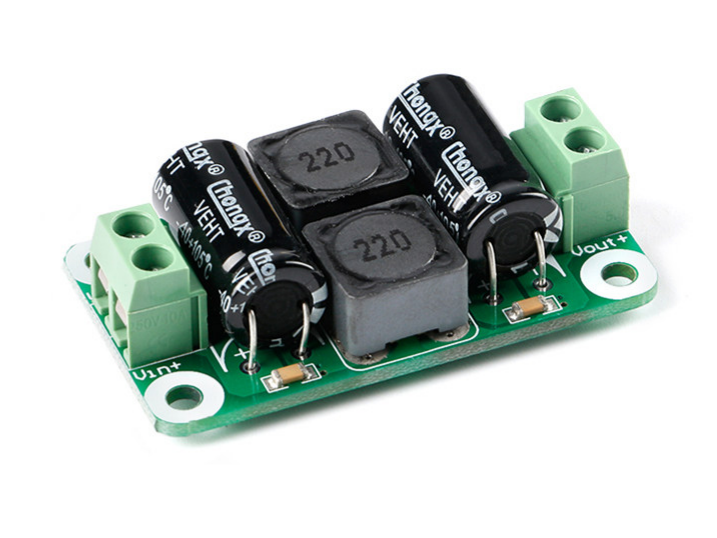
A DC power filter board is a passive electronic module designed based on the LC filter principle, with the core function of purifying DC power output. As we all know, DC power supplies (especially switching power supplies) inevitably generate high-frequency noise and voltage fluctuations during operation. These interferences are transmitted to the subsequent load through the power line, affecting the normal operation of the device.
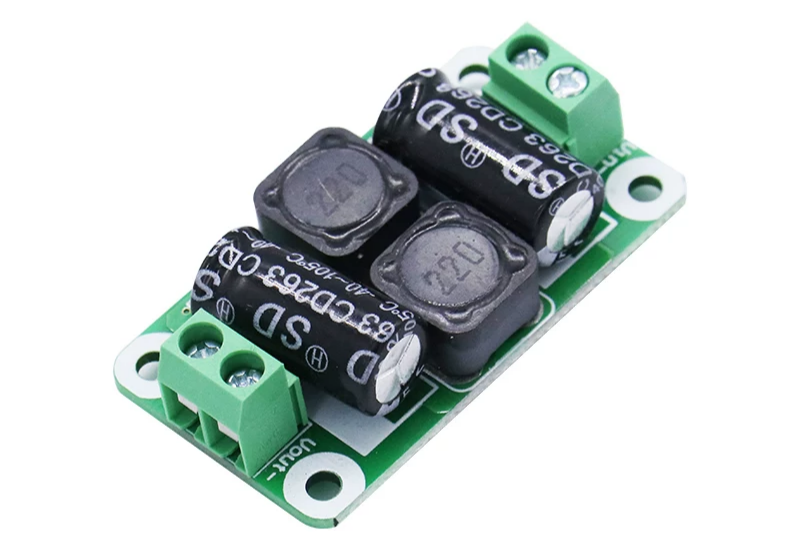
Through the synergistic effect of internal inductors and capacitors, this filter board forms a low-pass filter network by utilizing the inductor’s characteristic of blocking high-frequency signals and the capacitor’s characteristic of bypassing high-frequency noise. It allows useful DC signals to pass smoothly, while absorbing or shunting high-frequency interference and voltage ripples, ultimately outputting pure and stable DC power. This provides a reliable power supply environment for subsequent equipment, extends the service life of the equipment, and reduces failures caused by power supply problems.
Comparison of Same-Series Products
Our DC power filter boards come in three different specifications, adapting to different power and scenario requirements. The core differences lie in rated current, component parameters, and applicable scenarios:
| Model | Rated Current | Core Components Specification | Applicable Scenarios | Core Advantages |
|---|---|---|---|---|
| Standard Version | 5A | 1000μF capacitor + 10mH inductor | Smart home appliances, small instruments, DIY projects | High cost performance, compact size, flexible installation |
| Enhanced Version | 10A | 2200μF capacitor + 15mH inductor | Industrial control modules, medium-sized motor drives | Deep filtering capability, outstanding load capacity |
| Industrial Version | 20A | 4700μF capacitor + 20mH inductor | High-power equipment, new energy interfaces, workshop production lines | Good temperature resistance, strong anti-interference ability, stable long-term operation |
All three products adopt the same LC filter structure to ensure consistent filtering effect. Only the component parameters are adjusted according to power requirements, facilitating users to choose on demand.
How to Use the DC Power Filter Board?
This filter board is very easy to use. No complex debugging is required, and the effect can be achieved by following “correct wiring + standardized installation”:

- Vin+: Positive input terminal
- Vin-: Negative input terminal
- Vout+: Positive output terminal
- Vout-: Negative output terminal
Core Hardware Specifications
| Item | Specification |
|---|---|
| Operating Voltage | 0-25V/0-50V |
| Operating Current | ≤4A |
| Product Dimensions | 50*28*15mm |
| Pin Description | Vin+: Input Positive Terminal |
| Vin-: Input Negative Terminal | |
| Vout+: Output Positive Terminal | |
| Vout-: Output Negative Terminal |
Practical Application Example: DIY Smart Audio Power Supply Optimization
Many audio enthusiasts encounter the problem of “deteriorated sound quality due to power supply noise”, such as slight buzzing and blurred human voices when playing music. This is precisely caused by power supply ripples and external interference. After optimizing with our DC power filter board, the sound quality can be significantly improved:
- Application Scenario:DIY desktop audio system powered by a 12V switching power supply with slight power supply noise.
- Selected Model:Standard Version (5A), which fully meets the power requirements of the audio system.
- Connection Method: Connect the output terminal of the 12V switching power supply to the “VIN+ -” terminal of the filter board, the “VOUT + -” terminal of the filter board to the power interface of the audio system, and ground the grounding terminal of the filter board to the audio cabinet.
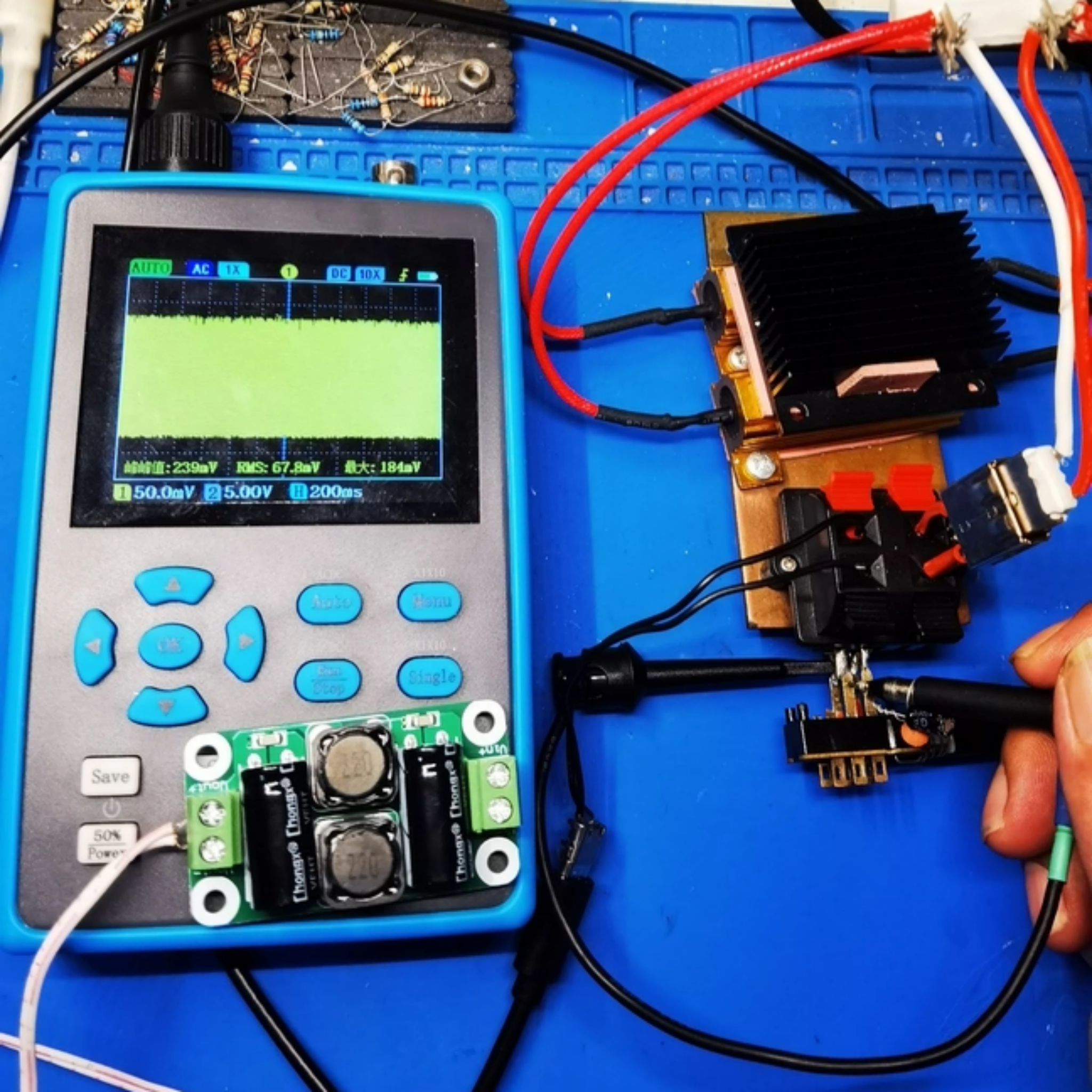
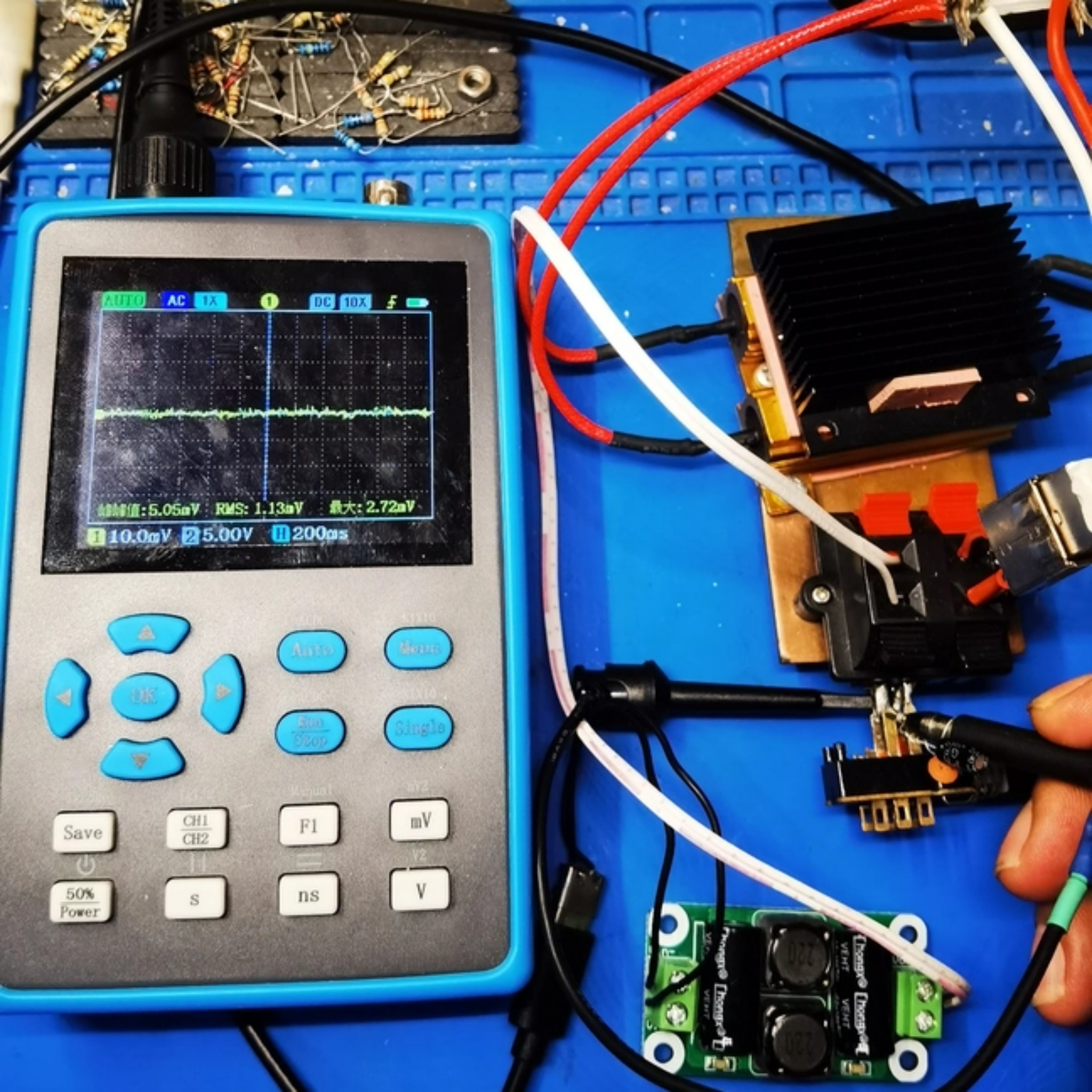
- Usage Effect: After filtering, the power supply ripple amplitude is reduced from the original 239mVto The background buzzing of the audio system completely disappears, the human voice is clearer, the low frequency is fuller, and the overall sound quality is significantly improved.
This example is also applicable to other devices that require pure power supply, such as precision measuring instruments, single-chip microcomputer development boards, and smart home controllers.
FAQS
No effect after connecting the filter board?
It is most likely a wiring or installation problem: check if VIN/VOUT is reversed, if the grounding is reliable, and if the input and output wires are too long (exceeding 50cm). If there is still no effect, try replacing with a higher-specification model or check if the power supply itself has a serious fault.
Why does the filter board get hot seriously?
The main reason is that the load current exceeds the rated value or the heat dissipation space is insufficient. It is recommended to replace with a model with a larger rated current, and ensure that the installation position is well-ventilated to avoid being blocked by other heating components.
Can it be used for AC power supply filtering?
No. This product is an LC filter board specially designed for DC power supplies. If used in AC circuits, it will cause component damage and fail to achieve filtering effect. Special AC filter products should be selected for AC scenarios.
Will performance degrade after long-term use?
The service life of the core components (capacitors and inductors) exceeds 50,000 hours, and performance degrades slowly under normal use. If the application environment temperature is too high or the voltage is abnormal, it may cause capacitor aging. It is recommended to regularly check if the capacitor is swollen or leaking, and replace it in a timely manner.