

Blog
5 Minutes to Understand the Remote Control
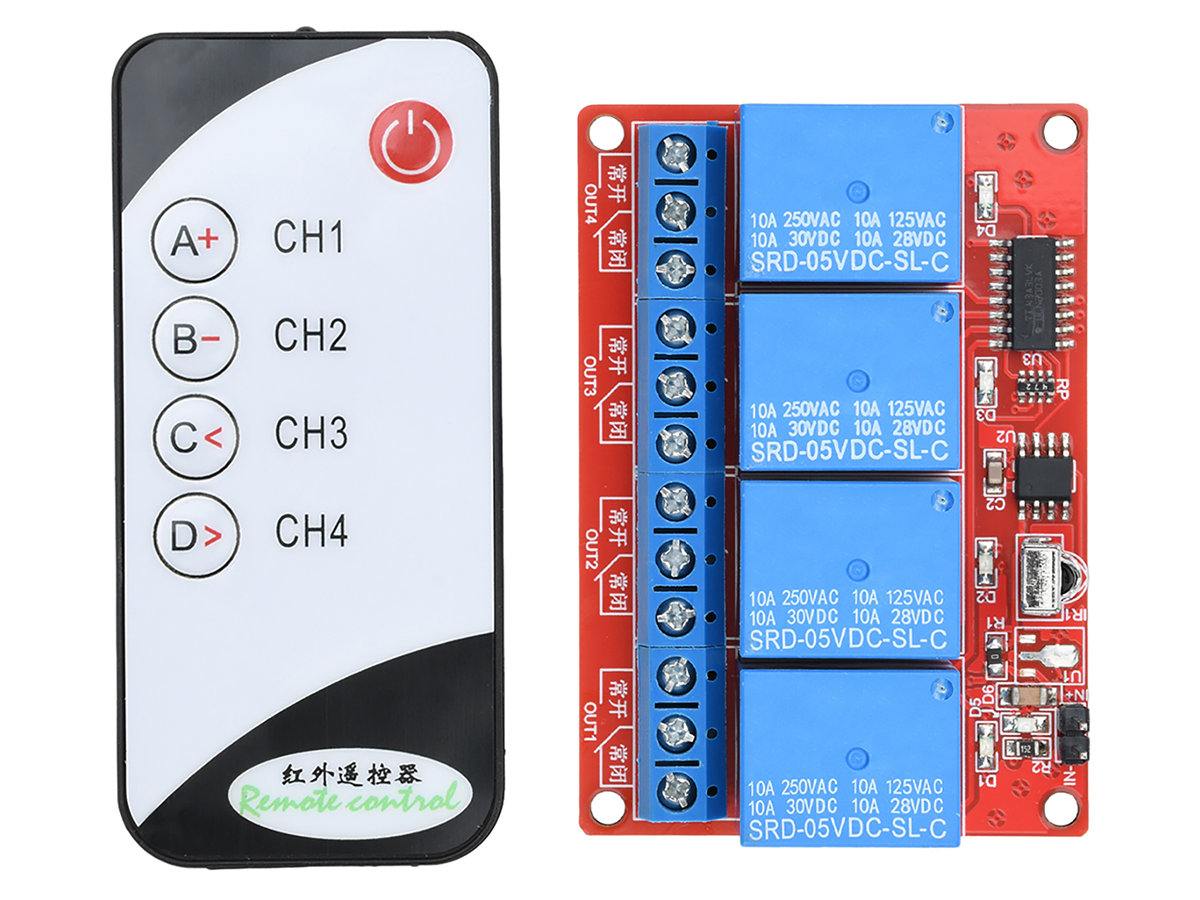
Composition of Remote Control Devices
To understand the principle of remote control, we first need to know the devices involved. Generally, remote control of electrical appliances requires four main components: a relay, a signal receiving component, a main control chip, and a remote control device.
Principle of remote control
Relay: The miniature relay is shown below.
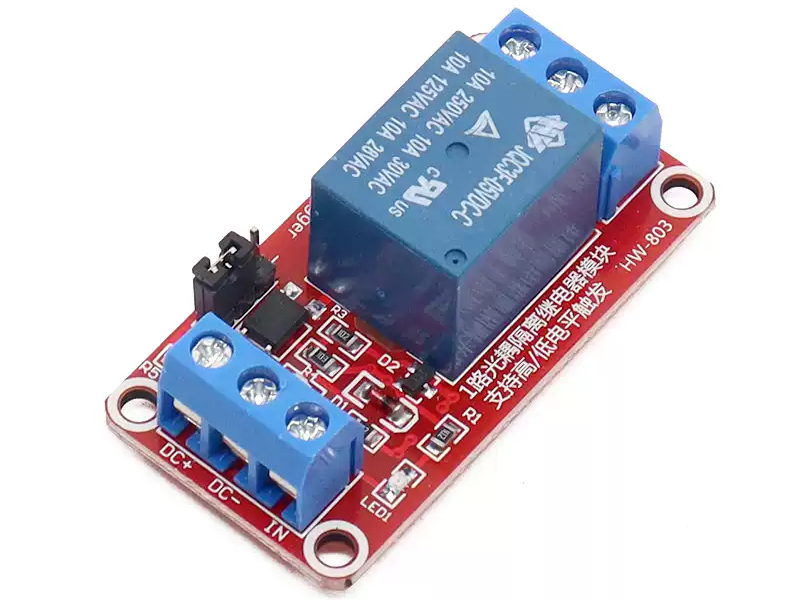
Generally, it has five wiring ports, which may seem complex, but it’s simple when broken down. As a control device, the relay requires a power supply (with positive and negative poles), so two wires are connected to the Vin power supply terminal. The other three wires function like a switch: the COM wire is connected to the positive electrode of the load’s power supply; NC stands for “Normally Closed,” and NO stands for “Normally Open.” In the inactive state, the COM terminal is connected to the NC terminal. When activated, the magnet above the COM terminal is attracted to the NO terminal, and the COM terminal conducts with the NO terminal.
Simply saying, the COM terminal is normally connected to the NC terminal (acting as a continuous wire), and when activated, it switches to connect with the NO terminal (also acting as a wire). Since the COM terminal is connected to the positive electrode of the power supply, activation is equivalent to using a wire to connect the positive electrode of the power supply to the positive electrode of the load. The negative electrode of the load is directly connected to the negative electrode of the power supply, so controlling whether the positive electrode is connected controls the entire device’s operation.
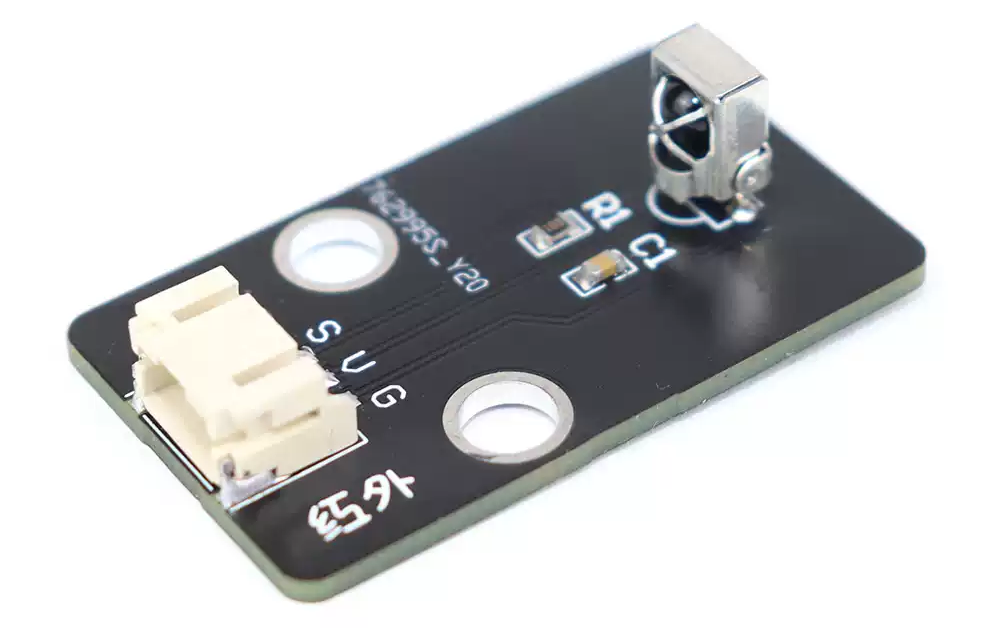
Signal receiving components:
There are various types of signal receiving components, mainly depending on the type of signal used for control. The most common is infrared remote control, where the signal receiving component is generally an infrared receiver. It can receive the frequency transmitted by the infrared remote control; when the frequency matches, a signal is triggered, which is recognized and used by other circuits and the main control chip.
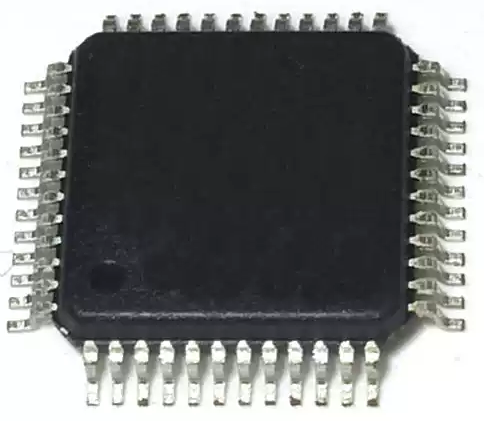
Main Control Chip
The main control chip is responsible for processing the signal fed back by the signal receiving component. When the signal receiver is triggered, it outputs a level signal to the main control chip. The main control chip controls the corresponding relay to conduct based on the level signal (either continuously or for a short time). This control logic is all managed by the main control chip, which also generally controls the frequency received by the signal receiver to match the infrared remote control.
Remote Control Device
There are many types of remote control devices, such as infrared remote control, RF (Radio Frequency) remote control, Bluetooth remote control, and Wi-Fi control. Essentially, they all achieve control by transmitting electromagnetic wave signals of different frequencies, which are then received by the receiver. Infrared remote control is the most common and is generally used for short-distance device control.
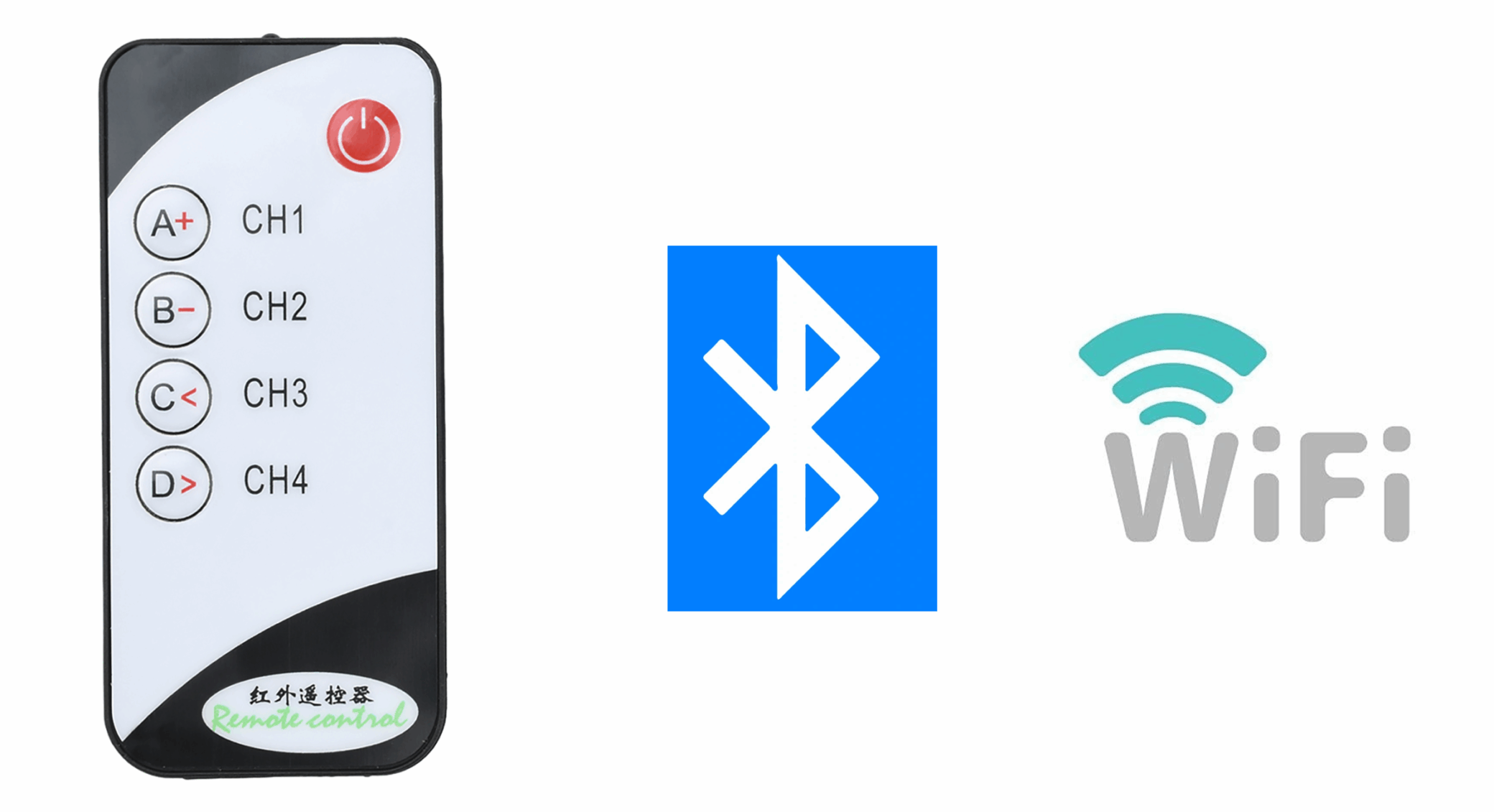
The difference of four kinds of remote control
| Technology | Advantages | Disadvantages | Applicable Scenarios |
|---|---|---|---|
| Infrared | Low cost, no interference, easy to implement | Short range, line-of-sight limitation, high alignment requirement | Home appliance control, small device switches |
| RF | Long range, strong penetration, no line-of-sight needed | Interference, high power consumption, higher cost | Access control systems, garage door remote, remote control toys |
| Bluetooth | High data rate, low power consumption, no line-of-sight needed, widely used | Short range, device pairing complexity, potential interference | Smart home devices, wireless speakers, wearable devices |
| Wi-Fi | Long range, high bandwidth, remote operation, good compatibility | High power consumption, complex setup, potential signal interference | Smart home, remote control, video surveillance, home automation |
Application scenarios of remote control
- Infrared Remote Control: The most common application is in home and daily life scenarios, such as air conditioners, fans, and televisions, all controlled by infrared remote controls.
- RF Remote Control:With strong penetration, it is generally used for controlling devices through metal, such as garage door remotes and access control systems.
- Bluetooth Remote Control:Typically used for smart home systems, wireless speakers, and other devices that require short-distance control and have certain visualization requirements. These devices usually need to confirm the connection status; otherwise, re-pairing is required.
- Wi-Fi Remote Control:Commonly used for configuring complex devices, such as complete smart home systems, remote control, and devices that require network connectivity and are relatively fixed in position (likevideo surveillance).
If you are interested, you can learn about the following module to realize your ideas:
Infrared remote control four-channel relay
This module uses infrared remote control and can control the operation of 12V devices, such as fans, light bulbs, and motors. Below is a demonstration of its usage effect:
It can control four channels of loads, which is fully sufficient for small DIY projects. For electronics enthusiasts or students, it can replace some simple remote control solutions. If you need further control or more complex logic, Wi-Fi protocol modules like ESP01 are better choices.
FAQ
Can l use my phone as a remote?
Yes, many devices can be controlled via a phone. For example, Bluetooth headsets are controlled via Bluetooth, and many devices connect to the internet via Wi-Fi for cloud control through a corresponding app.
What is the best remote control?
The best remote control depends on your application scenario. Refer to the advantages and disadvantages of the four types of remote control above for selection.
Can l buy a new remote control for my TV?
Yes, but the new remote control must match the frequency of your TV. It is best to search for a remote control specifically for your TV model, which can generally be used directly after purchase.
How to Implement Remote Control with ESP32
The ESP32 uses Wi-Fi for communication to achieve remote control. You need to configure the Wi-Fi file to connect it to the network, then set up cloud connectivity to control its pins for remote operation. Detailed configuration methods are available on many websites; simply search for “how to configure ESP32 network” to find corresponding instructions.