

Blog
Application Introduction of Tesla Coil Module
What is a Tesla coil?
A Tesla coil is a high-frequency, high-voltage, low-current electrical resonance device invented by Nikola Tesla. It boosts standard voltage to extremely high levels (typically hundreds of thousands to millions of volts) using the core principle of electromagnetic resonance: When the capacitor in the primary circuit discharges, it creates a high-frequency oscillating circuit. Through resonant coupling, extremely high voltage is induced in the secondary coil. Due to constant power, the current remains low—small Tesla coils generally do not cause electric shock (only a burning sensation if touched).
What is a Tesla Coil Used For?
Current applications of Tesla coils fall into four main categories:
- Scientific Research: Used to study high-frequency alternating current, electromagnetic resonance, and other phenomena. It was an early tool for researching radio and high-frequency electrical technologies.
- Education & Popular Science: Demonstrates arc phenomena in school laboratories or public science shows.
- Art & Entertainment: Creates visual effects by syncing arcs with music (common in videos showing arcs “dancing” to melodies).
- Small Tools: Converts high-voltage, high-temperature arcs into small igniters.
Practical Applications of Tesla Coils
The following examples use the BD243 Tesla Coil Module.
The BD243 Tesla Coil Module is a compact Tesla coil device that connects to a compatible power supply for easy demonstrations.
Here is a brief introduction to the BD243 Tesla coil:
The BD243 Tesla Coil Module is a DIY kit designed for electronics enthusiasts, particularly beginners, to practice and learn circuit applications. It helps newcomers quickly grasp the principles of circuit operation and the practical effects of Tesla coils.
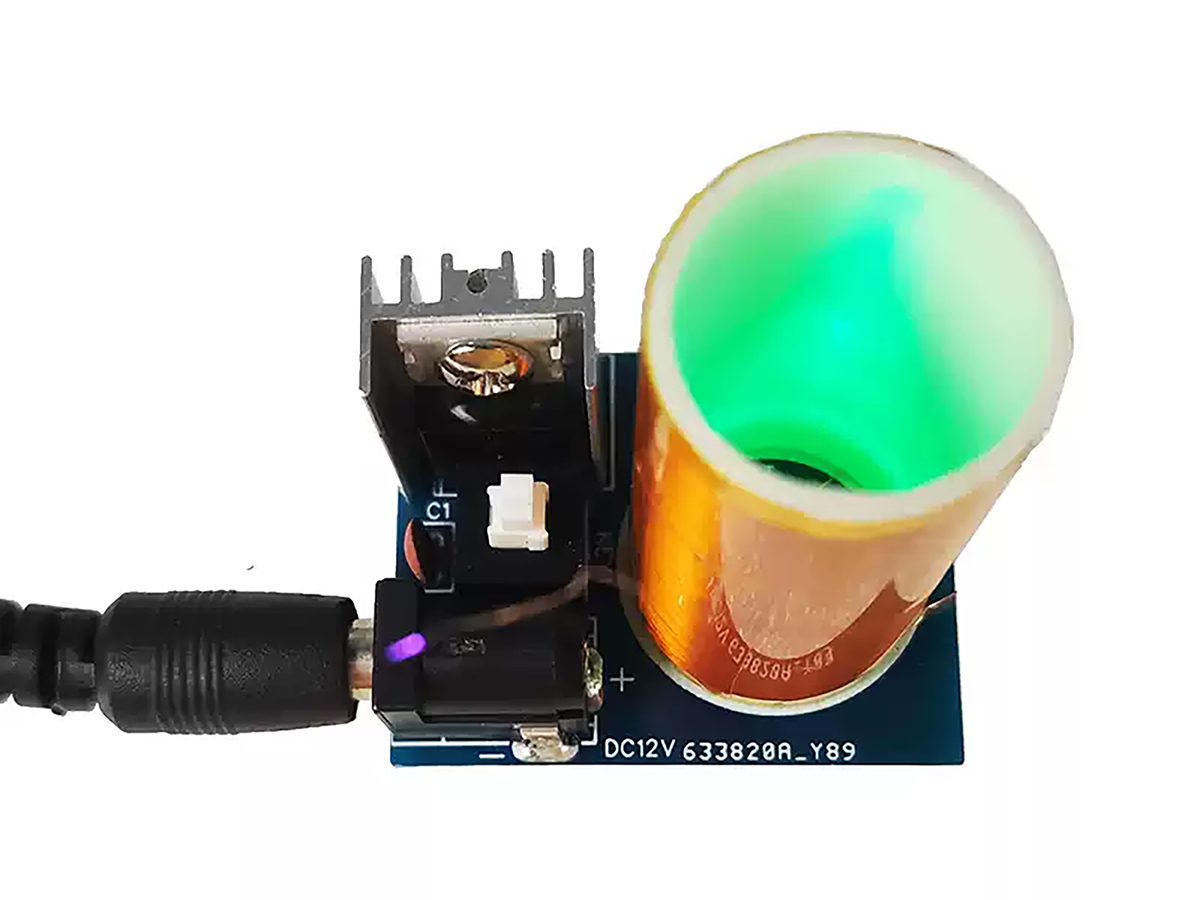
The BD243 module operates at 12V. During operation, it generates an electric arc, with the coil emitting green light, as shown in the figure.
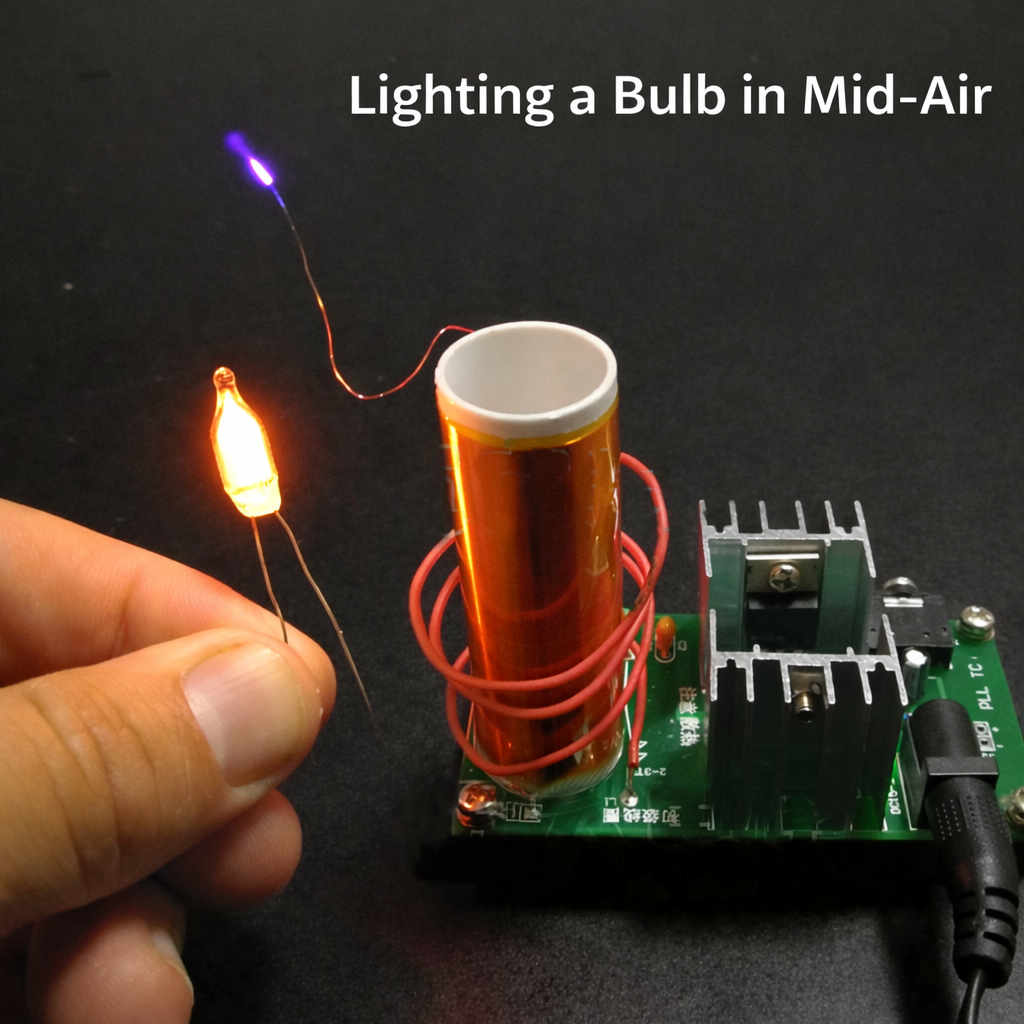
Moreover, the electric arc generated by Tesla coils is visually stunning and dynamically changes in sync with music. In many videos, you can see the arc pulsating to the rhythm, a feature achieved using Tesla coils. The BD243 Tesla coil module can also accomplish this, though its visual effect is less impressive than the professional demonstrations due to power limitations. For those with specific needs, purchasing a higher-power Tesla coil module is recommended, but pay attention to the precautions.
Demo Video
The following describes the actual application of the BD243 Tesla coil module.
FAQ
Why don't we use Tesla coils for power?
Tesla coils pioneered the concept of wireless charging, but their strong electric fields, high-frequency electromagnetic radiation, and exposed discharges pose significant safety hazards. Additionally, their efficiency is extremely low—most energy is lost as heat or through discharge. These factors make them impractical for power transmission.
What happens if l touch a Tesla coil?
Low-power coils cause only a burning sensation, while higher-power ones may lead to electric shock. Never touch the arc or coil—it may also interfere with or damage electronic devices. Always take safety precautions during use and observation.
Can Tesla coils create lightning?
Strictly speaking, the phenomenon is an arc, not lightning. While they look similar, their principles differ. Arcs can only mimic lightning’s visual effect for demonstrations—lightning has far greater energy, voltage, and destructive power.
Can a Tesla coil glow a LED bulb?
Yes, but with very low efficiency. The coil can power an LED, but the brightness is insufficient (it cannot reach the LED’s rated power). Placing the LED too close risks damage from excessive voltage. This function is only suitable for demonstrations, not long-term use.