

Blog
BQ25570 Energy Harvester Module
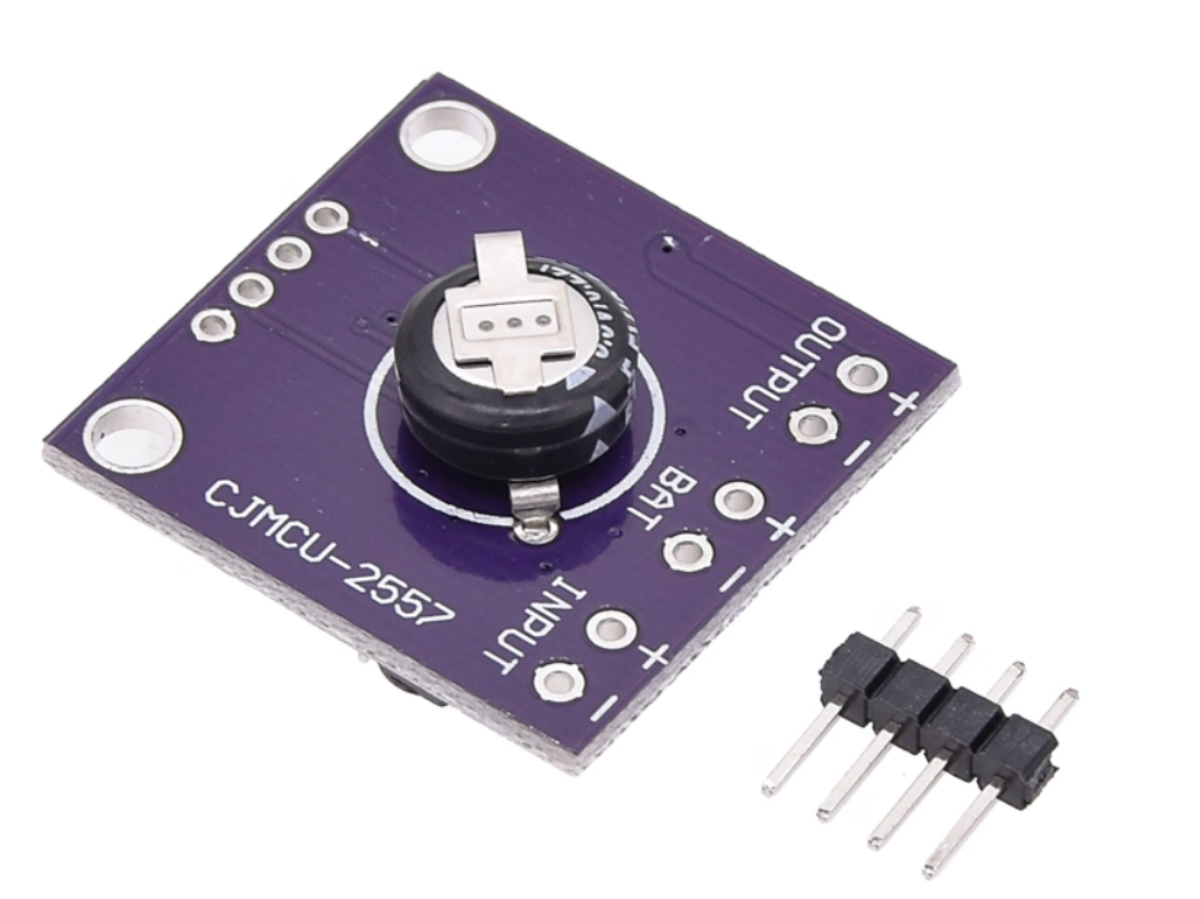
In today’s era of rapid development of low-power electronic technology, products such as Internet of Things sensors, wearable devices, and remote monitoring terminals have an increasingly urgent demand for “long-lasting self-power supply”. The traditional battery power supply mode faces pain points such as “frequent replacement, high maintenance costs, and environmental pollution“. The BQ25570 energy harvesting module, with its core capability of “capturing trace amounts of environmental energy and efficiently convert and utilize it”, has become a key solution to the power supply problem of low-power devices, laying a technical foundation for the popularization of “battery-free electronic devices”. Today, let’s have an in-depth discussion about the BQ25570 energy harvesting module!
What is a BQ25570 Energy Harvester Module?
The BQ25570 energy harvesting module is a highly integrated low-power energy management solution module, and its core functions are “collection – conditioning – storage – power supply”: The BQ25570 energy harvesting module can obtain milliwatt (mW) to microwatt (μW) level of trace energy from the environment, store it after processing, and then provide stable power supply for low-power devices.
Different from some traditional power modules that rely on adapters or large-capacity batteries, its core value lies in “energy scavenging” — no external power supply is required, and the operation of the device can be supported by environmental energy. It is especially suitable for deployment in remote and difficult-to-maintain scenarios (such as field sensors, pipeline monitoring equipment, etc.). Its typical adapted devices are low-power systems with standby power consumption lower than 100μW, such as wireless temperature and humidity sensors, smart bracelets, door and window sensing modules, etc.
What is the working principle of BQ25570 Energy Harvester Module?
- Energy harvesting:Obtain energy from photovoltaics (such as small solar panels), piezoelectricity (such as vibration harvesters), thermoelectricity (such as temperature difference generators), and radio frequency (such as Wi-Fi signals). Convert AC sources to DC and filter fluctuations from DC sources.
- Energy conditioning: Raise the voltage as low as 0.3V to 3.3V/5V through a boost converter, and then use MPPT to match the maximum power point of the energy source in real time, increasing the collection efficiency by 30%-50%.
- Energy storage:Adapt the charging strategy according to the type of storage device (use “constant current → constant voltage” for batteries and “constant current” for supercapacitors). Disconnect the load when the voltage is too low to prevent device damage.
- Load power supply:Convert the variable voltage of the storage device to a fixed voltage of 1.8V/3.3V through an LDO. When energy is insufficient, disconnect the load first and prioritize charging.
What is the composition of the touch BQ25570 Energy Harvester Module?
The BQ25570 energy harvesting module is mainly composed of a core IC and supporting components
| Component Name | Core Function |
|---|---|
| BQ25570 Integrated Circuit | The “brain” of the module: Responsible for rectification, voltage boosting, MPPT, charging management, load protection, and other functions. |
| Input Interface Circuit | Includes a rectifier (AC to DC) and a filter (to smooth voltage fluctuations), used to adapt to different energy sources. |
| Energy Storage Interface | Supports thin-film batteries, supercapacitors, rechargeable button batteries, etc., and provides charging protection for them. |
| Output Regulation Circuit | Integrates an LDO, outputs a stable voltage (1.8V/3.3V optional), and protects the load. |
| Protection Components | Overvoltage protection (prevents voltage surges), overcurrent protection (prevents excessive current from damaging components), and reverse polarity protection (prevents irreversible impacts caused by wrong wiring). |
Advantages of Capacitive BQ25570 Energy Harvester Module
The BQ25570 energy harvesting module is a capacitor – type module with supercapacitors as the main storage device. Compared with traditional battery – type modules, it has three core advantages:
1、Fast charging: There is no delay in chemical reactions, and it can be fully charged in seconds to minutes (while batteries take tens of minutes). It is also suitable for intermittent energy sources.
2、Long service life: It can undergo more than 100,000 charge – discharge cycles (batteries only 1,000 – 2,000 cycles), so there is no need for frequent replacement, which reduces maintenance costs.
3、Good temperature resistance: It works stably in a wide temperature range of – 40°C to 85°C (batteries have a sharp drop in capacity at low temperatures), making it suitable for outdoor and harsh industrial scenarios.
Functional Block Diagram of BQ25570 Energy Harvester Module

What are the application scenarios for the BQ25570 Energy Harvester Module?
Benefiting from its core advantages, the BQ25570 energy harvesting module is mainly used in:
1、IoT wireless sensor devices: Field temperature and humidity sensors, pipeline pressure sensors (powered by solar energy / vibration, no battery replacement required).
2、Consumer – grade wearable devices: Smart bracelets, health monitoring patches (powered by vibration / body temperature difference, extending battery life).
3、Smart home field: Door and window induction sensors, wireless smart switches (powered by indoor light and other energy sources).
4、Remote / harsh environment devices: Outdoor weather stations, underground pipe network monitoring devices (powered by solar energy / water flow vibration / soil temperature difference).
BQ25570 Energy Harvester Module pinout
The pins of the BQ25570 energy harvesting module are ONPUT(+,-), BAT(+,-), INPUT(+,-), GND, V_EN, EN, and V_OK respectively. The specific functions of each pin are as follows:
- – ONPUT(+,-):Output pin, used to provide a stable working voltage to the load device to ensure the device can operate normally.
- – BAT(+,-):Battery connection pin, connected to the energy storage device (such as supercapacitor or battery), responsible for the management of energy storage and release.
- – INPUT(+,-):Input pin, used to connect various energy harvesting sources (such as solar panels, vibration harvesters, etc.) and receive trace energy from the environment.
- – GND: Ground pin, providing a stable reference ground potential for the entire module to ensure the stability of the circuit operation.
- – V_EN: Enable voltage pin. By controlling the level state of this pin, some functions of the module can be turned on or off to achieve low-power management.
- – EN:Enable pin, used to control the start and stop of the module. When this pin receives a valid signal, the module starts to work.
- – V_OK:Voltage status indication pin, used to indicate whether the output voltage of the module is within the normal range, which is convenient for users to monitor the status and troubleshoot faults.

Product Parameter Sheet for BQ25570 Energy Harvester Module
| Parameter | Specification |
|---|---|
| Supply Voltage | DC 0.1V-5.1V |
| Output Voltage | 2V-5.5V |
| Operating Temperature | -40°C ~ 85°C |
| Size | 26.67mm*27.71mm |
BQ25570 Energy Harvester Module datasheet
FAQS
BQ25504 vs BQ25570
| Comparison Item | BQ25504 | BQ25570 |
|---|---|---|
| Core Positioning | Special-purpose energy harvesting manager for ultra-low input voltage, focusing on capturing “extremely weak energy” | General-purpose low-power energy harvesting manager, considering multi-scenario energy adaptation |
| Input Voltage Range | Minimum 0.1V, upper limit 5.5V | Minimum 0.3V, range 0.3V – 5.1V |
| MPPT Efficiency | About 80% – 85% | Up to 85% – 90% |
| Energy Storage Adaptation | Only supports supercapacitors | Supports supercapacitors, thin-film batteries, rechargeable button batteries, etc. |
| Quiescent Power Consumption | Typical value 30nA, suitable for “deep sleep” scenarios with long-term no energy input | Typical value 60nA, balancing power consumption and multi-function adaptation |
| Load Power Supply Capability | Fixed output voltage 1.8V, maximum output current 10mA, only supports low-power microcontrollers | Optional output voltage 1.8V/3.3V, maximum output current 20mA, can drive wireless sensors, small wearable devices, etc. |
| Protection Function | Basic protection (input overvoltage, reverse polarity) | Comprehensive protection (input overvoltage, output overcurrent, reverse polarity, under-voltage disconnection of load) |
| Applicable Energy Sources | Extremely weak energy (such as miniature temperature difference power generation chips, <1cm² miniature photovoltaic panels, etc.) | Conventional trace energy (such as small photovoltaic panels, standard piezoelectric vibration harvesters, etc.) |
| Typical Application Scenarios | Implantable medical devices, miniature wireless sensor nodes, auxiliary power supply for wearable devices | IoT wireless sensors, consumer-grade wearable devices, smart homes, remote harsh environment devices |