

Blog
DC-DC Adjustable Buck Converters: The Basics You Should Know
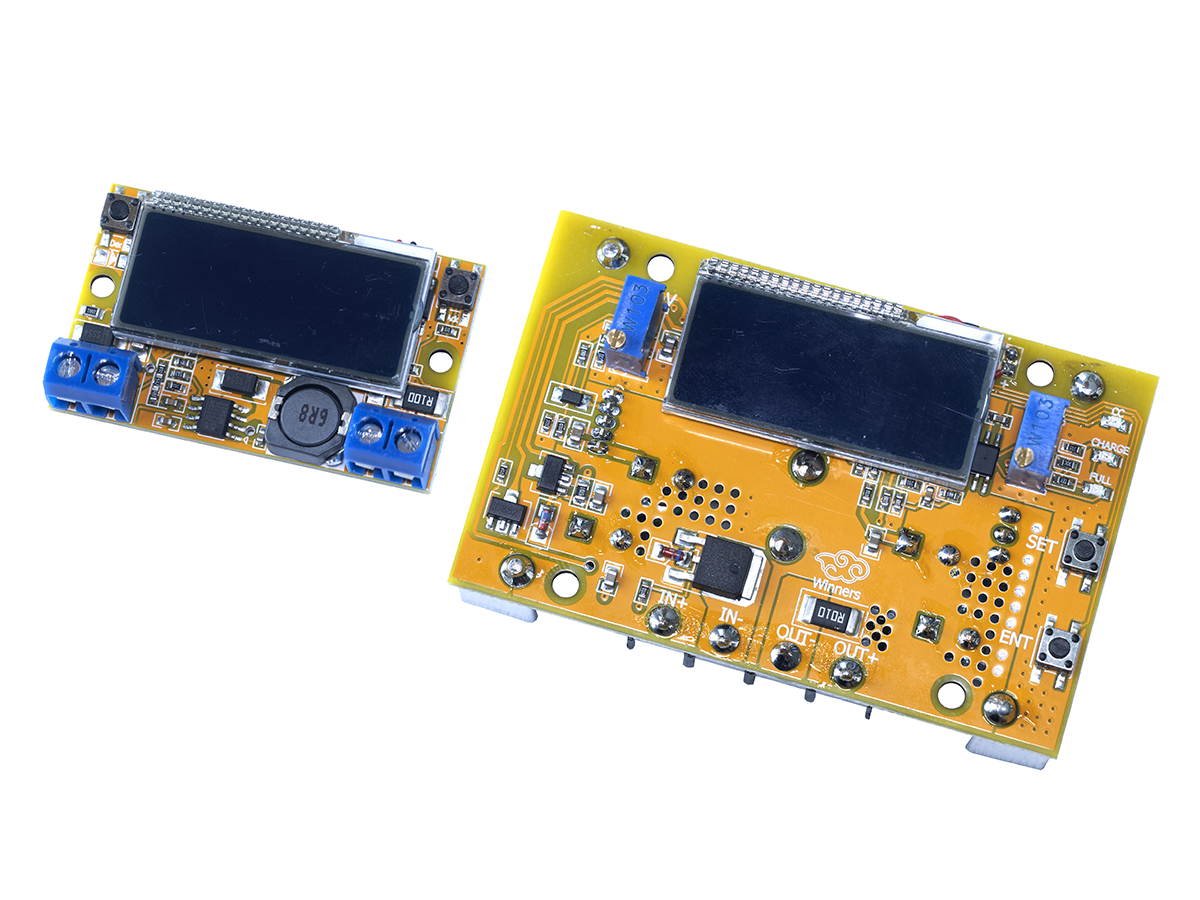
Definition of Buck Module
A buck converter refers to a DC-DC converter capable of reducing voltage. As the name suggests, a buck converter can make the output voltage smaller than the input voltage while maintaining the stability of the output voltage, and usually can achieve high conversion efficiency. At the same time, it will cause the output current to be larger than the input current. A buck converter is a switching power supply. In electronic equipment, when the power supply voltage is higher than the voltage required by the load, a buck converter can be used to reduce the voltage to an appropriate range and ensure the stable operation of the electronic equipment. Generally speaking, an adjustable buck module is a dc to dc step down module. An adjustable buck converter adds a regulation function on the basis of voltage reduction, enabling the voltage reduction to cover a range, which facilitates regulation and application and increases expandability.
Functions of Buck Converter
The core functions of a buck converter are DC voltage conversion and stable output. First is voltage conversion: it can reduce the voltage within a certain range and convert it into another smaller and stably output voltage, for example, converting 12V to 5V for use. Second is the stable output function: the buck converter can detect the output voltage through the built-in control circuit. When the voltage fluctuates, the converter will automatically adjust the on and off time (i.e., duty cycle) of the switching device to ensure that the output voltage remains at the set value.
An adjustable buck converter can generally adjust the output voltage by regulating the potentiometer, realizing switching applications between multiple output voltages.
Buck Converter Circuit
Generally, the on and off of switching transistors are controlled by two methods: “fixed frequency with adjustable pulse width” via PWM waves or “fixed pulse width with adjustable frequency” via PFM waves, among which PWM waves are commonly used.

Features of Adjustable Buck Converter
What are buck converters used for?
Adjustable buck converters with a relatively wide coverage range
The 10A adjustable step-down power module has a wide range of applications, with an input voltage range of 7V-36V. The output voltage only needs to be at least 1.5V lower than the input voltage. Additionally, the output current is adjustable, with a maximum of 10A, though it is generally recommended to stay below 8A. The maximum output power can reach 150W, but it is advised to use it within 100W. It comes with an LCD screen, making it very convenient to monitor the current output voltage. You can adjust the output voltage and current by rotating the potentiometer with a small screwdriver to achieve your desired voltage and power. On one side, there are two buttons: the upper one is for switching modes, and the lower one is the confirm button. There are three display modes: input current, output voltage/current, and alternating display of input/output voltage/current. After switching modes, press the confirm button to view the current. Once confirmed, pressing the confirm button again turns off the OLED screen.

The The 3A adjustable step-down power module can also handle a relatively wide voltage range, with an input voltage of 5-23V and an output voltage of 0-16.5V. The input voltage must be at least 1V higher than the output voltage. Its output current is not adjustable, with a maximum of 3A, though it is recommended to use it at 2A to avoid additional heat dissipation issues. It is equipped with short-circuit protection. During use, you can observe the current output voltage via the digital display. By pressing the buttons on either side, you can adjust the output voltage—holding the button down allows for rapid adjustment, while short presses enable fine-tuning. If adjustment is not possible, check whether the output voltage exceeds the input voltage. If so, reduce the output voltage and reconnect.

Buck Converter Electrical Parameters
DC-DC adjustable buck converter 10A:
| Parameter | Specification |
|---|---|
| Input Voltage | 7V-36V |
| Output Voltage | 1.5V-35V continuously adjustable (Input must be at least 1.5V higher than output) |
| Output Current | Adjustable, max 10A (Recommended below 8A, natural cooling below 5A or 70W) |
| Output Power | Max 150W (Recommended below 100W, reduce power at large voltage differences) |
| Operating Temperature | -20°C ~ +75°C (Monitor power tube temperature, enhance cooling if exceeded) |
| Switching Frequency | 300KHz |
| Conversion Efficiency | Up to 95% |
| Short Circuit Protection | Yes (Constant current value equals current setting) |
| Reverse Polarity Protection | Yes |
| Reverse Current Protection | No (Add diode when used for charging) |
| Connection Method | Terminal or soldering (IN for input, OUT for output) |
DC-DC adjustable buck converter 3A:
| Parameter | Specification |
|---|---|
| Input Voltage | 5-23V (Keep margin, recommended below 20V) |
| Output Voltage | 0V-16.5V continuously adjustable, auto-saves last setting (Input must be ≥1V higher than output) |
| Output Current | Max 3A (Recommended below 2A, requires cooling if overheating) Current self-adjusts to load (not adjustable) |
| Reverse Polarity Protection | Yes |
| Short Circuit Protection | No (Avoid short circuit use) |
| Accuracy | 1%, 3-digit display (Current in mA) |
| Conversion Efficiency | Up to 95% (Depends on I/O voltage, current & difference) |
| Load Regulation S(I) | <0.8% |
| Voltage Regulation S(U) | <0.8% |
Module Size
DC-DC adjustable buck converter 10A:

DC-DC adjustable buck converter 3A:

Precautions
Do not exceed the operating range during use and strictly abide by the electrical parameter range. If natural heat dissipation is not possible, external heat dissipation devices (such as fans) need to be added.
User Manual
DC-DC adjustable buck converter 10A: To use this module, first unscrew the screws, connect the power supply Vcc to IN, and then connect OUT with wires. On the premise of not exceeding the range, rotate the right screw to adjust the output voltage, and the left one to adjust the output current. By observing the OLED screen, you can see the output voltage and output current, which facilitates adjustment. You can press the button to switch modes, which are ① displaying input voltage and current, ② displaying output voltage and current, and ③ alternately displaying input and output. After confirming the mode, press the confirm button again to turn off the OLED screen for convenient use. When the power exceeds 70W, a small fan needs to be added for heat dissipation. It is recommended to use it within 100W and must not exceed 150W.

DC-DC adjustable buck converter 3A:When using this module, unscrew the screws, connect the power supply Vcc to Vin and GND, and then connect Vout and GND with wires. On the premise of not exceeding the range, press the left and right buttons to decrease or increase the output voltage. Long pressing enables quick adjustment, while short pressing allows fine adjustment. Equipped with an OLED screen, you can know the output voltage by observing it. The maximum output current is 3A, and it is recommended to use 2A; otherwise, if the heat is too high, the heat dissipation problem shall be solved by yourself.

Demonstration video of the buck converter
FAQ
When should you use a buck converter?
Is a buck converter AC or DC?
Yes, all buck converters are DC-DC.
What are the disadvantages of a buck converter?
Are buck converters noisy?
Buck converters do generate noise, but the noise can be reduced to a usable range through design.
Do buck converters waste power?
Generally speaking, the energy conversion rate of a buck converter can reach more than 80%-95%. Compared with linear regulators, its conversion rate is much higher. However, the energy conversion rate will drop significantly when it is under no-load condition. Therefore, under reasonable design, it will basically not waste too much power, but if the design is wrong, it will indeed lead to power waste.