

Blog
Introduction to Hall Effect Count Sensor
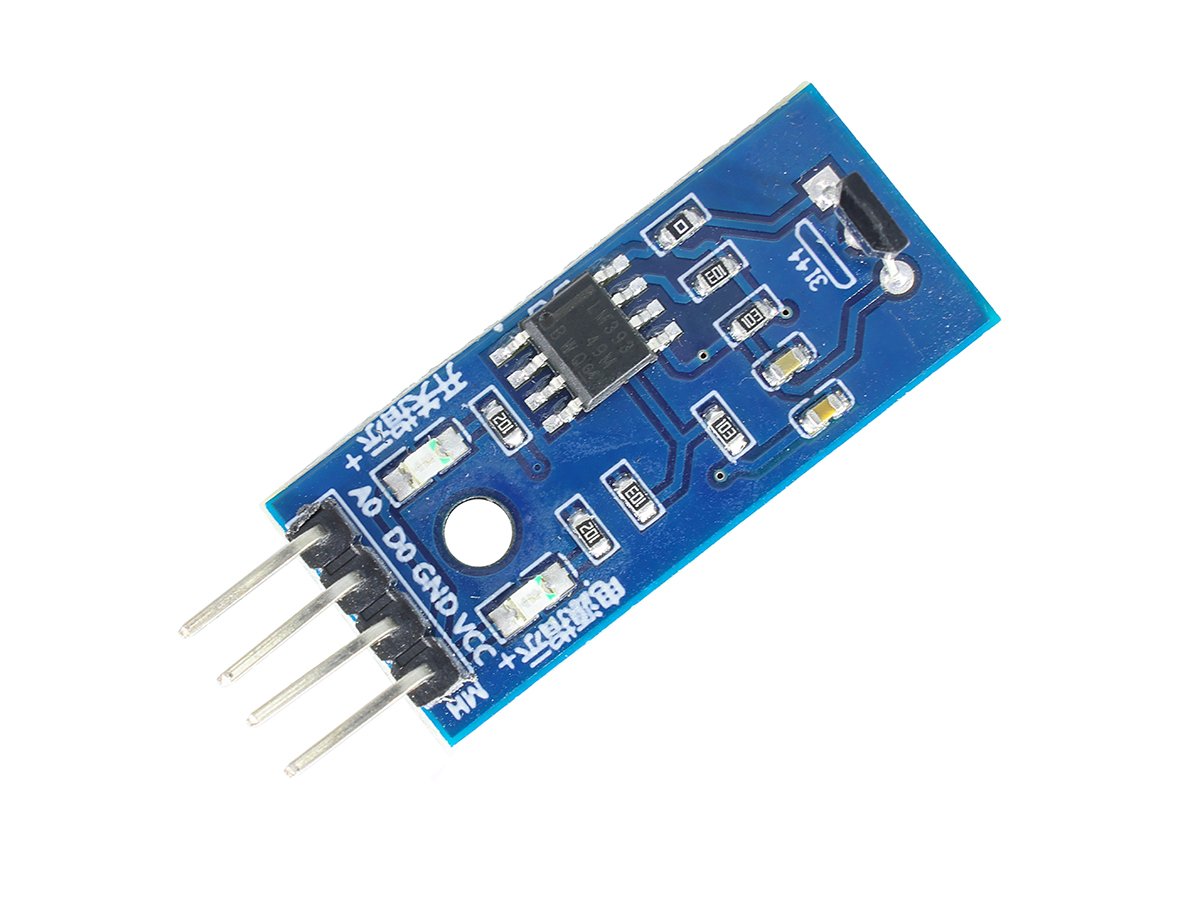
What is Hall Counting Sensor?
The Hall counting sensor is a device that utilizes the Hall effect to detect metals for counting purposes. Its core component is a Hall element, which can generate a voltage proportional to the intensity of the magnetic field passing through it. This signal is processed through circuit design, enabling the sensor to output a digital pulse when a magnet approaches or passes by. These digital pulses can be transmitted to microcontrollers such as single-chip microcomputers, which perform calculation and processing to achieve counting functionality.
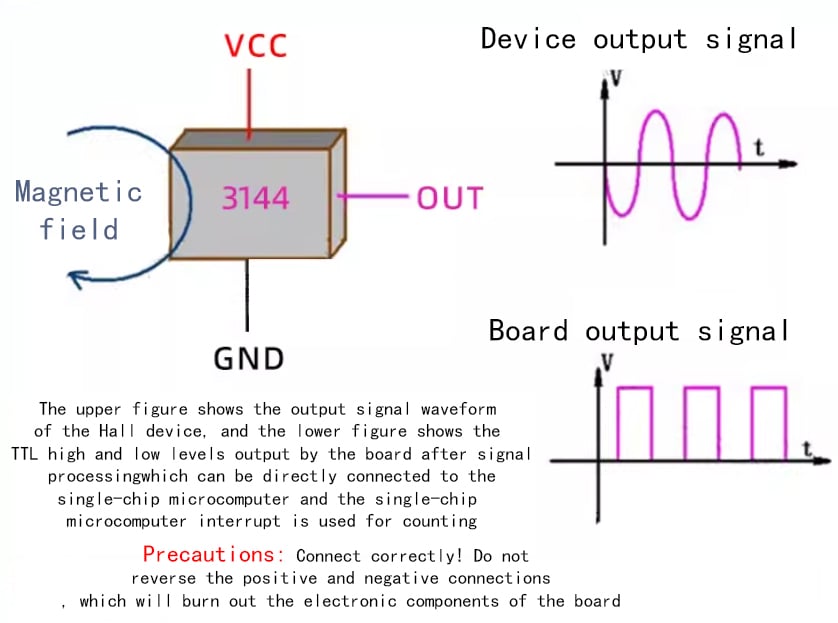
Hall effect sensor diagram:

What does a Hall effect sensor do?
Hall counting sensor operates on the Hall effect principle. It fundamentally works by detecting changes in a magnetic field to generate a digital signal. When a magnet attached to a rotating object (like a gear or motor shaft) passes close to the sensor, the magnetic field strength at the sensor’s surface fluctuates. Internally, the sensor’s integrated circuit contains a Hall element that produces a tiny voltage in response to this changing magnetic field. This signal is then amplified and processed by a Schmitt trigger, which cleans it up into a sharp, clean digital pulse (switching between 0V and the supply voltage). Each passing magnet produces one distinct pulse, and by counting these pulses, the system can accurately determine the number of revolutions or increments, enabling precise speed and position measurement.
Introduction to the Principle of Hall Counting Sensor
Hall counting sensor operates on the Hall effect principle. It fundamentally works by detecting changes in a magnetic field to generate a digital signal. When a magnet attached to a rotating object (like a gear or motor shaft) passes close to the sensor, the magnetic field strength at the sensor’s surface fluctuates. Internally, the sensor’s integrated circuit contains a Hall element that produces a tiny voltage in response to this changing magnetic field. This signal is then amplified and processed by a Schmitt trigger, which cleans it up into a sharp, clean digital pulse (switching between 0V and the supply voltage). Each passing magnet produces one distinct pulse, and by counting these pulses, the system can accurately determine the number of revolutions or increments, enabling precise speed and position measurement.
What is Hall effect in simple words?
Application of hall effect indaily life
The Hall effect is widely used in daily life for contactless sensing. It enables features like the automatic screen on/off in smartphone flip covers, wheel speed detection in car ABS systems, and speed control in devices like computer fans and electric bike motors.
The following is a simple magnet detection box made with a Hall effect count sensor and Arduino.
3144 Hall Effect Count Sensor
The 3144 Hall effect count sensor applies the Hall effect principle and is a magneto-sensitive circuit manufactured using semiconductor integration technology. It is a magneto-sensitive sensing circuit composed of a voltage regulator, a Hall voltage generator, a differential amplifier, a Schmitt trigger, a temperature compensation circuit, and an open-collector output stage. Its input is the magnetic flux density, and the output is a digital voltage signal. This sensor features a small size, high sensitivity, fast response speed, good temperature performance, high accuracy, and high reliability.
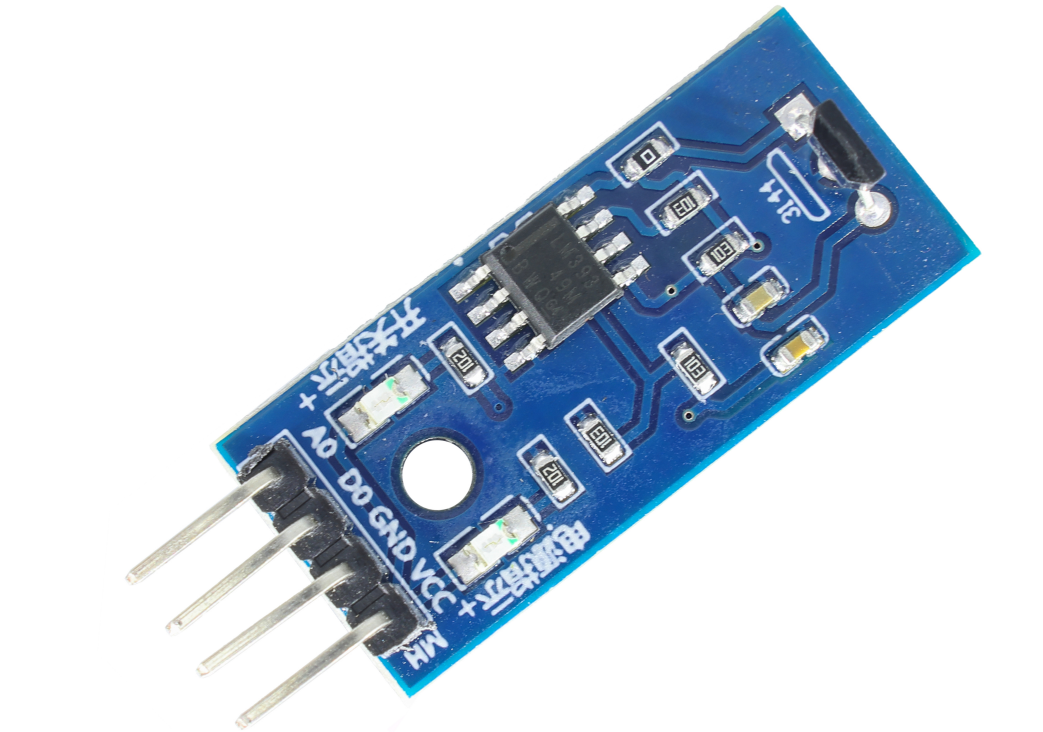
Electrical Parameters of the 3144 Hall Counting Sensor
| PARAMETER | SPECIFICATION |
|---|---|
| Operating Voltage | 3.3-5V DC |
| Core Sensor | 3144E Switch-Type Hall Sensor |
| Output Signal | Digital output (Low level when magnetic field is detected) |
| Output Type | Digital switch output (0 and 1), Analog AO port is invalid |
| Output Comparator | LM393 comparator |
| Drive Capability | > 15mA |
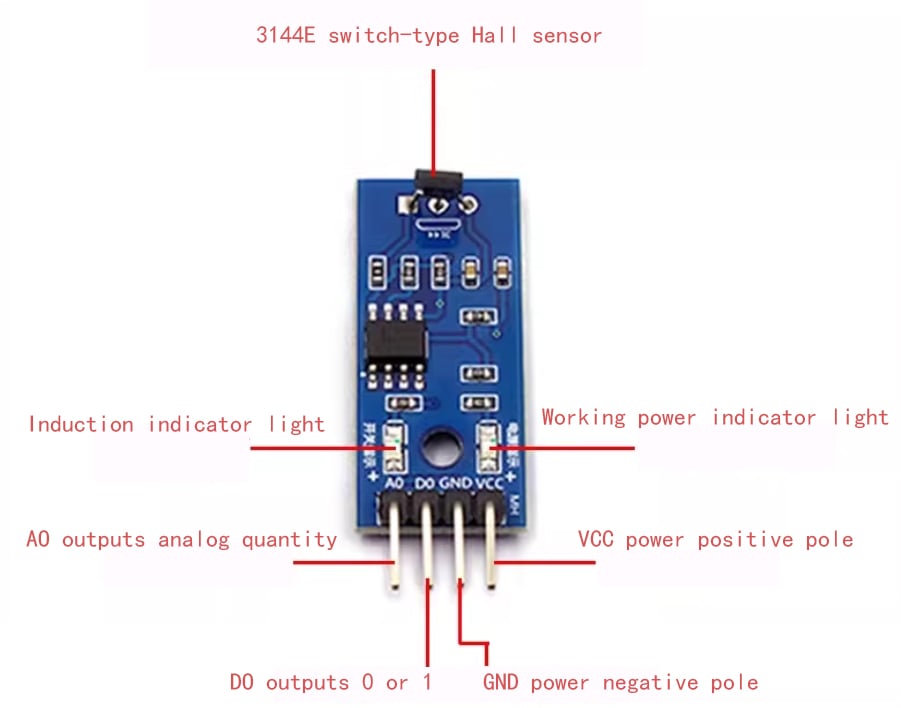
3144 Hall Effect Count Sensor Pinout
Wiring Instructions:
- VCC – Positive pole of power supply
- GND – Negative pole of power supply
- DO – TTL digital output
- AO – Analog output (different voltages are output at different distances)
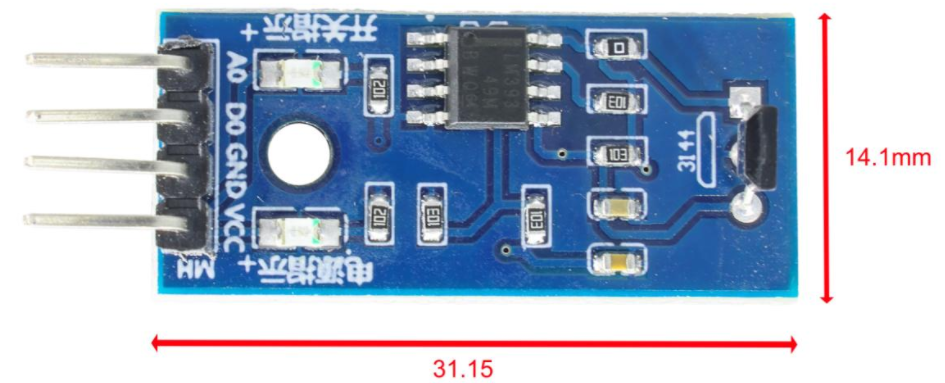
Size of Hall Effect count sensor
L*E*H: 31.15*14.1*9.67(mm)
FAQ
What is the difference between Hall effect sensor and magnetic sensor?
| Property / Characteristic | Hall Effect Sensor | Magnetic Sensor |
|---|---|---|
| Category | A specific type | Broad general term |
| Working Principle | Based on the Hall Effect: A voltage difference is generated across a conductor when current flows through it perpendicular to a magnetic field. | Various principles. Any technology that responds to a magnetic field qualifies. |
| Common Types / Examples | Only one: Sensors based on the Hall effect. | 1. Hall Effect Sensors 2. Reed Switches 3. Magnetoresistive (MR) Sensors |
| Output Signal | Primarily an analog voltage (proportional to field strength) or a digital switch signal. | Varies by type: Can be a switch (ON/OFF), analog voltage, or digital signal. |
| Key Difference | A technology category defined by how it detects (the Hall effect principle). | A functional category defined by what it detects (a magnetic field). |
Is a Hall effect sensor AC or DC?
Hall effect sensor typically requires a DC power supply to operate, but it can detect both DC and changing (AC) magnetic fields.
How do l know if my Hall effect sensor is bad?
The most direct signs that a Hall effect sensor is faulty are **no change in its output signal, an unstable signal, or abnormal voltage levels when a magnet is moved near or away from it, despite having proper power supply**. For example, when testing with a multimeter, a functioning sensor should show a clear jump in output voltage (e.g., from 5V sharply down to 0V or vice versa) as a magnet approaches. If the voltage shows no response, remains stuck at a high/low level, or fluctuates erratically, it indicates a likely sensor failure. In practical applications, this manifests as functional failures such as a motor failing to start, irregular speed, or counting errors.
What are the disadvantages of a Hall effect sensor?
The main disadvantages of Hall effect sensors include their short detection distance, typically requiring magnets to be close to the sensing surface; susceptibility to interference from external stray magnetic fields (e.g., from motors or speakers), which can cause false triggering or inaccurate signals; the need for an external power supply to operate, unlike mechanical switches that can detect static magnetic fields passively; and generally higher cost compared to simple mechanical switches (such as micro-switches or reed switches). Additionally, while their power consumption is low, ultra-low-power battery applications may require additional power management considerations.
Can a Hall Effect sensor detect metal?
A standard Hall effect sensor cannot directly detect most metals. It specifically detects magnetic fields, not metal itself. Therefore, it will only respond to metals that are ferromagnetic (like iron, steel, nickel, and cobalt) because these metals can distort or create a magnetic field. It will not detect non-ferrous metals such as aluminum, copper, or brass unless a magnet is attached to them. For detecting all types of metals, an inductive proximity sensor is a more suitable choice.
Are Hall-effect sensors analog or digital?
Hall-effect sensors can be either analog or digital, depending on their internal design and output signal. Analog Hall sensors provide a continuous voltage output that is directly proportional to the strength and polarity of the magnetic field they are exposed to. In contrast, digital Hall sensors (often called Hall switches) incorporate a Schmitt trigger, which causes their output to snap sharply to a high or low voltage state (ON or OFF) only when the magnetic field exceeds a specific threshold. Therefore, the choice between analog and digital depends entirely on the application’s requirement for either a precise field measurement or a simple switch-like function.