

Blog
Hardcore Teardown of the BMP280: How Does This Sensor Achieve Ultra-High-Precision Barometric Pressure Measurement?
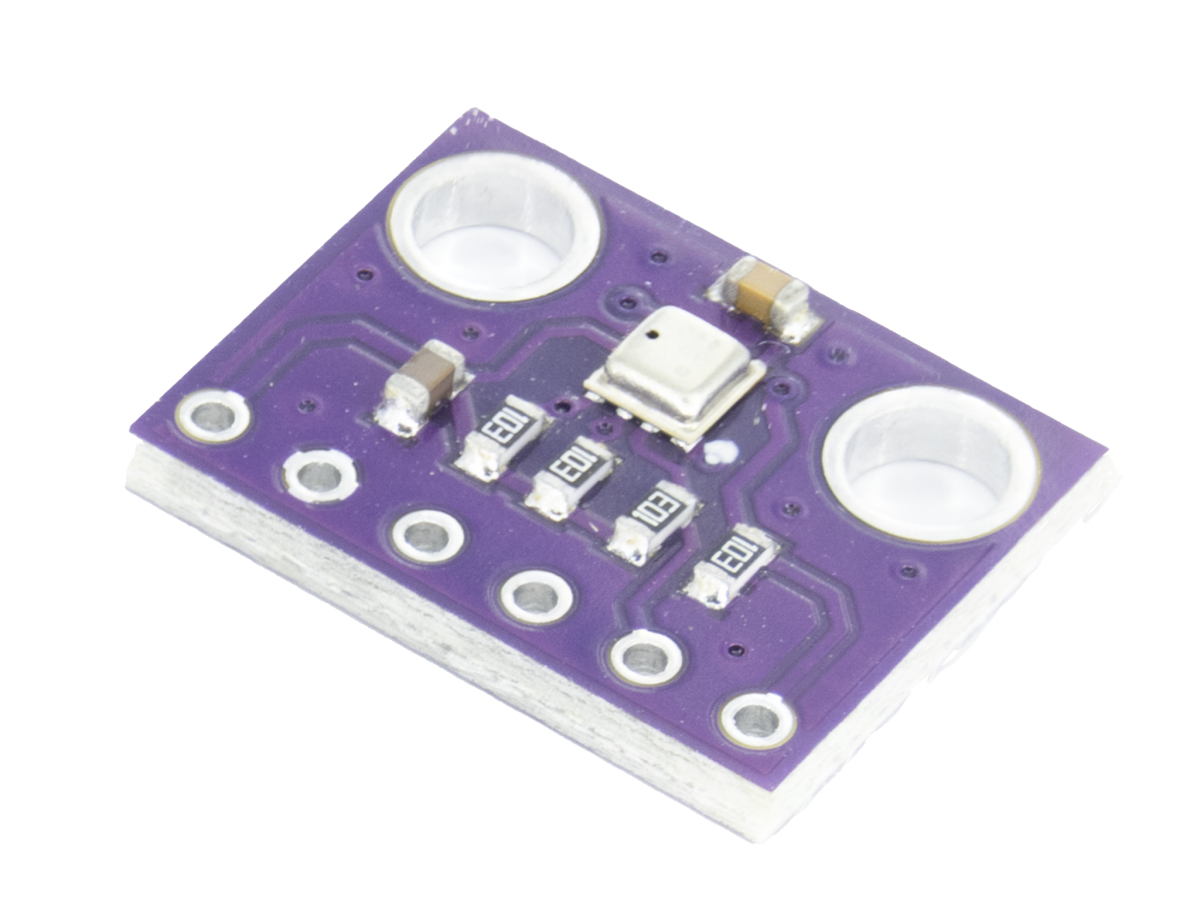
Recently, I discovered an extremely powerful module that integrates atmospheric pressure, temperature, and humidity detection, yet comes at a low price. Have you guessed what module it is? That’s right—it’s the BMP280 Barometric Pressure Sensor Module!
What is BMP280 Barometric Pressure Sensor Module?
The BMP280 Barometric Pressure Sensor Module is a basic module for detecting atmospheric pressure and temperature. Not only is it compact and easy to integrate into various embedded systems, but it also features ultra-low power consumption, making it ideal for scenarios requiring long-term operation with strict energy efficiency requirements. It boasts a wide measurement range, capable of accurately capturing tiny changes in atmospheric pressure while providing reliable temperature and humidity data, offering strong support for multiple fields such as meteorological monitoring, environmental control, and smart homes. The BME280 digital pressure sensor is an upgraded version of the BMP280, but the BMP280 still holds an important position in the market due to its excellent cost performance. It adopts advanced MEMS (Micro-Electro-Mechanical Systems) technology to ensure the accuracy and stability of measured data. Additionally, the BMP280 module supports both I2C and SPI communication protocols, simplifying connections with microcontrollers or other digital systems. Whether you’re a beginner or an experienced engineer, you can easily get started and quickly achieve real-time monitoring of atmospheric pressure, temperature, and humidity.
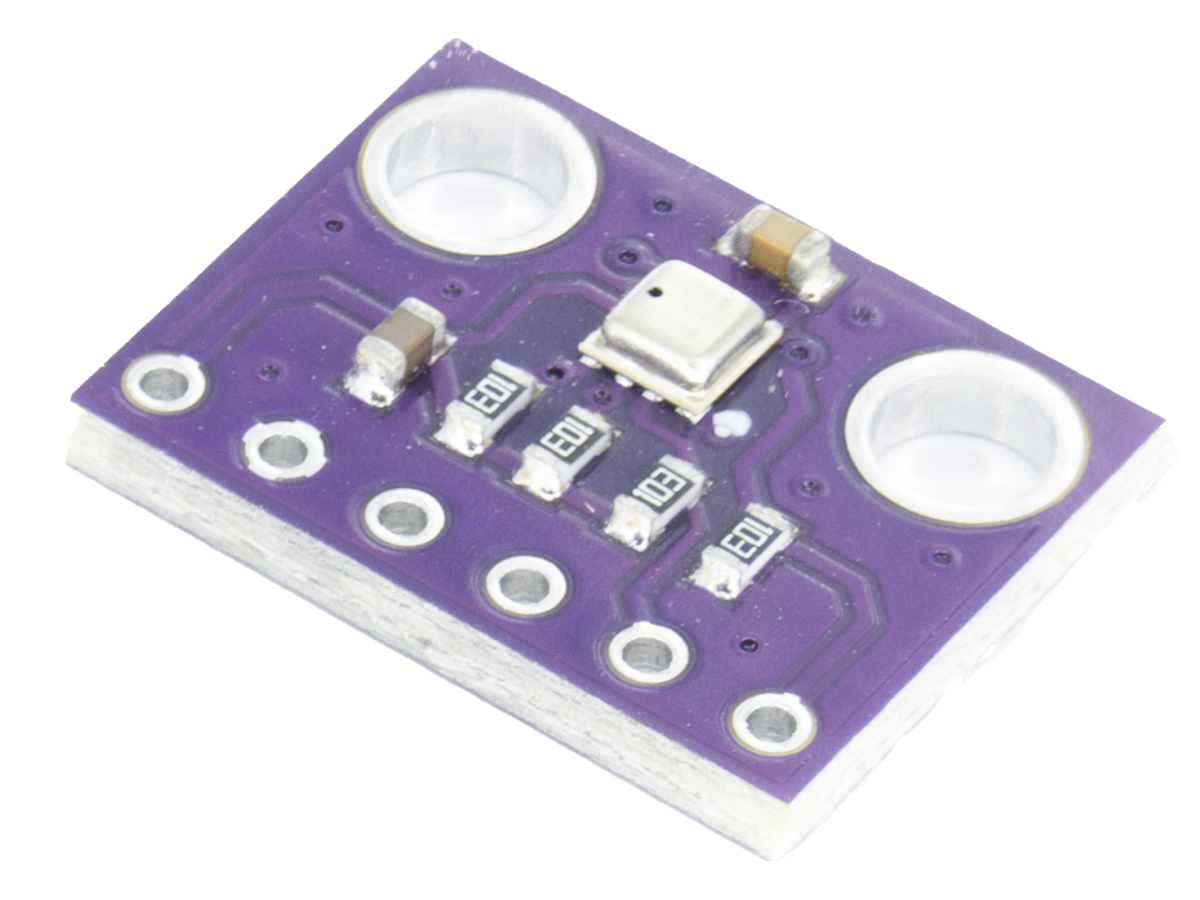
What is the working principle of BMP280 Barometric Pressure Sensor Module?
The core working principle of the BMP280 Barometric Pressure Sensor Module is based on the piezoresistive effect. When the external atmospheric pressure changes, the piezoresistive element inside the module (a tiny flexible film that bends when pressure changes) undergoes a corresponding change in resistance. This change has a definite functional relationship with atmospheric pressure. Through sophisticated circuit design, the BMP280 converts this resistance change into a measurable voltage signal, which is then processed and calibrated by an internally integrated microprocessor to finally output an accurate atmospheric pressure value. Meanwhile, the module also integrates temperature and humidity sensors, which use thermistor and capacitive sensing principles respectively to achieve accurate measurement of ambient temperature and humidity. These sensors work in conjunction with the piezoresistive element to provide users with comprehensive and precise environmental parameter data.

What are the advantages of BMP280 Barometric Pressure Sensor Module?
The BMP280 Barometric Pressure Sensor Module offers numerous notable advantages. Firstly, its high-precision measurement capability is impressive—it can detect extremely small pressure changes, which is crucial for fields with strict requirements for pressure data, such as weather forecasting and aviation. Secondly, the module exhibits excellent stability, consistently outputting accurate data even under complex and variable environmental conditions, reducing errors caused by environmental interference. Thirdly, the BMP280 module features high integration, combining atmospheric pressure, temperature, and humidity detection functions in one, greatly simplifying system design and lowering overall costs. Moreover, its low-power characteristic makes it outstanding in devices requiring long-term operation, such as outdoor weather stations and smart home systems—no frequent battery replacement or charging is needed for stable long-term performance. Finally, the BMP280 module is highly user-friendly, supporting both I2C and SPI communication protocols for easy connection with various microcontrollers or digital systems. Both novice developers and experienced engineers can quickly get started and implement its functions.
What are the application scenarios for the BMP280 Barometric Pressure Sensor Module?
The BMP280 Barometric Pressure Sensor Module has a wide range of applications. In meteorological monitoring, it can collect real-time, accurate atmospheric pressure, temperature, and humidity data to provide a reliable basis for weather forecasting, helping people prepare for severe weather in advance. In environmental control—for example, in industrial production workshops—monitoring these environmental parameters allows timely adjustment of ventilation, air conditioning, and other equipment to maintain a suitable production environment, ensuring product quality and production efficiency.
In smart home scenarios, the BMP280 module can be integrated into smart devices to automatically adjust indoor temperature and humidity based on indoor and outdoor environmental parameters, creating a comfortable living environment for users. Additionally, in agricultural planting, monitoring environmental parameters in greenhouses with this module enables precise control of irrigation, ventilation, and other operations, providing optimal conditions for crop growth and improving crop yield and quality. It also plays a role in outdoor sports equipment—for instance, when equipped with this module, mountaineering watches can display real-time altitude, atmospheric pressure, and other information, offering important references for climbers.
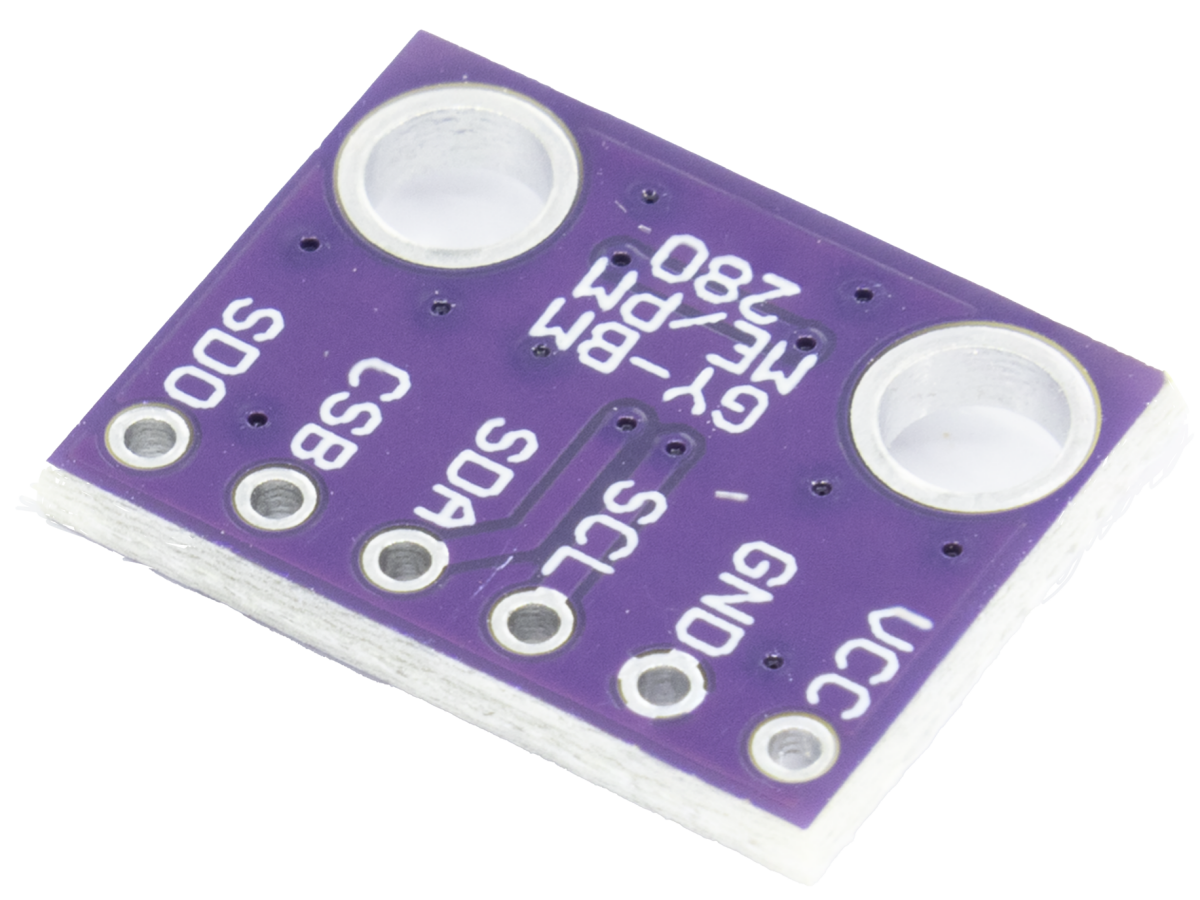
BMP280 Barometric Pressure Sensor Module pins
Pin | Function Description |
VCC | Positive power supply |
GND | Ground terminal |
SCL | I2C/SPI serial clock line |
SDA | I2C serial data line; also serves as 3-wire SPI serial data I/O port, 4-wire SPI serial data input port |
CSB | Chip select pin: High level (default) for I2C communication interface, low level for SPI communication interface |
SDO | I2C address selection bit; also serves as 4-wire SPI serial output port |
Comparison of BMP280 and BME280
Comparison Dimension | BMP280 | BME280 |
Core Functions | Measures only temperature and atmospheric pressure | Integrates temperature, atmospheric pressure, and relative humidity measurement |
Temperature Measurement Range | -40°C ~ +85°C | -40°C ~ +85°C |
Temperature Resolution | 0.01°C | 0.01°C |
Pressure Measurement Range | 300 ~ 1100 hPa | 300 ~ 1100 hPa |
Pressure Resolution | 0.16 Pa | 0.18 Pa |
Humidity Measurement | Not supported | 0 ~ 100% relative humidity, 0.008% resolution |
Package Size | 2.0×2.5×0.95 mm | 2.5×2.5×0.93 mm |
Power Consumption (1Hz sampling rate) | 2.7 μA (more energy-efficient) | 3.6 μA |
Core Application Scenarios | Drone altitude measurement, GPS-assisted positioning, industrial pressure monitoring, indoor navigation | Smart home HVAC, indoor air quality monitoring, agricultural greenhouse monitoring, weather stations |
Cost | Lower, high cost performance | Slightly higher (due to additional humidity detection module) |
Interface Type | Supports I2C and SPI digital interfaces | Supports I2C and SPI digital interfaces |
Physical Identification Feature | Second line of stamp marked “k” | Second line of stamp marked “u” |
Practical Notes | Stable pressure data, small temperature drift, suitable for relative altitude measurement | Humidity sensor is prone to dust contamination; install in a clean and ventilated environment |
The BME280 and BMP280 sensors are nearly identical, with the key difference being that the BME280 can measure humidity, while the BMP280 cannot. Most other parameters are the same.
BMP280 Datasheet and BME280 Datasheet
Here are the datasheets for the BMP280 and BME280 for your reference.
BMP280 Barometric Pressure Sensor Module Connected to Arduino
To connect the BMP280 to Arduino, let’s first discuss the wiring. Here’s how we’ll connect them:

Next, open the Arduino IDE. Before coding, install the library by searching for BMP280. You will find the “Adafruit BMP280 library”. Click ‘Install’ to prompt for all dependencies. Click ‘Install All’ to complete the installation.

Then you can refer to the code we provide
					#include <Wire.h>
#include <SPI.h>
#include <Adafruit_BMP280.h>
#define BMP280_ADDRESS 0x76
Adafruit_BMP280 bmp; // I2C
void setup() {
  Serial.begin(9600);
  while ( !Serial ) delay(100);   // wait for native usb
  Serial.println(F("BMP280 test"));
  unsigned status;
  status = bmp.begin(BMP280_ADDRESS);
  if (!status) {
    Serial.println(F("Could not find a valid BMP280 sensor, check wiring or "
                      "try a different address!"));
    Serial.print("SensorID was: 0x"); Serial.println(bmp.sensorID(),16);
    Serial.print("        ID of 0xFF probably means a bad address, a BMP 180 or BMP 085\n");
    Serial.print("   ID of 0x56-0x58 represents a BMP 280,\n");
    Serial.print("        ID of 0x60 represents a BME 280.\n");
    Serial.print("        ID of 0x61 represents a BME 680.\n");
    while (1) delay(10);
  }
  /* Default settings from datasheet. */
  bmp.setSampling(Adafruit_BMP280::MODE_NORMAL,     /* Operating Mode. */
                  Adafruit_BMP280::SAMPLING_X2,     /* Temp. oversampling */
                  Adafruit_BMP280::SAMPLING_X16,    /* Pressure oversampling */
                  Adafruit_BMP280::FILTER_X16,      /* Filtering. */
                  Adafruit_BMP280::STANDBY_MS_500); /* Standby time. */
}
void loop() {
    Serial.print(F("Temperature = "));
    Serial.print(bmp.readTemperature());
    Serial.println(" *C");
    Serial.print(F("Pressure = "));
    Serial.print(bmp.readPressure());
    Serial.println(" Pa");
    Serial.print(F("Approx altitude = "));
    Serial.print(bmp.readAltitude(1013.25)); /* Adjusted to local forecast! */
    Serial.println(" m");
    Serial.println();
    delay(2000);
}