

Blog
Master the LCR-T4 Transistor Tester in 3 Minutes
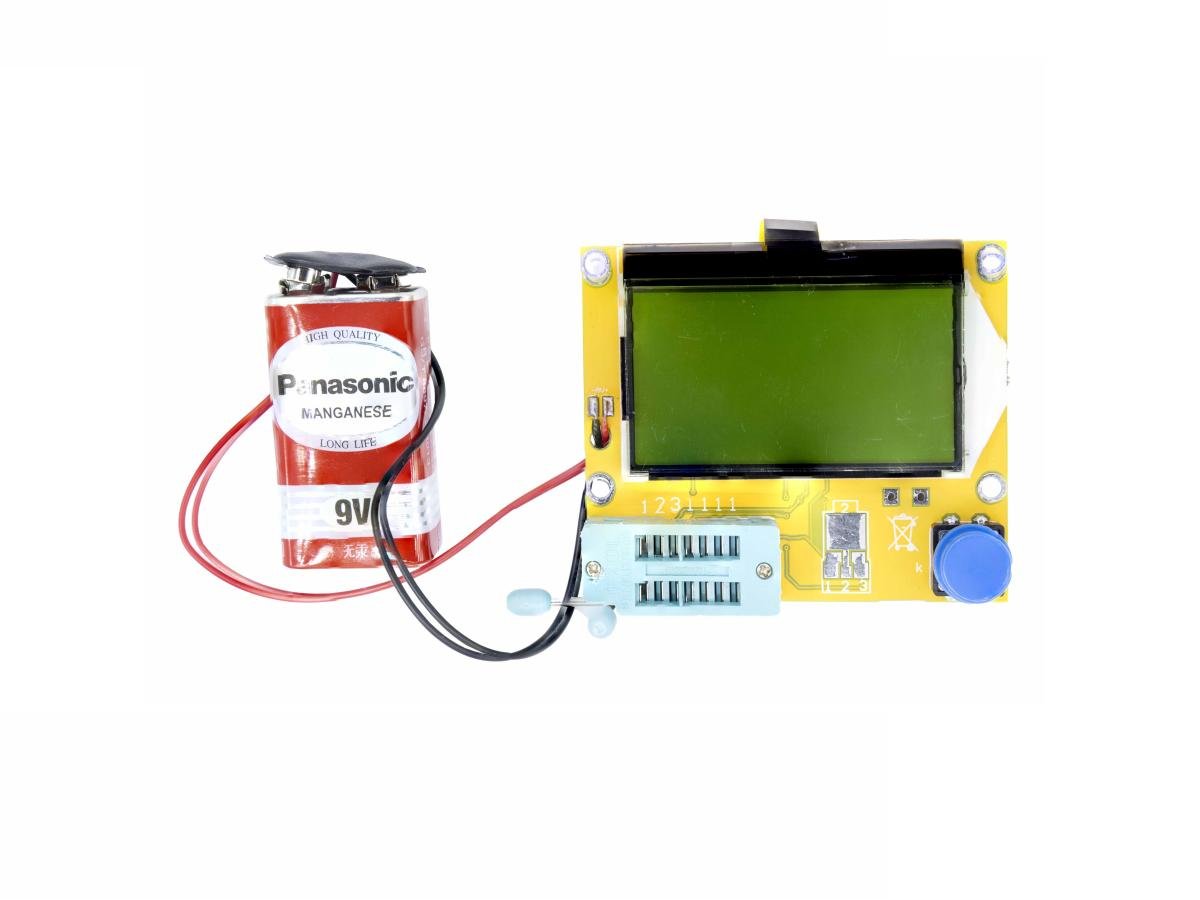
Can the LCR-T4 Transistor Tester Really Detect “Hidden Faults”? Revealing the Pocket Tool of Electronic Engineers!
Have you ever encountered circuit boards that break again after repair, or components that seem normal but always cause problems? Don’t worry, the LCR-T4 graphical transistor tester may be the “electronic microscope” you need. It can not only accurately measure resistance, capacitance and inductance, but also detect ESR (Equivalent Series Resistance) with one key, identify aged capacitors and poorly soldered chips, and even easily check the parameters of thyristors and transistors. The LCR-T4 transistor tester shines with its LCR-T4 firmware, especially in the Mega328-powered LCR-T4 Mega328 transistor tester version that quickly identifies components like a pro! This article takes you to fully understand the core principles, actual measurement capabilities and application scenarios of this portable tester, helping you avoid the trap of “false normality” and double your maintenance efficiency!
What is LCR-T4 Transistor Tester?
The LCR-T4 graphical multi-function tester is a practical testing device integrating multiple measurement functions. It is core-equipped with ATmega328 and can accurately test various electronic components such as resistors, capacitors, diodes, thyristors, inductors, triodes, and MOSFET, meeting the diverse needs of electronic enthusiasts, maintenance personnel and research personnel in daily testing. The LCR-T4 tester is equipped with a 12864 LCD display, which not only shows clearly and intuitively but also has a backlight design. The default backlight color is soft yellow-green, allowing easy reading of measurement data even in dimly lit environments, thus improving operational convenience. In terms of power supply, the device supports 9V stacked battery power supply, suitable for portable use scenarios. For long-term continuous power supply, you can also choose to use two lithium batteries to form a 8.4V battery pack, which can flexibly adapt to different usage requirements and provide stable power support for continuous detection.
LCR-T4 Schematic Diagram

LCR-T4 Analysis of the Core Functions
The true strength of the LCR-T4 lies in its ability to delve into the “inside of components” to see the essence. Let’s break down several key indicators.
- ESR Detection (Equivalent Series Resistance): This is crucial for judging the health of capacitors! When a capacitor ages, its internal electrolyte dries up, leading to a sharp rise in ESR. Ordinary multimeters cannot detect this “invisible killer”, but the LCR-T4 can display it in real time, allowing you to see through the trap of “apparent normality” at a glance.
- Transistor/Thyristor Testing: Supports parameter detection of common semiconductor devices such as NPN/PNP triodes, MOSFETs, IGBTs, and thyristors (SCR), including hFE (current amplification factor), on-state voltage, reverse breakdown, etc. Whether it is to determine if it is burned out or to evaluate performance degradation, it is clear at a glance.
- Wide-Range Measurement Accuracy: The typical parameter ranges are as follows:
Resistance: 0.1Ω ~ 50MΩ
Capacitance: 25pf ~ 100000uf
Inductance: 0.01mH ~ 20H
Test Frequency: Usually 1kHz or adjustable; some models support multi-frequency switching to adapt to different material characteristics.
These parameters cover more than 95% of daily electronic maintenance needs, and are especially suitable for troubleshooting high-frequency circuits, power modules, and filter circuits.
LCR-T4 Function
- One-key operation, automatic shutdown.
- Can detect components such as NPN and PNP transistors, N-channel and P-channel MOSFETs, diodes (including dual diodes), thyristors, triodes, resistors, inductors and capacitors.
- Automatically identify component pin arrangements.
- Measure bipolar transistor current amplification factor and base-emitter threshold voltage.
- Identify Darlington transistors through base-emitter threshold voltage and high current amplification factor.
- Can detect bipolar transistors and MOSFET protection diode.
- Measure gate MOSFET threshold voltage and gate capacitance.
- Can measure two resistors simultaneously and display resistor symbols. The right side shows a decimal value of 4. The resistor symbols on both sides display pin numbers. So you can measure potentiometers. If the potentiometer wiper is not moved to the extreme position, we can distinguish the middle and both ends of the pins.
- Resistance measurement resolution is 0.1 ohm, capable of measuring up to 50M ohms.
- Capacitance measurement range is 30pF-100mF with a resolution of 1pF.
- Capacitors above 2uF can measure the equivalent series resistance (ESR) value simultaneously. Both can be displayed with a decimal value, with a resolution of 0.01 ohms.
- Can display two diodes in the correct order and with diode symbols, and provide the diode forward voltage.
- LEDs are detected as diodes with higher forward voltage. LED combinations are identified as two diodes.
- Zener diodes with a reverse breakdown voltage below 4.5V can be identified.
- Can measure the reverse capacitance of a single diode. If a bipolar transistor is connected to the base and collector or emitter of the pins, it can measure the reverse capacitance of the collector or emitter junction.
- Single-measurement rectifier bridge connection can be obtained.
LCR-T4 Parameter
Battery | 9V | Inductor | 0.01mH ~ 20H |
Shutdown current | 20nA | Power consumption in shutdown mode | >20 nA |
Capacitor | 25pf ~ 100000uf | Microcontroller | ATmega328 |
Display screen | The LCR-T4 tester uses a 128*64 LCD screen (128 * 64 characters) | ||
Resistor | 0.1 ohm resolution, maximum 50 M ohms | ||
LCR-T4 Instrument Calibration
- When turning off the device, short-circuit the three test ports together with a wire.
- Press the test button to power on the device. It will display “self test mode”, and display a question mark on the second line. Immediately hold down the test button, and calibration will start automatically.
- The screen display will change continuously. When “T4 isolate Probe” appears, disconnect the short-circuit wire between the three test ports and continue the calibration.
- When “1-Ⅱ-3 >100nf” is displayed, connect a non-polar capacitor of more than 100 nf between test port 1 and port 3, and continue the calibration until it is completed.
LCR-T4 Usage Instructions

- First, insert the device to be tested into the instrument, then press the test start button. The LCR-T4 meter will automatically perform the test and display the test results.
- All test ports are labeled. When testing a 2-pin device, you can freely match pin positions of different numbers, such as 1-2, 1-3, and 2-3. If the device has polarity, the meter will automatically display polarity information.
- When testing a 3-pin device, the 3 pins of the device correspond one-to-one with the 1, 2, and 3 test ports of the meter, such as 1-2-3, 2-3-1, 3-2-1, etc.
LCR-T4 Notice
- Before using the device to measure the capacitor, please discharge the capacitor first.
- The ESR and Vloss of the capacitor are only displayed when they are valid.
- On or Off voltage of the FET must be less than 5V.
- If you feel there is a deviation in the instrument’s test value, please refer to the calibration steps for calibration. The debugging components shall be prepared by yourself.
LCR-T4 Demonstration
LCR-T4 Application Scenarios
- Electronic repair technicians/DIY enthusiasts: When you repair a radio but find the sound is intermittent, the LCR-T4 can quickly identify whether it is due to capacitor aging or resistor drift, eliminating the trial-and-error cost of blind replacement.
- University laboratories/vocational school training: When students conduct circuit experiments, they often fail due to deviations in component parameters. The LCR-T4 can be used as a teaching aid to help understand the difference between “ideal components” and “real components”.
- Electronic product quality inspectors: In mass production, conduct random inspections on key capacitors and resistors to ensure that the ESR does not exceed the standard and improve product reliability.
Note : Before use, it is necessary to short-circuit the test pen to zero. Avoid operating in environments with strong electromagnetic interference. When measuring SMD components, it is recommended to hold them with tweezers to prevent electrostatic damage.
The LCR-T4 transistor tester is not an “all-powerful device”, but it is indeed a dual-role tool of “scout” and “doctor” in your electronic world. It speaks with scientific data, helping you get rid of the misunderstanding of “repairing circuits by feeling” and truly achieve “visible, accurate measurement and fast repair”. Whether you want to improve your maintenance skills, complete teaching tasks, or simply love hands-on exploration, it is worth having. A good tool is not about being expensive, but about “being just usable”.
Relative Information
Purchase Link
FAQ
How to check transistor terminals?
When using the LCR-T4 tester to detect transistor terminals, first insert the transistor into the corresponding jacks according to its type (NPN/transistor or MOSFET/FET), such as the transistor jacks BCE or the FET jacks GDS. The tester will automatically identify the pin functions and display the type (e.g., NPN/PNP or N/P channel) and parameters (e.g., the hFE value of the transistor). If the normal pin correspondence and parameter values are displayed, the terminal functions are normal; if abnormal display or pin disorder occurs, there may be a fault. The operation is simple and the results are intuitive and reliable.
How to check d882 transistor?
When using the LCR-T4 tester to detect a D882 transistor, insert it into the NPN transistor jacks of the tester (aligning with the BCE positions). The tester will automatically display the current gain (hFE value) and identify the pin functions. If a normal hFE value (usually around 100-400) is displayed and the pins are correctly corresponding, the D882 is intact; if the display is abnormal or there is no reading, it may be damaged. This method is fast and accurate, and can verify its amplification performance simultaneously.
How to test a fet transistor?
When using the LCR-T4 tester to detect a field-effect transistor (FET), simply insert the transistor into the corresponding G, D, S slots according to its package. After power-on, the tester will automatically display the N-channel or P-channel type and identify the function of each pin. If the normal channel type is displayed and the pins are correctly identified, the transistor is basically intact; if “Defective” is displayed or the pins are disordered, the transistor may be damaged. This tester is simple and intuitive to operate, and can quickly determine the quality of the FET and the definition of its pins.
What is an LCR meter?
An LCR meter can measure inductance (L), capacitance (C), and resistance (R).
What do L, C, and R stand for in an LCR circuit?
It is the current allowed to pass through in the circuit. R is the equivalent resistance of the combination of power supply, load and components. L is the inductance of the inductive component. C is the capacitance of the capacitive component.