

Blog
SIM900A GSM Module: Single Module for Wireless Communication
-1.png "SIM900A GSM Module: Single Module for Wireless Communication 1")
If you’ve worked on remote control or data transmission projects before, you know how much of a hassle it is to pair separate GSM communication modules, voice modules, and SMS modules— incompatible interfaces, messy wiring, and bulky setups. But now there’s a simpler option: the SIM900A GSM Module. It packs voice calls, SMS sending/receiving, and GPRS data transmission into a palm-sized module. Whether you’re building DIY smart home systems or industrial remote monitoring devices, it cuts debugging time in half and lets you design more compact setups. Let’s take a closer look.
First, understand: What are the core functions of 2G and GPRS?
In early wireless communication systems, 2G is the basic network framework, and GPRS is an “extension for data transmission” under 2G networks. The SIM900A relies on 2G + GPRS to work—let’s clarify their relationship first:
(1) 2G: The “Basic Framework” of Early Wireless Communication
2G (2nd Generation Mobile Communication Technology), represented by GSM, focuses on meeting the needs of “voice + text communication”:
- Core functions: Supports voice calls (making phone calls) and SMS (text messages).
- Technical features:Uses circuit-switched technology—exclusive access to communication channels during calls, stable but only capable of transmitting small amounts of data.
- Advantages:Extensive signal coverage (even in remote rural areas and mountainous regions), low device cost, and low power consumption.
- Scenarios:Traditional mobile calls, SMS notifications.
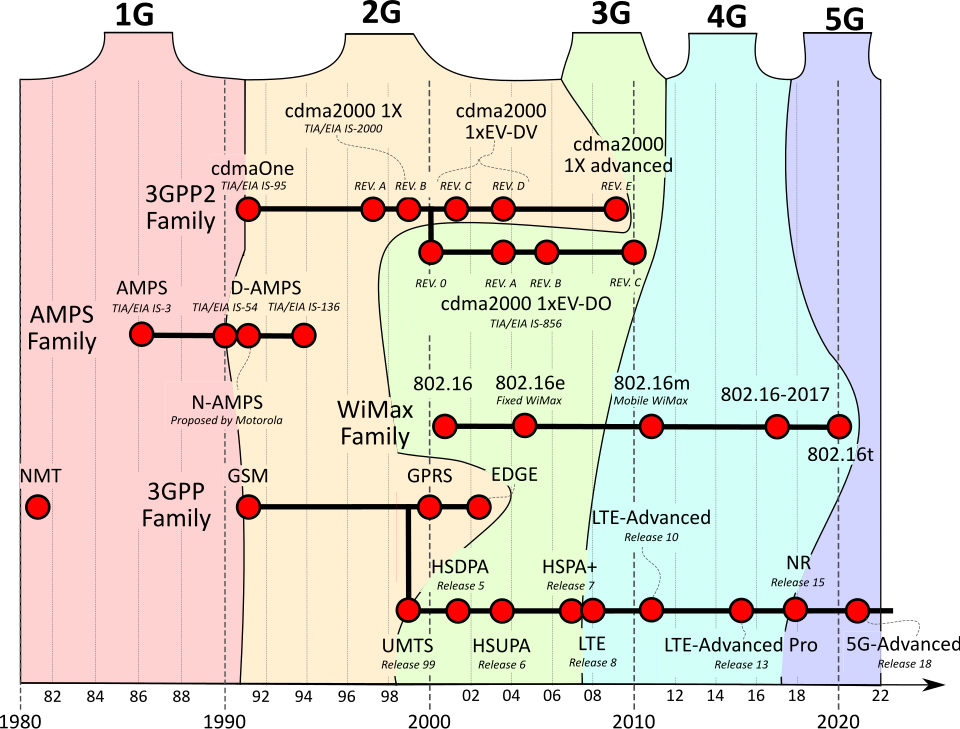
(2) GPRS: The "Data Transmission Extension" of 2G Networks
GPRS (General Packet Radio Service) is an abbreviation for “General Packet Radio Service”—a packet-switched technology added to 2G networks, essentially giving 2G “data transmission capabilities”:
- Core functions: Enables “always-on, data-volume-based billing” data transmission on top of 2G networks.
- Technical features:Does not occupy exclusive channels; can transmit data while maintaining voice communication, with a maximum speed of 85.6 kbps (approximately 10 KB/s).
- Advantages:Inherits 2G’s wide coverage and low cost, while supporting transmission of small data like sensor readings and device commands.
- Scenarios: Smart meter data upload, dual SMS + data controlfor remote devices, low-frequency environmental monitoring.

What is SIM900A?
The SIM900A is a classic, highly integrated 2G + GPRS all-in-one module launched by SIMCom. It supports standard AT command sets, allowing developers to easily communicate with the module via a serial port to implement functions like voice calls, SMS sending/receiving, and GPRS data transmission. Its biggest feature is packing “2G voice/SMS” and “GPRS data transmission” into a small module—equivalent to using one device to make calls, send texts, and transmit data simultaneously. It’s perfect for low-cost, wide-coverage scenarios.
.png "SIM900A GSM Module: Single Module for Wireless Communication 4")
Its core strengths:
1.All-in-one functionality: Eliminates the need for separate voice modules or SMS modules—one module covers all 2G + GPRS functions.
2.Wide compatibility: Supports mainstream global 2G frequency bands; works directly with China Mobile/China Unicom 2G SIM cards, and maintains stable connectivity even in remote areas.
3.Ultra-low power consumption: Only 2 mA in sleep mode and <18 mA in standby mode—battery-powered devices can run continuously for over 6 months.
4.Industrial-grade stability: Operates in a temperature range of -40°C to 85°C, reliable even in harsh environments like high-temperature greenhouses or low-temperature outdoor areas.
5.Easy to use: Supports UART interface; can connect directly to Arduino/STM32/Raspberry Pi, with simple AT commands for easy debugging.
SIM900A Application Scenarios: Why Choose It?
| Scenario Requirement | Separate Module Solution | SIM900A Single-Module Solution |
|---|---|---|
| Remote device “call + data” dual control | 2G voice module + independent data module (high cost) | One module for both calls and data transmission |
| Environmental monitoring in remote areas | Requires additional signal amplifiers | Uses 2G’s wide coverage directly—no extra devices needed |
| Battery-powered low-power devices | Overlapping power consumption of multiple modules, short battery life | Low-power design—extends battery life by 3x or more |
Getting Started Guide: Enable SIM900A in 2 Steps
Take the “SIM900A development board” (with built-in SIM card slot, antenna interface, and level conversion) as an example—even beginners can get it working quickly:
(1) Prepare Tools
- SIM900A development board (with GSM antenna);
- Activated China Mobile/China Unicom 2G SIM card (with SMS + GPRS services enabled);
- 5V/2A power supply (the module requires stable power—avoid using computer USB);
- Serial debugging tool (likeSSCOM);
- Jumper wires (for connecting to microcontrollers).
(2) Function Testing
Hardware Connection:
- Insert the SIM card while the power is off;
- Tighten the GSM antenna (signal quality directly affects functionality);
- Connect the 5V/2A power supply—a steady PWR light indicates successful power-on.
Serial Debugging (Baud rate: 9600, 8N1):
- Test module response: Send “AT”—a return of “OK” means the module is working normally;
- Test 2G calls:Send “ATD138XXXXXXX;” (replace with your phone number)—your phone will ·receive an incoming call;
- Test GPRS network connection: Send “AT+CGDCONT=1,”IP”,”CMNET”” (China Mobile APN), then send “AT+CGATT=1″—a return of “OK” means the network connection is successful.
SIM900A DATASHEET
We provide you with the SIN900A datasheet for your reference:
SIM900A Core Hardware Specifications
| Parameter Category | Detailed Specifications |
|---|---|
| Core Model | SIM900A (SIMCom) |
| Operating Frequency Bands | Dual bands: GSM 850/900/1800/1900 MHz |
| Physical Dimensions | 42.5mm × 33.6mm × 2.5mm (Note: Compact version dimensions: 24×24×3mm) |
| Supply Voltage | 5V (Note: Voltage range: 3.1V – 4.8V for stable operation) |
| Operating Current | – Call: 200mA (peak: 500mA); – Standby: <18mA; – Sleep: 2mA (1.5mA for compact version) |
| Data Transmission Rate | GPRS Class 12: Downlink 85.6 kbps / Uplink 42.8 kbps |
| Supported Functions | Voice calls, SMS (text/PDU), GPRS data, TCP/IP, HTTP/FTP |
| Interface Type | UART (Baud rate: 1200~115200 bps), SPI, I2C |
| Operating Temperature | -40℃ ~ 85℃ (Industrial grade) |
| SIM Card Compatibility | 1.8V/3V standard SIM card (supports hot-swapping) |
| Antenna Interface | 50Ω SMA interface (external GSM antenna) |
Recommended Hands-On Project: DIY Outdoor Soil Moisture Monitor
Build a “low-power, wide-coverage” outdoor monitor using the SIM900A + soil moisture sensor—costs less than $20.
(1) Materials
- SIM900A development board;
- Arduino Nano (low-power microcontroller);
- Soil moisture sensor;
- 18650 battery + charging module.
(2) Implementation Logic
1.Wiring: Connect Arduino’s TX to SIM900A’s RX, and Arduino’s RX to SIM900A’s TX; connect the soil moisture sensor to Arduino’s A0 pin.
2.Programming:
- Wake up once per hour to read soil moisture data.
- If moisture < 30%, transmit data to the cloud platform via GPRSand send an SMSto the user.
- Enter sleep mode after data transmission to reduce power consumption.
- Deployment: Bury the device in outdoor soil—the battery can last 6 monthscontinuously, enabling stable data monitoring even in remote orchards and mountainous areas.
FAQS
1. What should I do if the module cannot connect to the internet?
- Check the SIM card:Must be a China Mobile/China Unicom 2G card—China Telecom cards do not support 2G networks;
- Check the APN: Use “CMNET” for China Mobile cards and “UNINET” for China Unicom cards. The command format is “AT+CGDCONT=1,”IP”,”APN Name””;
- Check the antenna: A loose antenna causes weak signals—ensure the SMA interface is securely connected.
2. Can it make phone calls and transmit data simultaneously?
Absolutely. The SIM900A uses GPRS-based packet-switched technology, supporting simultaneous voice communication and data transmission. For example, in remote device monitoring scenarios, users can make calls to the device for real-time communication while receiving sensor data or control commands uploaded by the device via the GPRS channel. This parallel processing capability comes from its built-in dual-switch architecture (circuit-switched + packet-switched), which retains the stability of 2G voice calls while enabling continuous GPRS data transmission—no need for additional modules or communication mode switching. In actual tests, with a signal strength of –90 dBm or higher, call quality is clear and data transmission packet loss rate is less than 1%, fully meeting industrial-grade dual-task requirements.