

Blog
VL53L0X Module Deep Dive: Mastering the Core Logic of Laser Ranging
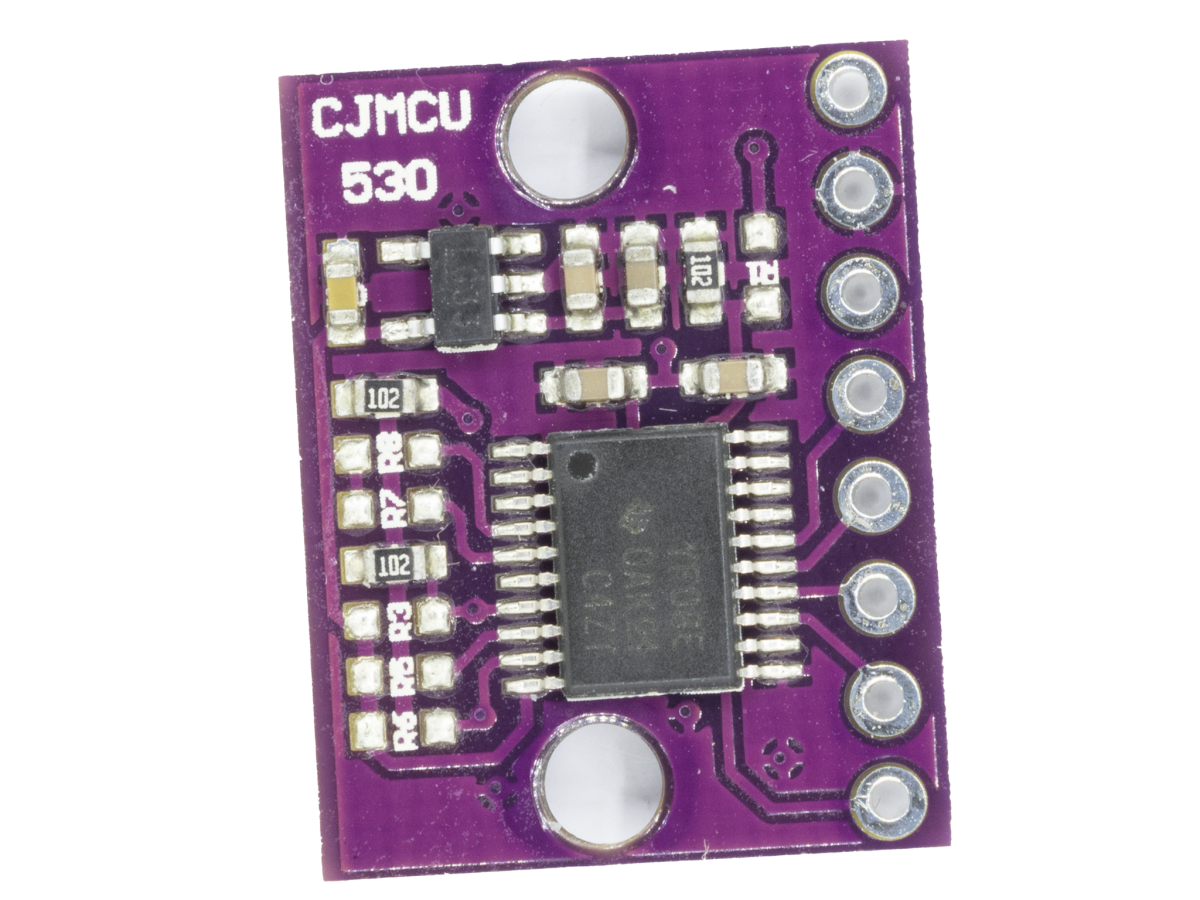
When intelligent robots need to avoid obstacles, automatic sensor doors need to detect approaching people, and drones need to maintain a stable altitude, they all require “eyes” that can “perceive distance” — the VL53L0X laser rangefinder module is just such a “micro visual sensor”. With its thumbnail-sized volume and millimeter-level measurement accuracy, it has become a “spatial perception tool” in the fields of consumer electronics, robotics, and industrial automation. Today, we will break down this Time-of-Flight (ToF) rangefinder module, understand its advanced functions from the perspectives of principle and basic usage, and help you master “laser distance measurement”.
What is VL53L0X Laser Rangefinder Module?
The VL53L0X laser rangefinder module is a high-precision distance-measuring sensor based on the Time-of-Flight (ToF) principle. Its core components include a VCSEL laser emitter, a Single-Photon Avalanche Diode (SPAD) receiving array, and a dedicated processing chip. The module emits invisible 940nm laser pulses, measures the time difference between the emission and reflection-reception of photons, and calculates the target distance by combining the constant speed of light. It has a measurement range of 0-2000mm, with a repeat accuracy error controlled within ±3mm. Its unique multi-region coverage mode can output distance data of 9 measurement regions simultaneously, providing stronger obstacle recognition capabilities in complex environments.
What is the working principle of VL53L0X Laser Rangefinder Module?
The core reason why this small module can accurately calculate distance lies in the “Time-of-Flight (ToF)” technology: “measuring the round-trip time of laser to calculate distance”.
- The Moment of Laser “Transmission-Reception”
The VL53L0X integrates two key components internally:
- VCSEL Laser: Emits a 940nm infrared laser pulse (safe for human eyes);
- SPAD Array: Single-Photon Avalanche Diode, which can capture the weak laser signal reflected back.
- The “Mathematical Formula” for Distance
The speed of light is a known constant (approximately 3×10⁸m/s). The module records the time difference (t) between “laser emission and reception”, and then calculates the distance using the formula: Distance = (Speed of Light × Time Difference) / 2(The division by 2 is because the laser travels two paths: “going to the target + returning from the target”.)
For example: If the laser takes 13.3ns (nanoseconds) for the round trip, the corresponding distance is (3×10⁸ × 13.3×10⁻⁹) / 2 = 2 meters.
- Intelligent “Noise Reduction”: Measuring Only the Target Object
Ambient stray light can interfere with measurements, but the VL53L0X’s “signal processing black technology” can filter out noise:
- It marks the laser emitted by itself through “pulse coding” and only identifies the reflected signals that match the coding;
- The built-in algorithm eliminates long-distance clutter to ensure that the distance of the target object is output.
What are the core advantages of the VL53L0X?
- Ultra-Miniature: The module size is only about 15×10mm, which can be easily embedded in small devices such as mobile phones and robots, making it the first choice for compact equipment;
- Low Power Consumption: The working current is only 5-20mA, suitable for battery-powered portable devices;
- High Precision: The measuring range is 3cm-2m(can be extended to 4m in some optimized scenarios), with an accuracy of±3%, and the error within 1 meter is only a few millimeters;
- Easy Integration: It communicates through the I2C interface, and only 4 wires are needed to connect to a microcontroller/development board;
- Immunity to Ambient Light Interference: The infrared laser (940nm, invisible to the human eye) is resistant to strong light and can work stably even in sunlight;
- No Restriction on Reflective Objects: It has good compatibility with reflective materials such as paper and metal (only black light-absorbing materials will slightly affect accuracy);
- Fast Response: The maximum measurement speed is 15 framesper second, which can track moving objects in real time.
What is the range of the vl53lox sensor?
The measurement range of the VL53L0X laser rangefinder module covers 0–2000mm. In conventional application scenarios, it can achieve accurate distance measurement of 3cm–2m, and can even be extended to 4m in some optimized scenarios. Its repeat accuracy error is strictly controlled within ±3mm, and it can provide stable and reliable distance data whether for static object measurement or dynamic target tracking. This combination of wide range and high precision enables it to meet the short-distance detection needs of consumer electronic devices and also be competent for medium-distance spatial perception tasks in industrial automation scenarios.
What are the application scenarios for the VL53L0X Laser Rangefinder Module?
Thanks to its many advantages, the VL53L0X has a wide range of application scenarios, covering almost all fields that “require spatial perception”:
- Consumer Electronics: Mobile phone screen-off during calls, automatic lid opening of smart toilets;
- Robotics/Drones: Obstacle avoidance for small cars (steering), anti-collision for sweeping robots, altitude holding for drones;
- Industrial Automation: Material detection in production lines, packaging thickness measurement, automatic door sensing.
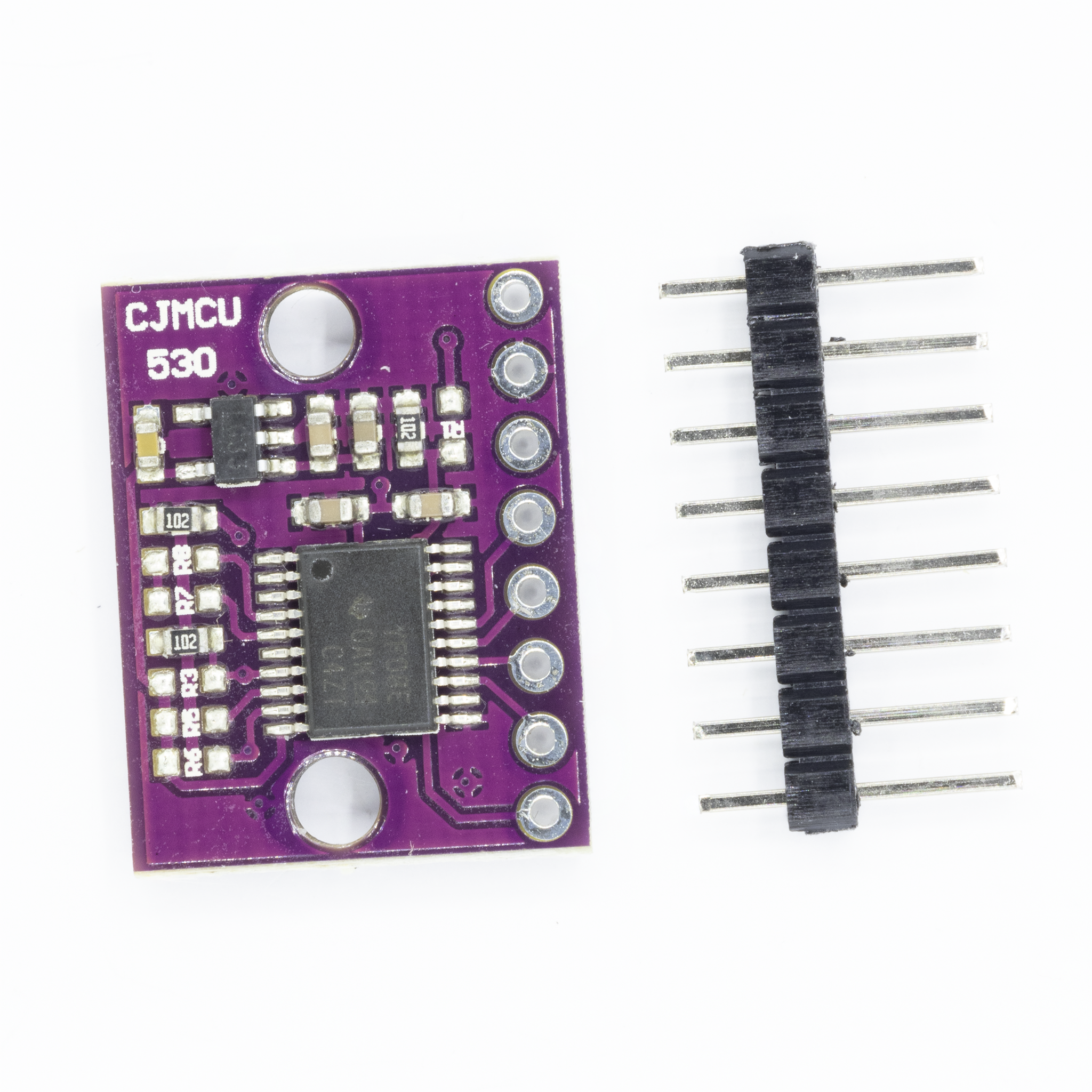
VL53L0X Laser Rangefinder Module pins
Pin Label | Function Description | Common Scenarios |
VCC | Positive power supply | Connect to 3.3V/5V (module has built-in voltage regulation) |
GND | Negative power supply | Connect to the GND of the development board |
SCL | I2C clock line | Connect to Arduino A5, ESP32 GPIO22, etc. |
SDA | I2C data line | Connect to Arduino A4, ESP32 GPIO21, etc. |
DNC | No-connect pin | No wiring required |
GN2 | Address switching pin | Address is 0x29 when grounded; address is 0x2A when connected to VCC (multiple modules can be connected simultaneously) |
XSH | Reset pin | Low level resets the module (connect to VCC by default) |
INT | Interrupt output pin | Outputs a level signal when measurement is completed/distance triggers the threshold |
Product Parameter Sheet for VL53L0X Laser Rangefinder Module
Parameter Category | Specification of VL53L0X Laser Rangefinder Module |
Power Supply | 3-5V power supply |
Communication Method | I2C, 3-5V |
Measurement Range | Absolute measurement range up to 2m |
Working Current | Working current is only 5-20mA |
VL53L0X Laser Rangefinder Module datasheet
Here is the datasheet for the VL53L0X laser ranging module for your reference:
VL53L0X Laser Rangefinder Module Connected to Arduino
Now let’s connect the VL53L0X laser ranging module to the Arduino to test its performance. First, let’s check the wiring:
VL53L0X Pin | Arduino Pin (Uno/Nano/Mega) | Description |
VCC | 3.3V (mandatory) | The sensor only supports 3.3V power supply |
GND | GND | Common ground |
SDA | A4 (Uno/Nano) / 20 (Mega) | I2C data pin |
SCL | A5 (Uno/Nano) / 21 (Mega) | I2C clock pin |
XSHUT (optional) | Any digital pin (not used in code) | Hardware reset/address switching, not involved in the code |
GPIO1 (optional) | No wiring (not used in code) | Interrupt output, not used in the code |
Sample code
					void setup()
{
  Serial.begin(9600);
  Wire.begin();

  sensor.init();
  sensor.setTimeout(500);

#if defined LONG_RANGE
  // lower the return signal rate limit (default is 0.25 MCPS)
  sensor.setSignalRateLimit(0.1);
  // increase laser pulse periods (defaults are 14 and 10 PCLKs)
  sensor.setVcselPulsePeriod(VL53L0X::VcselPeriodPreRange, 18);
  sensor.setVcselPulsePeriod(VL53L0X::VcselPeriodFinalRange, 14);
#endif

#if defined HIGH_SPEED
  // reduce timing budget to 20 ms (default is about 33 ms)
  sensor.setMeasurementTimingBudget(20000);
#elif defined HIGH_ACCURACY
  // increase timing budget to 200 ms
  sensor.setMeasurementTimingBudget(200000);
#endif
}

void loop()
{
  Serial.print(sensor.readRangeSingleMillimeters());
  if (sensor.timeoutOccurred()) { Serial.print(" TIMEOUT"); }

  Serial.println();
}