

Blog
A Simple Reverse Polarity Protection Module Using a Diode
Introduction
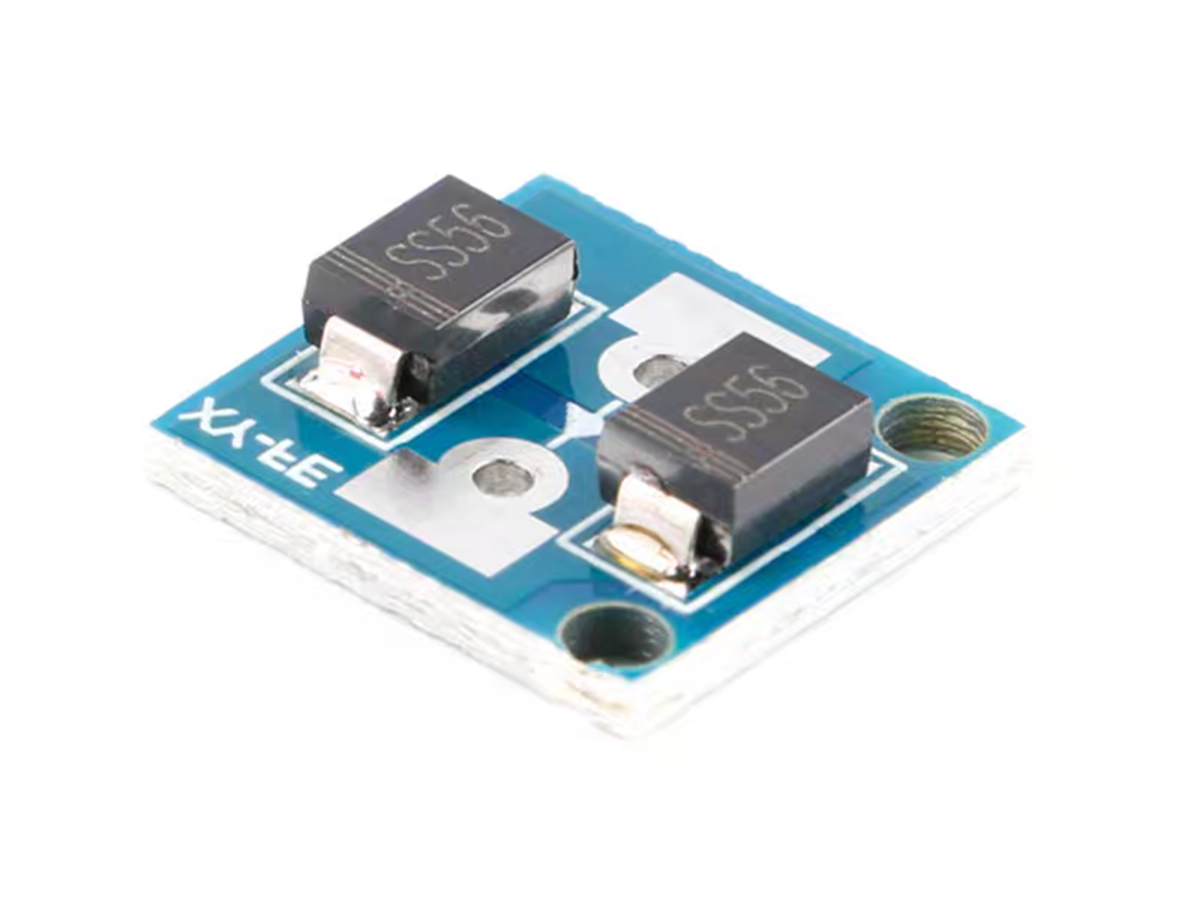
A reverse connection protection diode is an important component used to protect electronic circuits from the negative effects of reversed power supply connections. When the power is reversed, the direction of current will be inconsistent with the design, potentially damaging components in the circuit. To prevent this, the reverse connection protection diode plays a crucial role. This article will introduce a common reverse connection protection diode module (as shown in the image), explaining its working principle, applications, advantages and disadvantages, and how to use it correctly.
Working Principle of Reverse Connection Diodes
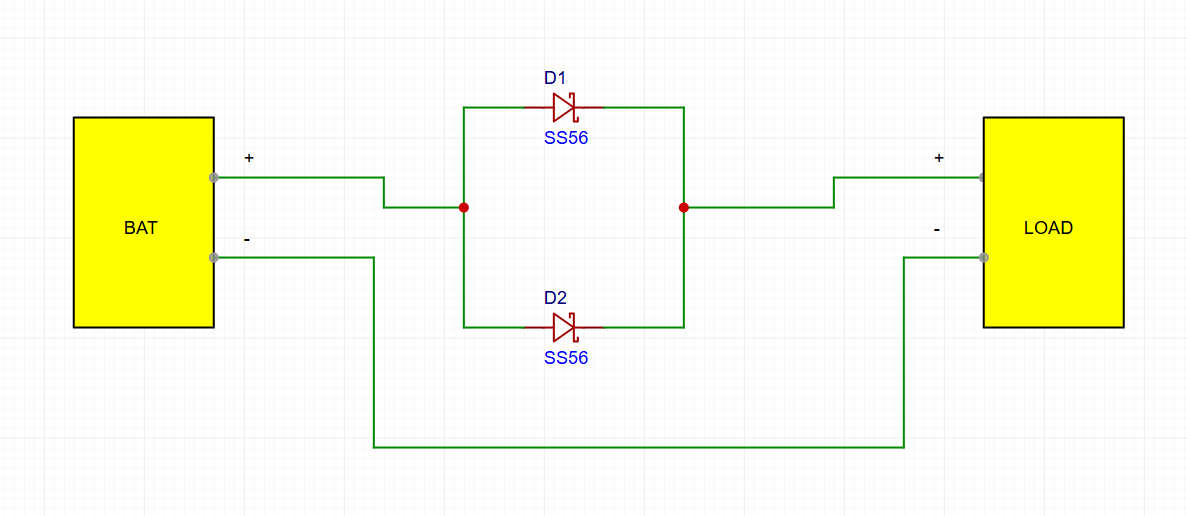
A diode is a component with unidirectional conductive properties. It allows current to flow from the anode to the cathode, but if the direction of current is reversed, the diode will be in a non-conductive state and will not conduct. A reverse connection protection diode uses this property to protect the circuit. When the power supply is reversed, the diode’s reverse characteristic blocks the current from flowing into the circuit, preventing damage to other components.
Structure and Components of the Reverse Connection Protection Diode Module
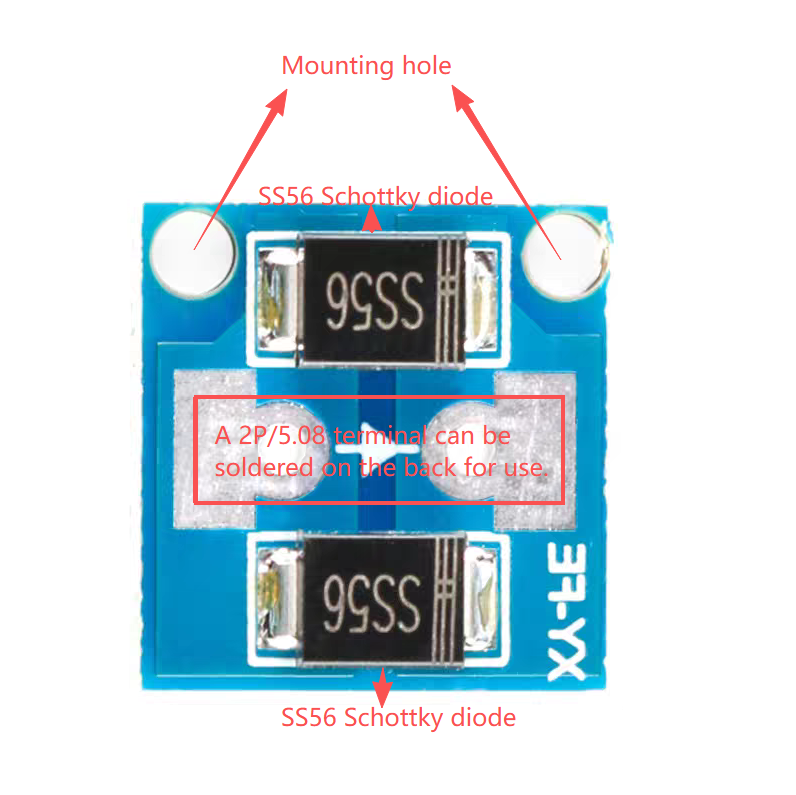
● This reverse connection protection diode module contains several key components:SS56 Schottky Diodes: Schottky diodes have a low forward voltage drop and fast response speed, making them ideal for reverse connection protection. The SS56 is a commonly used model, widely applied in low-voltage applications.
●Soldering Holes and Terminals: A 2P/5.08 terminal can be soldered on the back of the module, allowing for easy connection to power lines or other components.
Applications of the Reverse Connection Protection Diode Module
The reverse connection protection diode module plays an important role in many electronic devices, especially in battery-powered systems. Reversing the battery connections can lead to device damage, and the protection diode can effectively prevent this issue. In addition, the module can be widely used in protecting power interfaces, ensuring that devices are not damaged in case of power reversal.
How to Use the Reverse Connection Protection Diode Module
1. Using the reverse connection protection diode module is simple. Here are the installation steps:Connect the Power Lines: Connect the positive and negative terminals of the module to the corresponding ports on the power supply.
2.Solder the Terminal: If needed, solder a 2P/5.08 terminal on the back of the module for connecting to other components in the circuit.
3.Check the Circuit Connections: Ensure all connections are correct and perform a power-on test to confirm that the protection function of the module works effectively.
Advantages and Disadvantages of the Reverse Connection Protection Diode Module
Advantages:
- Low Cost: Compared to other protective circuits, the reverse connection protection diode is relatively inexpensive.
- Easy Installation: The module is designed simply and can be easily integrated into various circuits.
- Strong Protection: It effectively prevents circuit damage caused by power reversal.
Disadvantages:
- Current Limitation: In some high-power applications, the diode may limit the flow of current, affecting the performance of the circuit.
- Limited Application Scope: It is only suitable for situations where protection against power reversal is needed, and not applicable for other types of circuit protection.
Precautions and Common Issues
- Common connection errors when using the reverse connection protection diode module include:Reverse Connection: Ensure that the positive and negative terminals of the module are connected correctly, or it won’t provide effective protection.
- Excessive Current: While the reverse connection protection diode is suitable for low-power devices, high-power applications require attention to current limitations.
- Module Damage: After prolonged use, the module may be damaged, so it is important to regularly check the condition of the module.