

Blog
Basic Introduction to Buck-Boost Converter Module
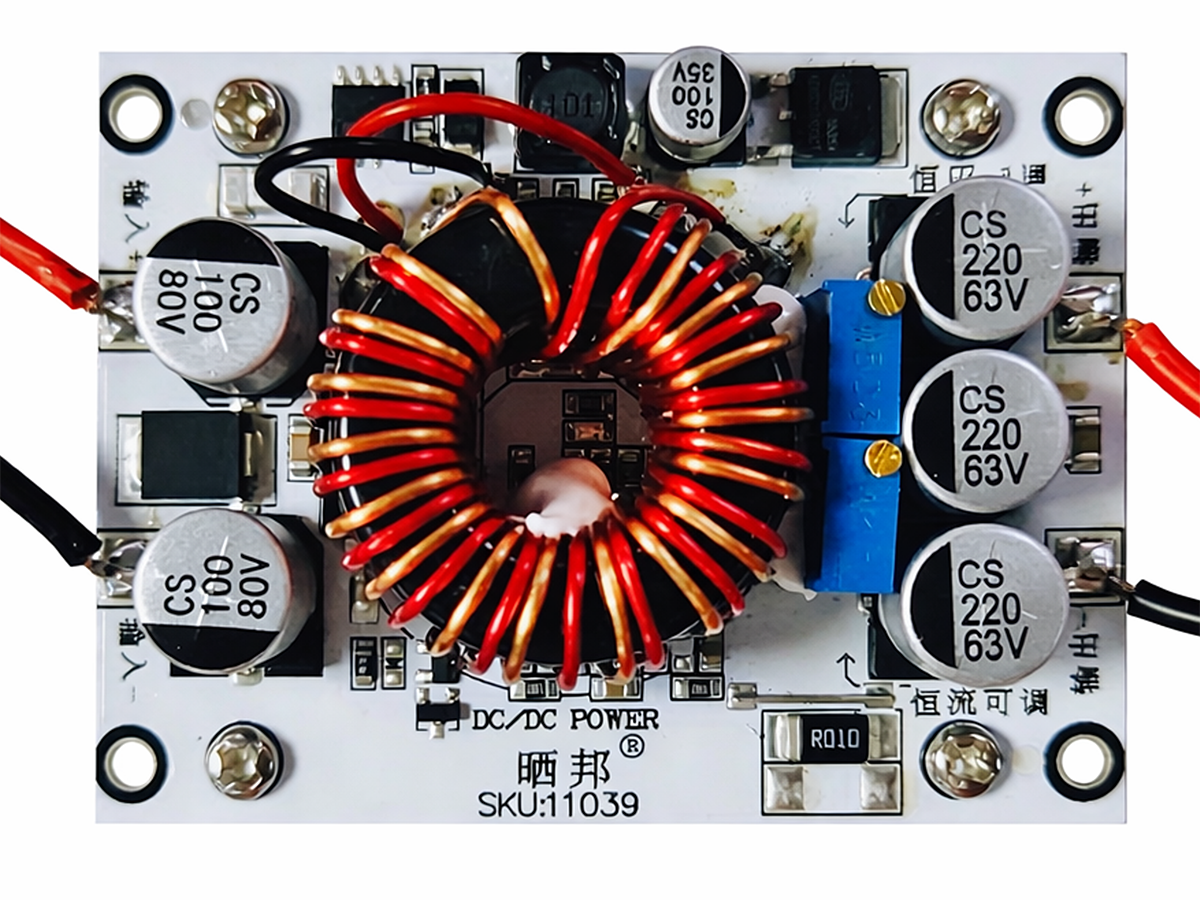
What Does "Buck-Boost" Mean?
“Buck-boost” generally refers to the increase and decrease of DC voltage. Standalone step-up or step-down modules can be either fixed or adjustable, while buck-boost modules typically include adjustment and automatic voltage stabilization functions. Buck-boost modules are divided into three types: AC-DC, DC-DC, and AC-AC, with DC-DC being the most common. For example, a circuit that converts a 12V input voltage to a 5V–24V output voltage is a buck-boost circuit.
What is the function of a buck-boost module?
Many electronic devices on the market use batteries as their power source, which presents a problem: battery voltage is not constant—it decreases as the battery discharges. This unstable voltage cannot be used directly in circuits, so a buck-boost module is needed to keep the voltage stable at a fixed value.
This principle also applies to solar energy systems: solar energy output voltage fluctuates greatly. A buck-boost module stabilizes this voltage before charging the battery, preventing battery damage.
What is the principle of buck-boost?
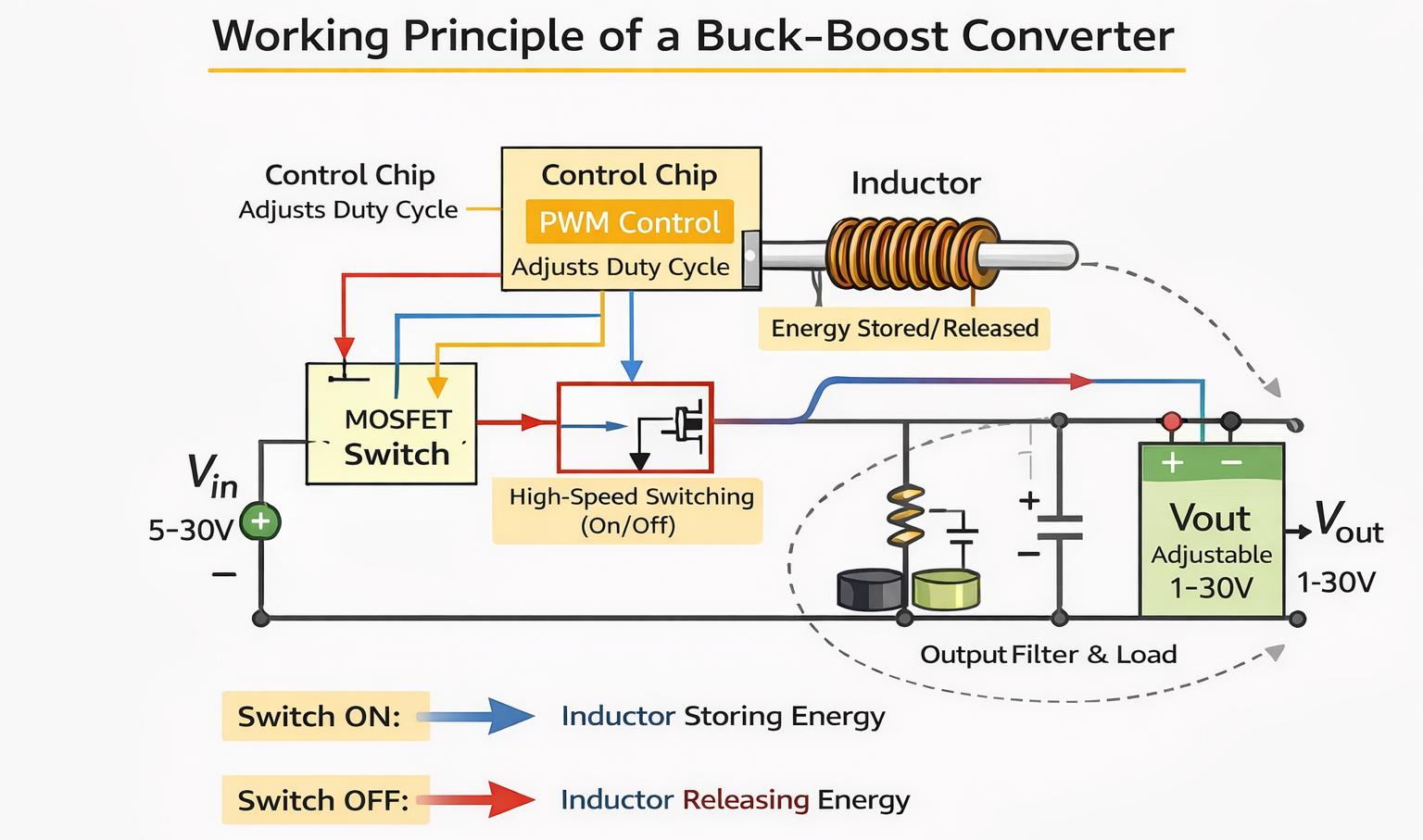
Buck-boost works through a buck-boost circuit, which relies on three key components: an inductor, a MOSFET (metal-oxide-semiconductor field-effect transistor), and a control chip (for PWM modulation). The control chip adjusts the duty cycle of PWM signals to increase or decrease the voltage.
The specific process is as follows:
1.When the switch (MOSFET) is turned on, the input voltage flows into the inductor, which stores energy and the current gradually rises. During this time, the load is powered by the output capacitor.
2.When the switch is turned off, the inductor reverses its polarity to maintain current flow and releases stored energy. At this point, energy from the inductor flows to the output capacitor and the load.
Adjusting the duty cycle (the ratio of on-time to off-time) controls the voltage: a longer on-time results in step-up, while a shorter on-time results in step-down. This ensures the output voltage remains at the set value regardless of whether the input voltage is higher or lower.
Key Factors for Choosing a Buck-Boost Module
When selecting a buck-boost module, focus on the following parameters:
1.Input voltage range
2.Output voltage & current
3.Maximum power
4.Efficiency
Take this buck-boost module as an example:
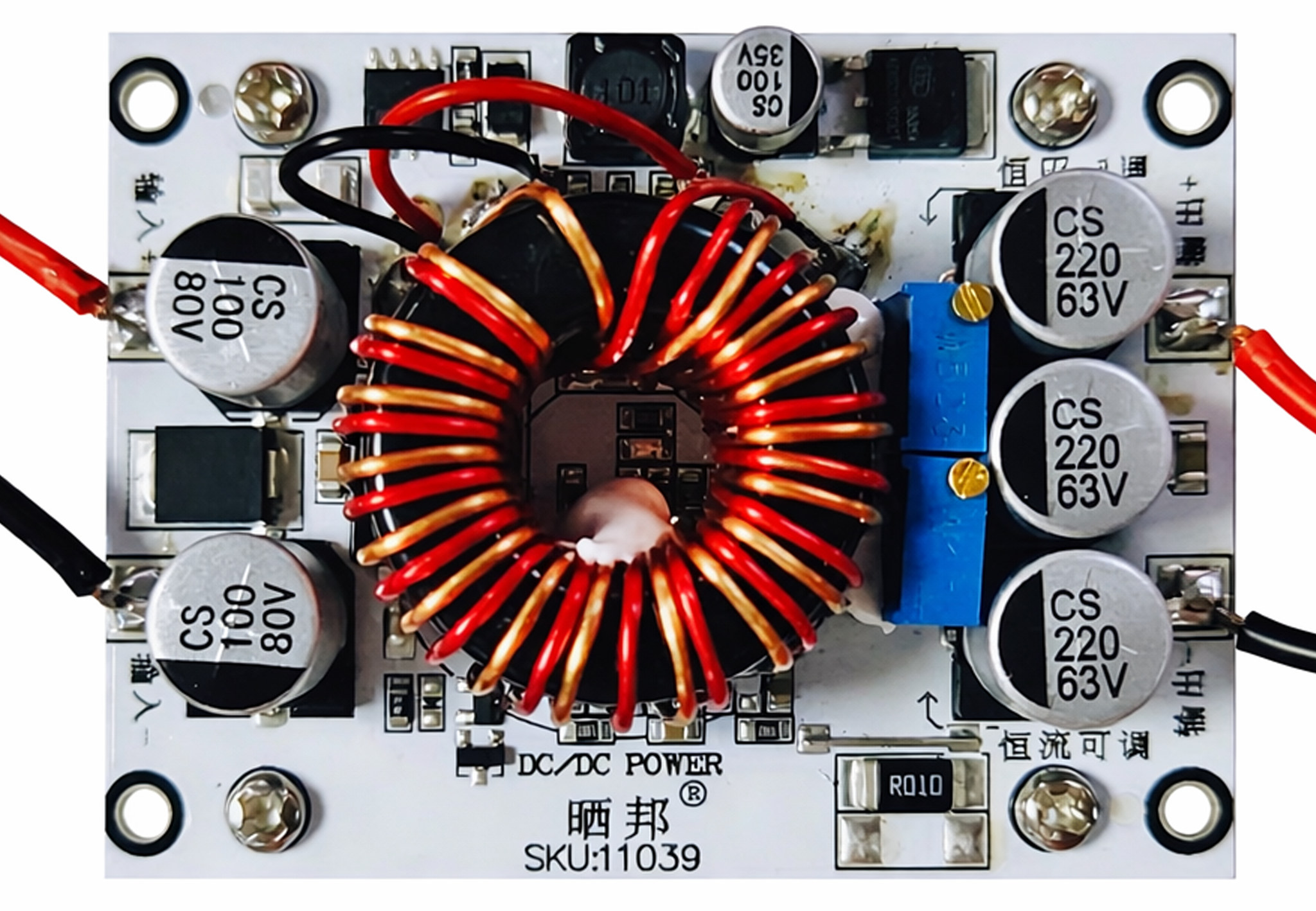
Its electrical parameters is:
| Item | Specification |
|---|---|
| PCB Model | 011039 |
| Power Protection | No reverse-polarity protection. Please confirm correct polarity before powering on. |
| Input Voltage | DC 10.5–70 V (When input voltage is below 12 V, power derating is required) |
| Input Current | 10 A (Max), 8 A (Max) for long-term operation |
| Output Voltage | DC 2.5–58 V |
| Output Current | 8 A (Max), 6 A (Max) for long-term operation. Input and output cannot be short-circuited. At maximum operating values, the sum of input and output currents must not exceed 12 A. |
| Output Power | Max 180 W. At low input voltage: max current 8 A. Bare board (no auxiliary heatsink): max 30 W. With heatsink (no fan): max 50 W. Additional forced cooling required when module temperature exceeds 65°C. |
| Conversion Efficiency | Approximately 90% |
| Adjustable Constant Current | 0.5–8 A |
| Standby Current | Approximately 20 mA |
| Dimensions | 70 × 52 × 21 mm (bare board) 70 × 52 × 36 mm (with heatsink) 70 × 52 × 45 mm (with heatsink and fan) |
| Weight | Bare board: approx. 70 g With heatsink: approx. 120 g With heatsink and fan: approx. 135 g |
Note that while the input and output voltage ranges are wide, you cannot directly use the minimum input voltage to achieve the maximum output voltage in practice—power derating is required. Additionally, the output current and power must stay within the specified ranges; otherwise, the module may be damaged.
In practical use, the output voltage is usually adjustable. Some modules also include an adjustable output current function (typically constant current).
Demo Video
FAQ
When to use buck-boost?
Use a buck-boost module whenever the input voltage fluctuates significantly (sometimes higher, sometimes lower than the required output voltage) and a stable output is needed. It can also be used simply for its boost or buck function, making it a versatile choice.
What are the advantages of buck-boost?
| Converter Type | Step-Up | Step-Down | Vin Can Cross Vout | Efficiency | Cost | Typical Use Case |
|---|---|---|---|---|---|---|
| Buck | No | Yes | No | High | Low | Vin always higher than Vout |
| Boost | Yes | No | No | High | Low | Vin always lower than Vout |
| Buck-Boost | Yes | Yes | Yes | Medium–High | Medium | Battery-powered, unstable input |
| LDO | No | Yes | No | Low | Low | Low current, low noise |