

Blog
How to Choose a Portable Power Station?

As a new type of mobile power device, the portable power station has become an ideal choice for outdoor activities and emergency backup with its portability, versatility, and safety features. When selecting a portable power station, it is essential to comprehensively consider factors such as capacity, output power, interface types, and charging methods based on actual needs to purchase the most suitable product. Whether in daily life or special scenarios, portable power stations can provide us with reliable power support and enhance the quality of life.
Clarify Requirements: Figure out "what you will use portable power station for"
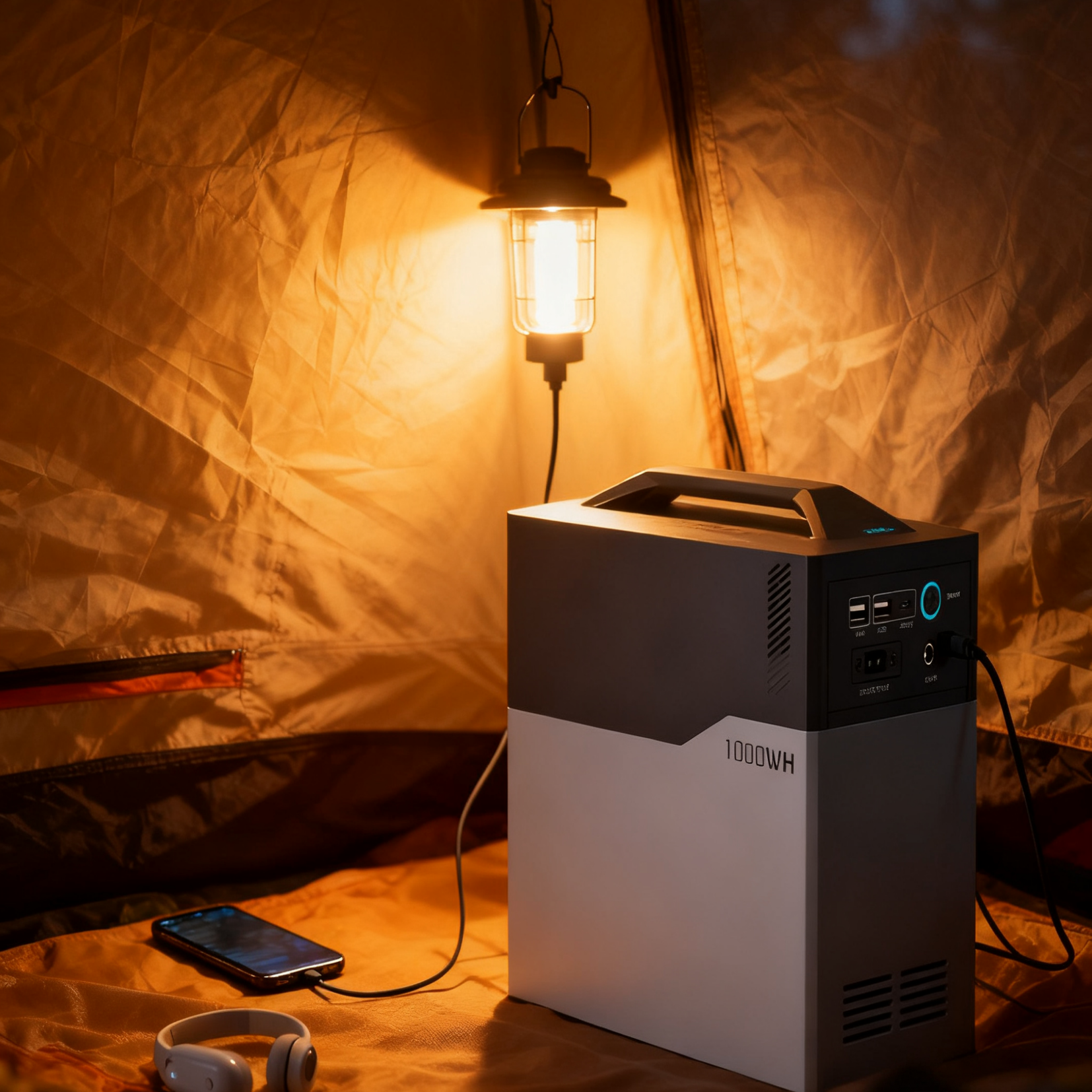
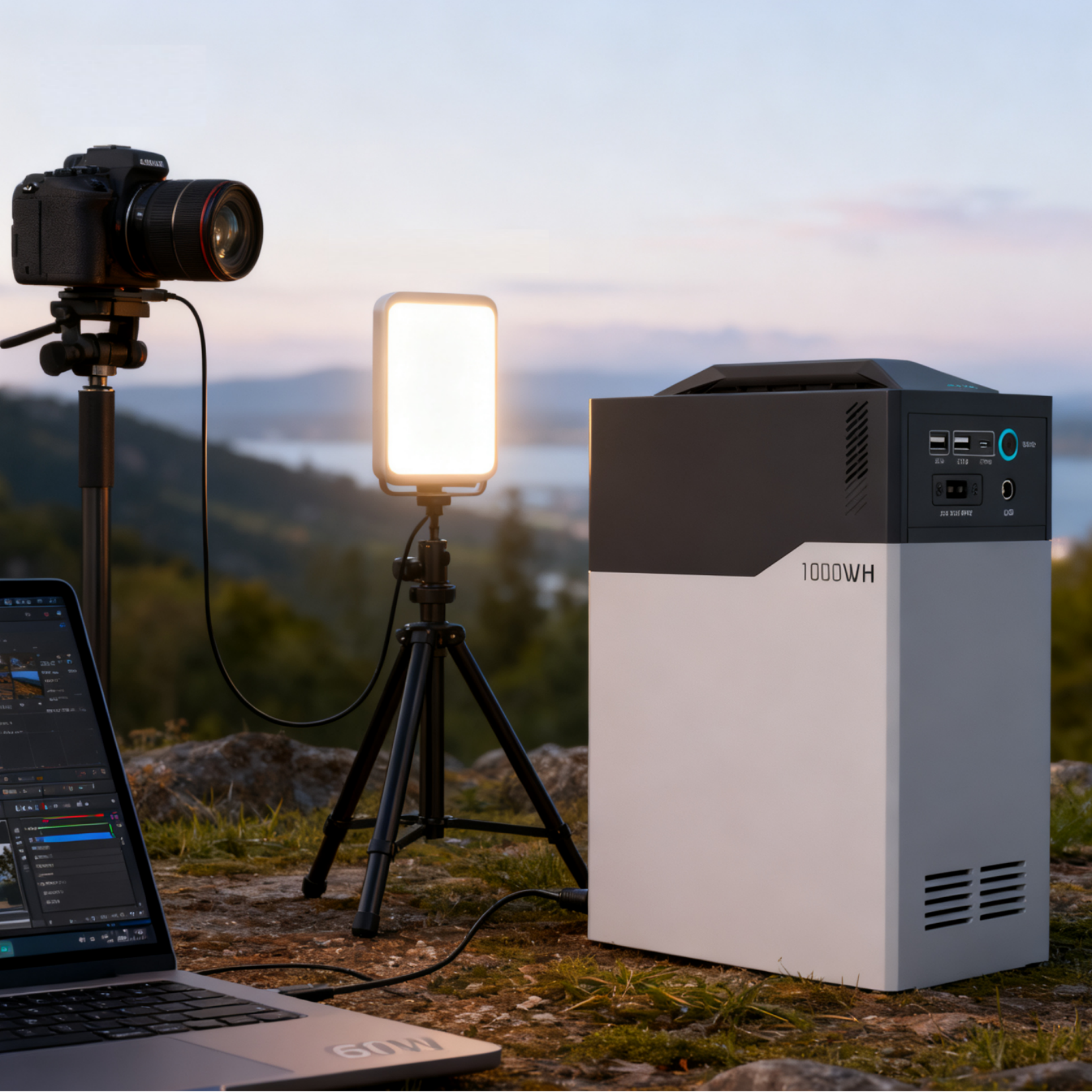
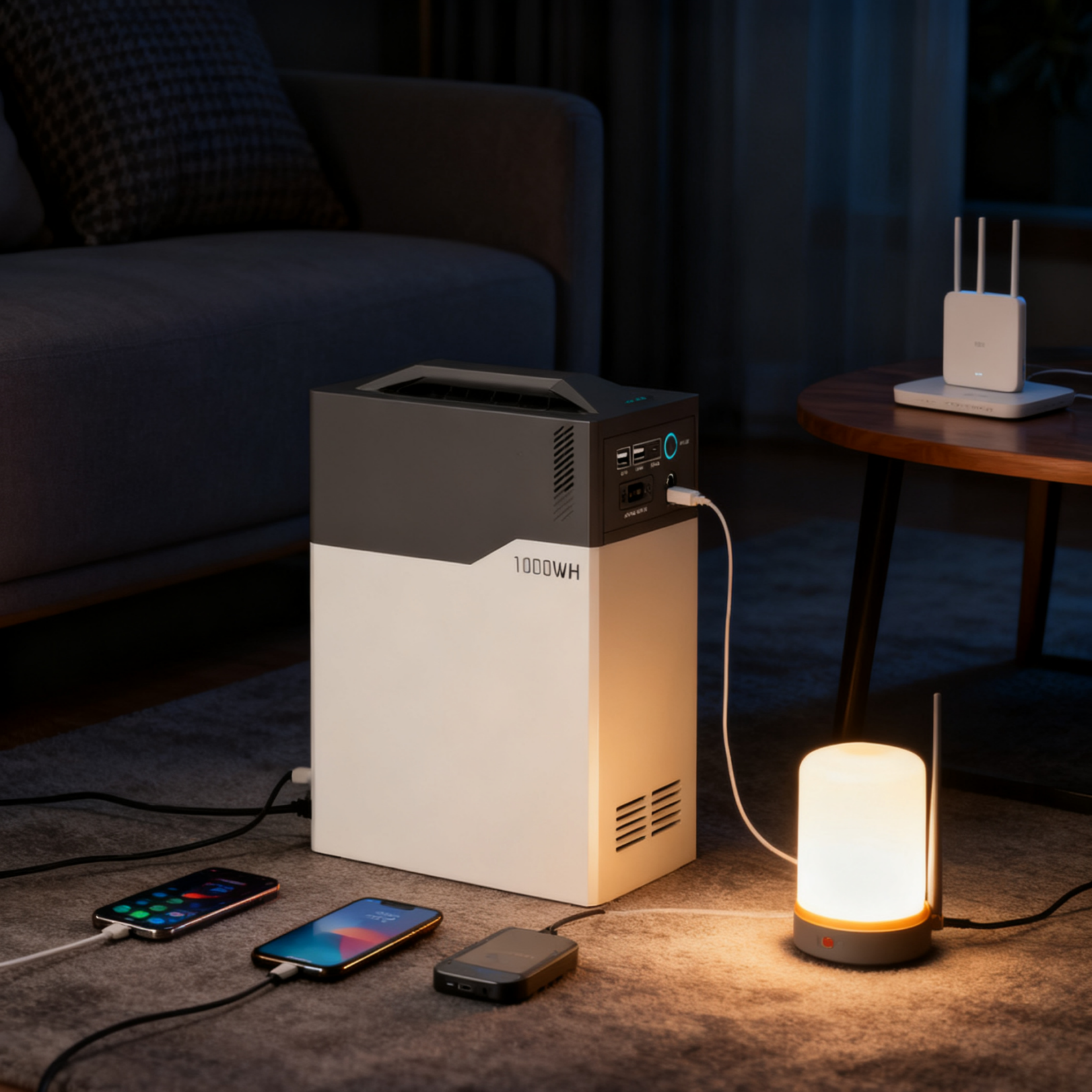

The first step in choosing a portable power station is not to check parameters or compare prices, but to clarify the “core usage scenario”. Different scenarios have vastly different requirements for capacity (Wh) and power (watt), and blindly pursuing “large capacity and high power” will only lead to wasting money:
Scenario 1: Short-distance Camping (1-2 Days)
The core demand is to supply power to mobile phones and camping portable power compatible devices (such as 20W camping lights, 60W laptops), with the total power of the devices usually ≤ 100W. It is recommended to choose a 300W portable power station with a capacity of 500Wh-800Wh, and the weight should be controlled within 8KG for easy carrying by hand or placing in a camping backpack. For example, a portable power box for camping with an 800Wh capacity can power a 20W camping light for 40 hours and a 60W laptop for 13 hours. The price is mostly between 1000-2000 yuan, which is highly cost-effective for weekend short-distance camping.
Scenario 2: Long-distance Camping / Outdoor Work (More than 3 Days)
It needs to power devices such as portable power station for refrigerator, 60W projector, 300W electric cooking pot, with a total power of 200-300W. It is recommended to choose a 500W portable power station with a capacity of 1000Wh-1500Wh (e.g., 1000Wh portable power station) that supports solar charging, then match it with a solar panel for portable power station to achieve “outdoor energy self-sufficiency”. For example, a 1000Wh portable power station with built-in solar panel can power a 6W car refrigerator for 166 hours and a 60W projector for 16 hours, completely getting rid of grid dependence.
Scenario 3: Home Emergency Power Supply
To meet the needs of home power stations during power outages, such as powering 30W fans, 10W routers, and 60W small TVs, with a total power ≤ 150W. It is recommended to choose a model with a capacity of over 1000Wh (cope with power outages of more than 24 hours), prioritize a portable power station AC that supports AC fast charging (full charge in 80 minutes) for quick energy replenishment during power outages. Meanwhile, it is a must to select lithium iron phosphate batteries (marked “LFP”) among portable power station lithium, combined with full BMS protection to avoid safety hazards during emergencies. Such best home power stations can ensure the electricity safety of the elderly and children.
Scenario 4: Street Vendor / Street Performance
If you need to power devices such as a 300W electric cooking pot, 100W speaker, and 20W display light, it is recommended to choose a 500W portable power station with a capacity of over 1200Wh. It should also be a portable power station with AC outlet, equipped with at least 2 AC interfaces, 4 DC interfaces, and 2 USB interfaces to support simultaneous power supply for multiple devices. For example, a 2000 watt portable power station features strong battery life and abundant interfaces, which avoids frequent charging from affecting business operations and is suitable for mobile scenarios like street food stalls and singer performances.
Three Parameters More Important Than "Capacity"
Many people only look at the capacity marked as “XX Wh” when purchasing, but overlook the parameters that have a greater impact on the user experience. As a result, they find the product “unusable” or “not easy to use” after bringing it home. The following 3 parameters must be focused on:
Parameter 1: Output Power
Merchants often advertise “peak power of 800W”, but rated power is what matters for long-term use. For example, if you want to power a 300W electric cooking pot, you must choose a model with a rated power ≥ 300W (such as a 300 watt portable power station). If you choose one with a rated power of 200W and a peak power of 400W, it will frequently trigger overload protection and may even damage the equipment. When purchasing, list the power of existing devices (marked at the bottom of the device), and ensure that the rated power of the power station ≥ total power of the devices × 1.2 (reserve 20% margin to cope with transient power exceeding the standard).
Parameter 2: Battery Type
① Lithium Iron Phosphate Battery (LFP): Namely portable power station LiFePO4, with a cycle life of over 2000 times, high temperature resistance and not easy to bulge, it is the first choice for home and outdoor use, suitable for most scenarios.
② Ternary Lithium Battery (NCM): Only suitable for low temperatures below -10℃, it is necessary to select a portable power station for cold weather with low-temperature protection, and its safety is slightly lower.
③ Inferior batteries will vaguely mark “lithium battery” without indicating the cycle life, and their capacity may decay to 60% after 800 uses. It is better to choose the best battery power stations clearly marked with “LFP”, which requires special attention.
Parameter 3: Charging Method
High-quality portable power systems need to support at least 2 of the following charging methods: “AC charging, solar charging, and car charging”:
① AC Charging: Choose one that can be fully charged within 80 minutes, such as a portable power station pick up today, which has high energy replenishment efficiency.
② Solar Charging: Choose a solar portable power station that supports 12-48V and 200W MPPT. MPPT is 30% more efficient than ordinary PWM, and can replenish power even on cloudy days.
③ Car Charging: For self-driving scenarios, choose a portable power station for car, which can replenish energy through the car battery in case of emergency.
Interface Configuration: Whether the portable power outlets are sufficient is of great importance
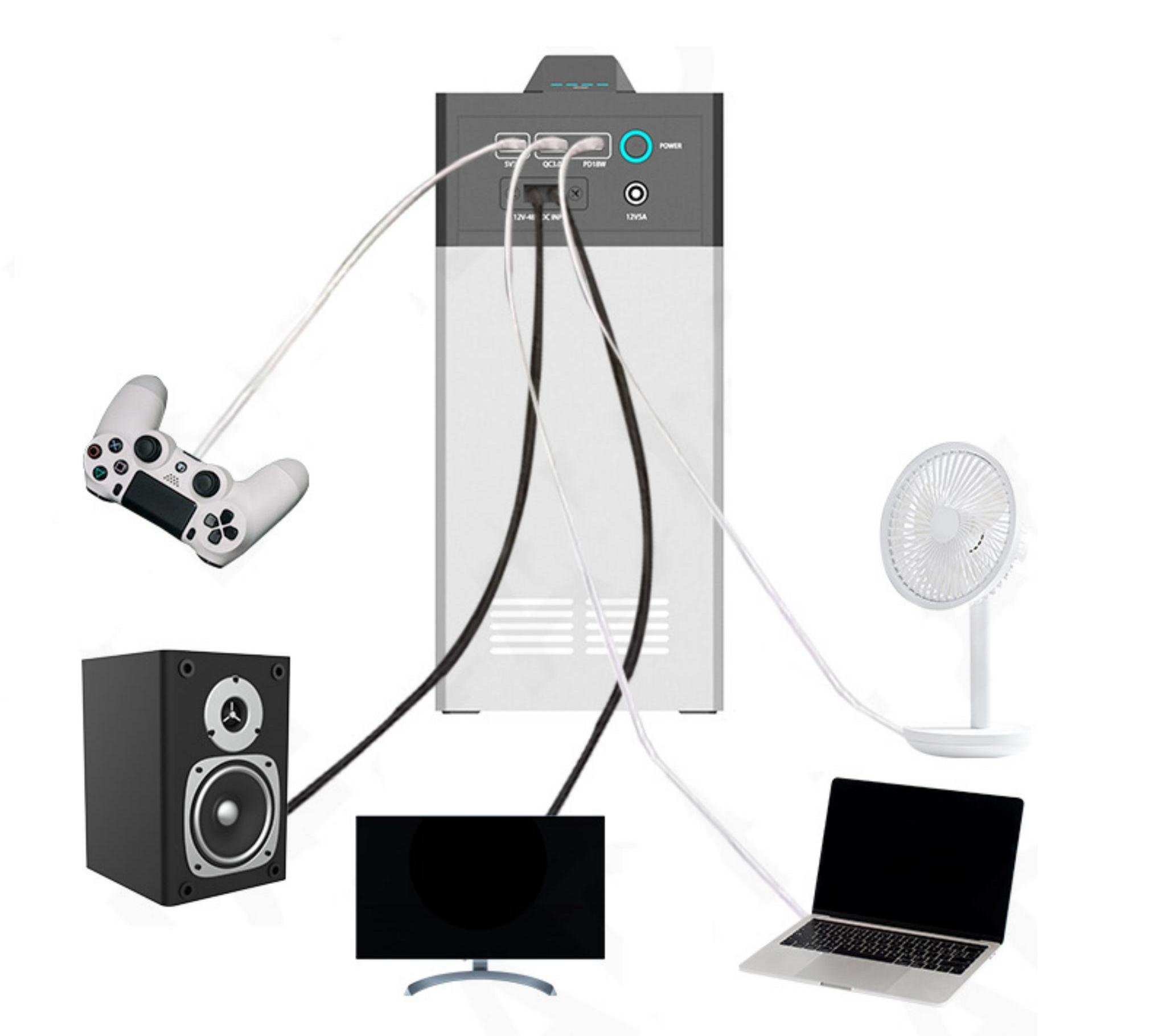
The number and type of interfaces directly determine “how many devices can be powered simultaneously”. Many people find that “there are not enough interfaces” or “there is no compatible interface” after buying the product, and have to purchase additional adapters, which affects the user experience. The following interface configurations should be paid attention to when purchasing:
AC Interface (220V) (supports most electronic devices such as sockets)
It is used for laptops, electric cooking pots, and small TVs. It is recommended to have at least 2 national standard interfaces, and marked with “pure sine wave” (waveform distortion rate < 3%) to avoid damaging precision devices like portable power station for laptop. For example, the AC interface of a portable power source with outlet supports pure sine wave, making it safer to charge cameras and projectors.
DC Interface (Direct Charging Port)
DC5521 Interface: At least four, suitable for camping lights and dashcams, and is the core interface of camping portable power.
DC12V Interface: At least one, suitable for the car refrigerator in portable power station for refrigerator, meeting the demand for food preservation.
USB Interface (Supports mobile devices)
① USB-A: At least two, supporting QC3.0 18W fast charging for replenishing power to mobile phones and earphones.
② USB-C: At least one, supporting PD3.0 18W, which can charge laptops and reduce the occupation of AC interfaces. Such a portable power bank with ac plug is suitable for the fast charging needs of multiple devices.
③ PD & QC: Fast charging technologies that improve the charging efficiency of mobile devices. Compared with QC fast charging, PD fast charging is compatible with more mobile phone protocols, while it does not damage the battery and does not cause overheating during charging.
Special Interfaces:
④ PV Input Interface: If matched with a solar panel, it is necessary to confirm that it supports 12-48V to be compatible with solar panels for portable power station.
⑤ DC12V5A Interface: Used for charging drone and camera batteries, suitable for portable power station for cameras to meet the needs of outdoor photography.
The BMS (Battery Management System) must be "full functional", not a single function can be missing
The safety of a portable power station depends on the BMS (Battery Management System). Low-priced products often reduce protection functions, posing risks of fire and bulging. When purchasing, it is necessary to confirm that the BMS includes 6 major protections:
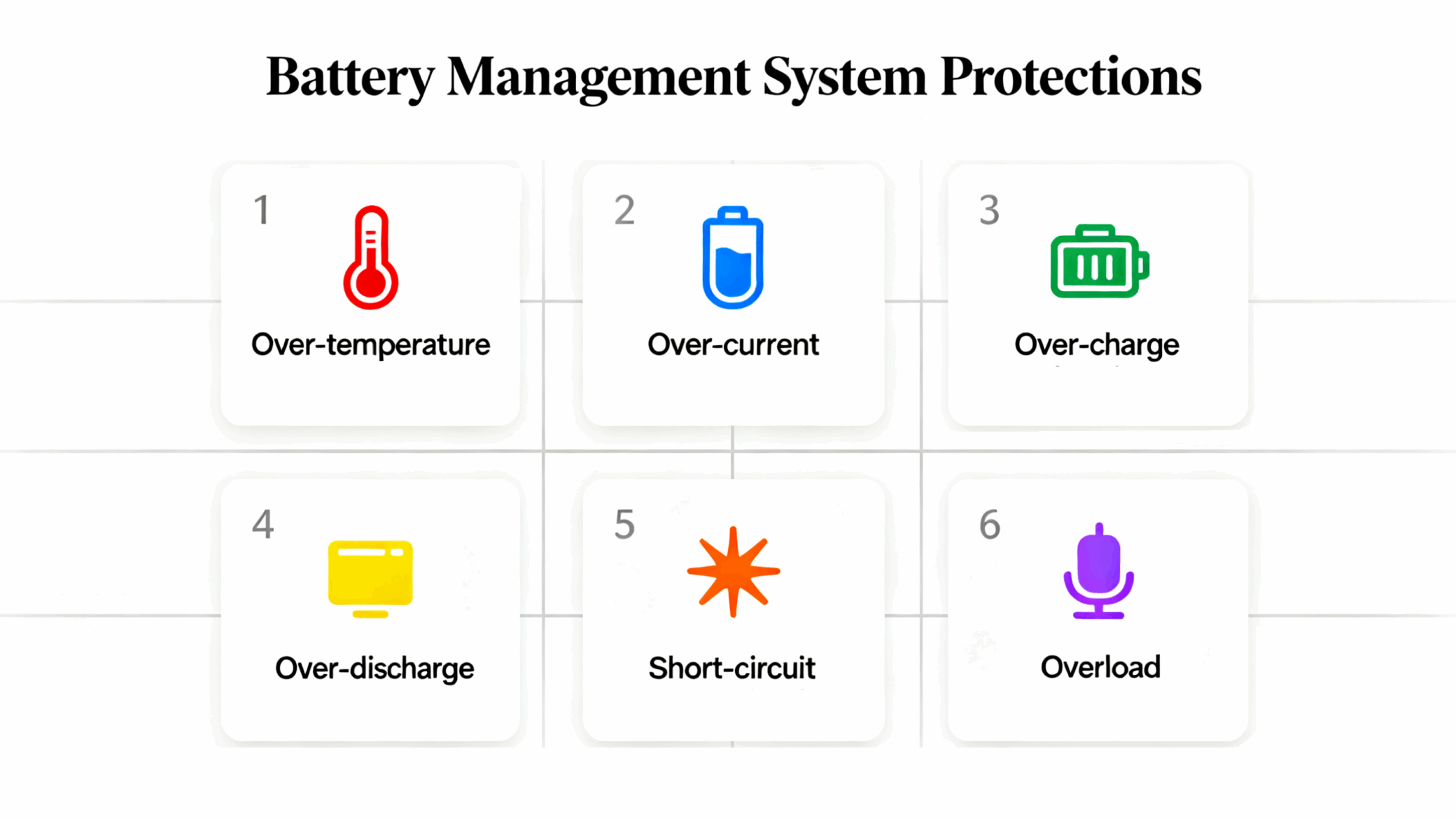
- Over-temperature protection:The battery automatically powers off when exceeding 60℃ to avoid bulging of the portable power station lithium.
- Over-current protection:The output current is immediately cut off when exceeding 1.5 times the rated current to prevent the circuit from burning out.
- Over-charge protection: Charging of lithium iron phosphate batteries stops when exceeding 3.65V to extend battery life, which is the core protection for portable power station LiFePO4.
- Over-discharge protection:Discharging stops when the battery voltage is below 2.65V to avoid permanent damage.
- Short-circuit protection: Instantly powers off when the interface is waterlogged or the line is damaged to prevent electric shock.
- Overload protection:Delays power off for 5-10 seconds when the total power exceeds 105% of the rated power to remind reducing the load.
Consult customer service or check the manual when purchasing to confirm the BMS has complete functions and avoid buying the “simplified version”, such portable power stations have great safety hazards when used outdoors or at home.
Three Tips to See Through "Digital Traps" and Learn to Identify False Capacity
False capacity labeling is a common issue in the industry and can be verified through the following methods:
- Parameter verification:Regular products will clearly mark the rated energy in “Wh”. If only “Ah” is marked without indicating the voltage, reverse calculation can be done using the formula “Energy = Voltage × Capacity (Ah)”. If the result deviates from the marked Wh value by more than 10%, there is a suspicion of false labeling. At the same time, attention should be paid to the description of conversion efficiency. Claims of 100% energy conversion are all exaggerated. The typical conversion efficiency of high-quality products is mostly between 85% and 90%.
- Equipment actual measurement:Connect a 100W halogen lamp in a fully charged state, and calculate according to “Actual capacity = 100W × Discharge hours”: For example, a 1000Wh portable power station, if the actual discharge is only 8 hours (800Wh), then the false labeling is 20%. When powering a portable power station for TV, if the voltage drops rapidly, it also indicates that the capacity is reduced.
- Detail check:Check whether the battery information is clear. High-quality products will mark the cell specifications, quantity and cycle life. At the same time, refer to users’ follow-up reviews. If most feedback “fast power loss” or “battery life is not as advertised”, the possibility of false labeling is extremely high.
Portable power station is the optimal solution for mainstream scenarios
- Ordinary Power Bank: An “emergency helper” for single-person short-distance trips
Mainstream high-capacity power banks are mostly 20000mAh (about 74Wh). Calculated based on an Apple mobile phone (taking iPhone 15 as an example, with a battery capacity of approximately 3300mAh), it can charge cyclically for 5-6 times, which can meet the power supply needs of small devices such as mobile phones and earphones for a single person in a short period (1-2 days).
Advantages:
Small size (palm-sized), light weight (mostly 300-500g), no pressure to carry around, and affordable price.
Limitations:
Limited capacity, unable to power devices with a little larger power such as laptops and camping lights, only suitable for the minimalist scenario of “single person + single device”, and “power is insufficient” when beyond this scope.
- High-Capacity Outdoor Battery (Portable Power Station): An “all-round power supply station” for outdoor trips
This type of power supply usually has a capacity ranging from 500Wh to 2000Wh. Some high-power models can power devices such as induction cookers (within 2000W), ovens (within 1500W), and projectors (60W), basically covering the power needs of outdoor camping, picnics, and small gatherings. A 1000Wh model can meet the power supply needs of 2-3 people for 2-3 days outdoors.
Advantages:
① Strong compatibility: Equipped with multiple interfaces such as AC (220V), DC (12V), and USB, capable of charging mobile phones, laptops, home appliances, and tools.
② Easy to use: No additional wiring required, just press the switch to supply power. Some models support solar charging, eliminating the reliance on “finding a socket”.
③ Safe and reliable: Adopts lithium iron phosphate battery + full-protection BMS, avoiding risks such as overcharging and short circuit, with zero noise and zero emissions, no environmental pollution.
Limitations:
The larger the capacity, the heavier the weight (a 1000Wh model weighs about 8-12KG), which needs to be carried by hand or placed in the trunk; the price is relatively high, but its overall practicality is far superior to other solutions.
- Car Power Inverter: A “temporary energy replenishment tool” dependent on vehicles
It connects to the car battery (12V/24V) to convert direct current into alternating current of 220V, which can power devices such as laptops and small fans, and is suitable for temporary electricity use during self-driving trips.
Advantages:
No need to carry an additional power supply. It utilizes the car’s existing battery and can quickly replenish energy in emergency situations.
Limitations:
① Dependent on vehicle status: When the car is started, using it will consume fuel. If it is used after the engine is turned off, it will easily deplete the battery power, making it impossible to start the car and may also damage the battery life.
② Power limitation: The rated power of most car power inverters is ≤ 300W, which cannot power high-power devices such as induction cookers and ovens, and can only meet the needs of “low power + short time”.
- Gasoline Generator: A “high-power alternative” for multi-person outdoor use
Compared with diesel generators, gasoline generators are smaller in size (about 30-50L) and have lower operating noise (60-70 decibels), with power mostly ranging from 2000-5000W, which can meet the high-power electricity needs of multi-person outdoor scenarios (such as team camping, small-scale construction).
Advantages:
High power output and long endurance (continuous power supply can be achieved by refueling), capable of powering multiple high-power devices to operate simultaneously.
Limitations:
① Poor user experience: It emits exhaust gas (containing CO, PM2.5) during operation, which pollutes the environment and affects respiratory health. The noise also disturbs the camping and resting atmosphere.
② Complex operation: It requires manual refueling and starting, and oil replacement is needed during maintenance, which is not user-friendly for beginners.
- Diesel Generator: A “bulky option” for high-power scenarios
It mostly has a power of over 5000W, and the cost of diesel is lower than that of gasoline, which is suitable for high-power and long-term electricity scenarios such as large-scale outdoor construction and long-term team stationing.
Advantages:
High power, low fuel cost, and strong endurance.
Limitations:
① Large size and weight: Mostly 50-100KG, which needs to be moved by cart or forklift, cannot be carried by hand, and has extremely poor outdoor flexibility.
② Safety and experience issues: Diesel is making purchase and storage inconvenient. The operating noise is as high as 70-85 decibels, and the exhaust emission is larger than that of gasoline generators, so it is not suitable for leisure scenarios such as camping and picnics.
③ High difficulty in starting: It is difficult to start in low-temperature environments, requiring preheating equipment, and the maintenance process is more complicated.
Compare the 5 Types of Solutions from the Three Core Dimensions of "practicality, safety, and convenience"
In terms of the number of applicable people, ordinary power banks can only meet the needs of 1 person, car power inverters are suitable for 1-2 people, outdoor batteries can cover 2-5 people, gasoline generators are suitable for more than 5 people, and diesel generators are for large-scale scenarios with more than 10 people.
In terms of power coverage, ordinary power banks are ≤10W, car power inverters are ≤300W, outdoor batteries can reach 10W-2000W, gasoline generators range from 2000-5000W, and diesel generators are above 5000W.
In terms of portability, ordinary power banks are the most portable (5 stars). Car power inverters, which rely on vehicles, can be rated 4 stars. Outdoor batteries get 3 stars. gasoline and diesel generators, due to their large size and weight, can only be rated 1 star.
In terms of safety, ordinary power banks and outdoor batteries both get 5 stars (outdoor battery is equipped with BMS protection). Car power inverters are rated 2 stars because they may damage the battery. Gasoline generators are rated 2 stars due to flammability. Diesel generators, with high risks, only get 1 star.
In terms of environmental friendliness, ordinary power banks and outdoor battery is pollution-free (5 stars). Car power inverters consume fuel (3 stars). Gasoline generators emit exhaust gas (1 star). Diesel generators cause more serious pollution (1 star).
Ordinary power banks can only meet the minimalist needs of a single person. Car power inverters rely on vehicles and have limited power. Gasoline/diesel generators have shortcomings in safety and user experience. However, portable power stations balance “capacity, power, portability, and safety” . They can not only meet most power needs of 2-5 people for outdoor trips but also avoid issues such as regulatory restrictions, pollution, and equipment damage. They are the best solution that balances “practicality and flexibility”, especially suitable for mainstream scenarios like family camping, friends gatherings, and outdoor work.
Purchase Link
FAQ
What is the best wattage for a portable power station?
The optimal power of a portable power station depends on specific usage scenarios and needs. Below are power recommendations for some common scenarios:
① Outdoor short-term digital device applications: If it is mainly used to charge digital devices such as mobile phones, tablets, cameras, and laptops to meet outdoor office or photography needs, a portable power station with a power of 300W-500W and a capacity within 1000Wh is sufficient.
② Outdoor long-term travel or self-driving travel: When there are needs such as boiling water, cooking, charging a large number of digital devices, night lighting, and audio entertainment, it is recommended to choose a portable power station with a power of 1000W-2000W and a capacity of 2000Wh-3000Wh.
③ Home power outage emergency: In addition to meeting the needs of lighting and power supply for mobile phones and digital devices, it may also be necessary to drive some household appliances, such as fans and small refrigerators. In this case, it is recommended to choose a portable power station with a power of more than 1000W, and the specific power should be determined according to the power of the household appliances.
Can I use a portable power bank to start my car?
It is possible to use a portable power bank to start a car, but certain conditions must be met. Not all portable power banks can start a car; ordinary power banks usually cannot provide the high current required for car starting. A car generally needs to release a current exceeding 300A within 5 seconds to start, while the current of an ordinary mobile phone power bank is only a few amperes. A dedicated car emergency jump starter is required. This type of power supply has enhanced battery cells and transformers, enabling it to output a sufficiently large current. For example, some models such as Xiaonengren X5 and X6 clearly indicate that they support the car emergency jump-start function.
In addition, it is necessary to ensure that the portable power bank has sufficient power when in use, and the power display generally needs to be above 3 bars. At the same time, jumper cables that meet quality and specification requirements should be used, and the positive and negative poles should be connected correctly: the red clamp is connected to the positive pole, and the black clamp is connected to the negative pole. Usually, the negative pole is connected to the metal frame of the starter battery. During the operation, safety protective equipment such as insulating gloves and goggles must be worn. If the car fails to start at one time, do not attempt frequently; instead, wait for an interval of more than 5 seconds before trying again.
Can I leave my portable power station plugged in all the time?
A portable power station can be left plugged in for a long time (i.e., in a “float charging” state), but attention must be paid to the product’s characteristics, usage scenarios, and maintenance details to avoid affecting battery life or causing safety risks.

