Basic Introduction to the SP303 Water Immersion Electrode
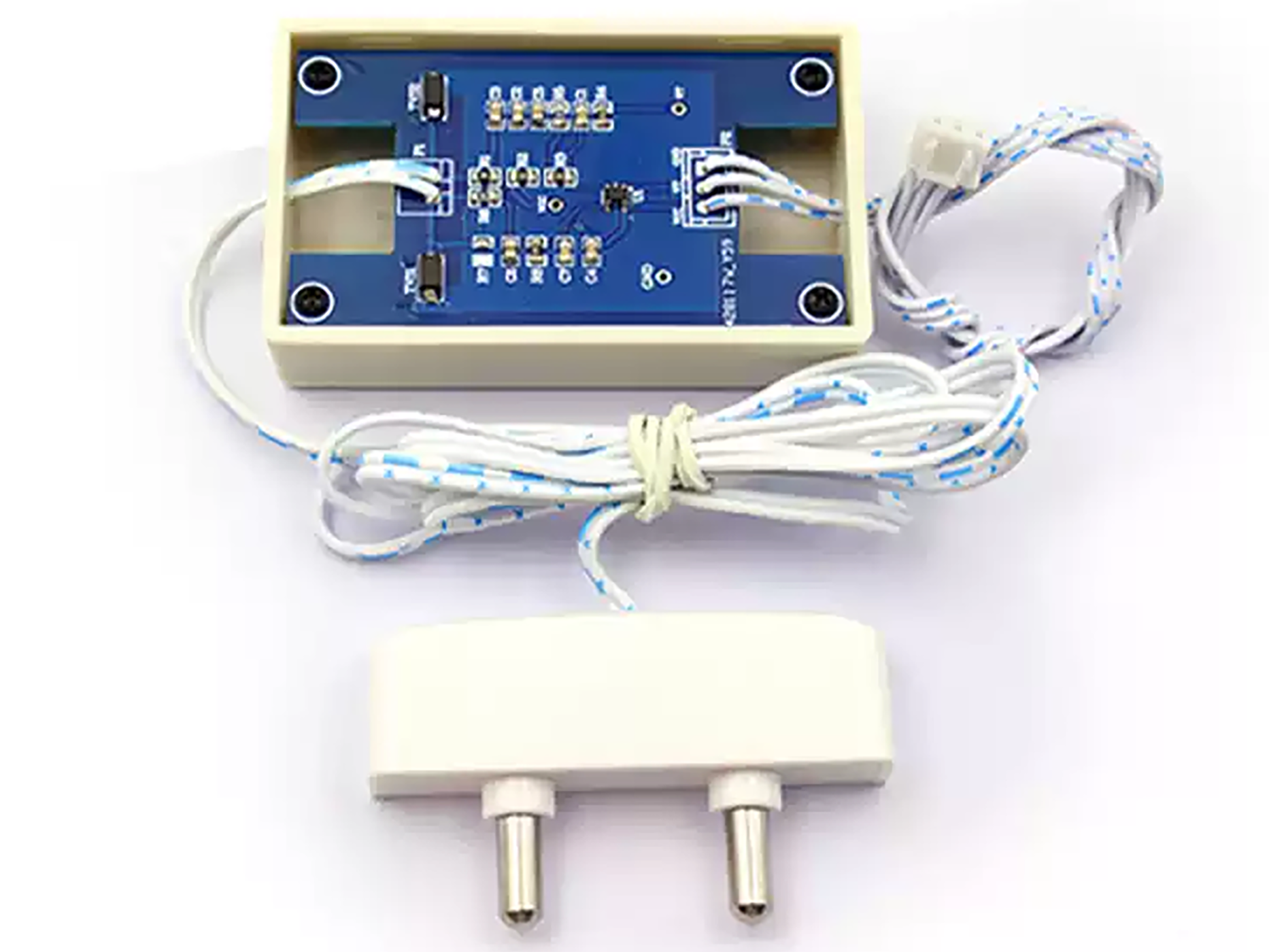
The SP303 Water Leak Alarm Electrode is a water detection device designed for residential and commercial environments. It’s mainly used with a main controller to monitor ground water accumulation in real time. Its electrode probe is made of high-quality stainless steel, which is corrosion-resistant and anti-oxidative—no rusting or failure even after long-term use.
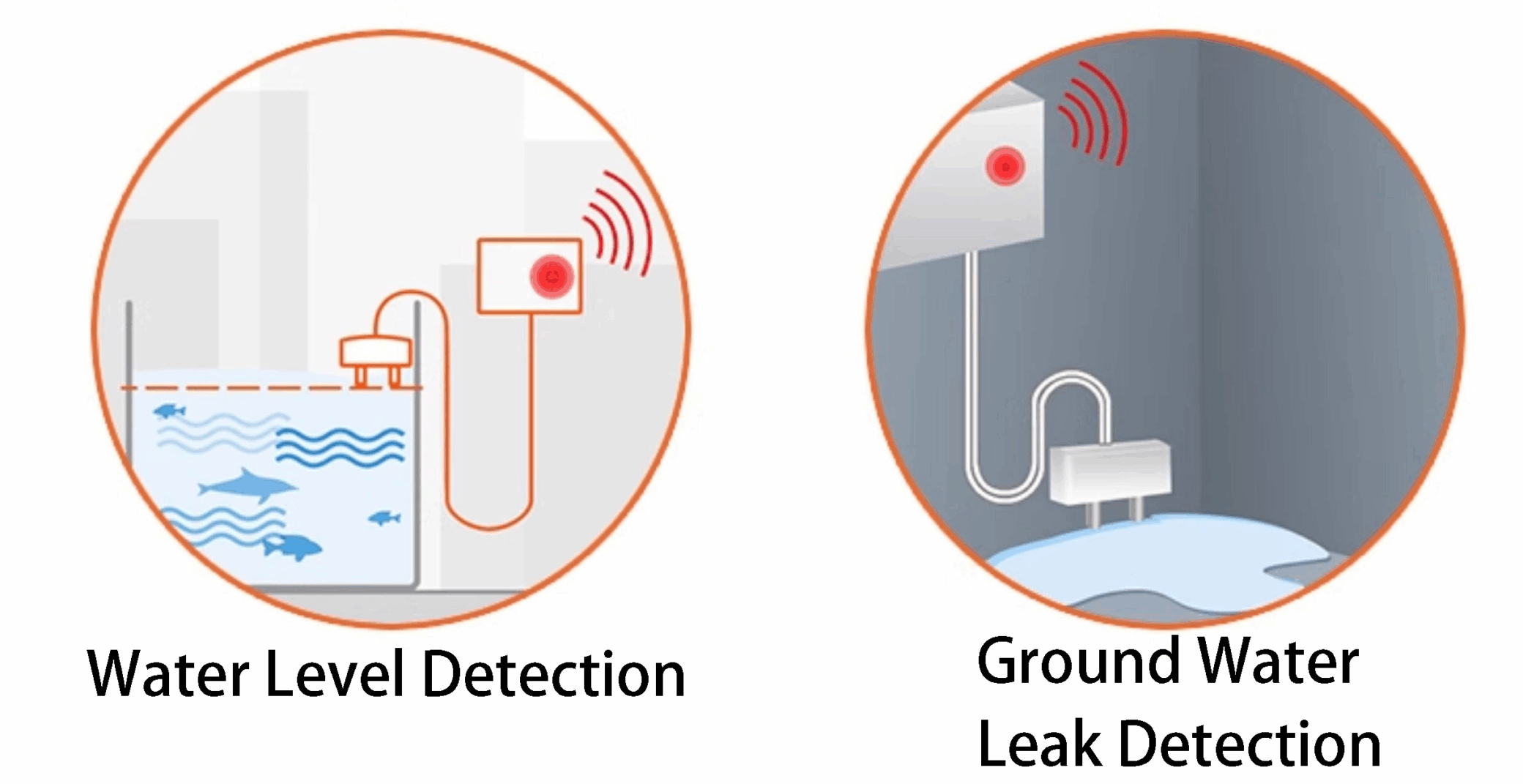
With a compact size (about 5cm x 5cm) and flexible installation, it can be placed under washing machines, next to water heaters, near fish tanks, or in kitchen corners (all leak-prone areas). Once water seeps out, the electrode immediately sends a signal to the host, triggering a low-level signal. The alarm method can be adjusted freely, eliminating worries about ground leaks.
Introduction to SP303 Water Immersion Probe Principle
The SP303 Water Immersion Electrode uses water-immersed electrodes. Its principle is: when there’s accumulated water (or the water surface reaches a certain height), water connects the two probes, forming a circuit between them (generating about tens of kiloohms of resistance). The main control board amplifies and converts this resistance signal, finally outputting a high/low level for use. When paired with an intelligent alarm main control board, it can even send remote leak alerts.
Matching Signal Processing Board
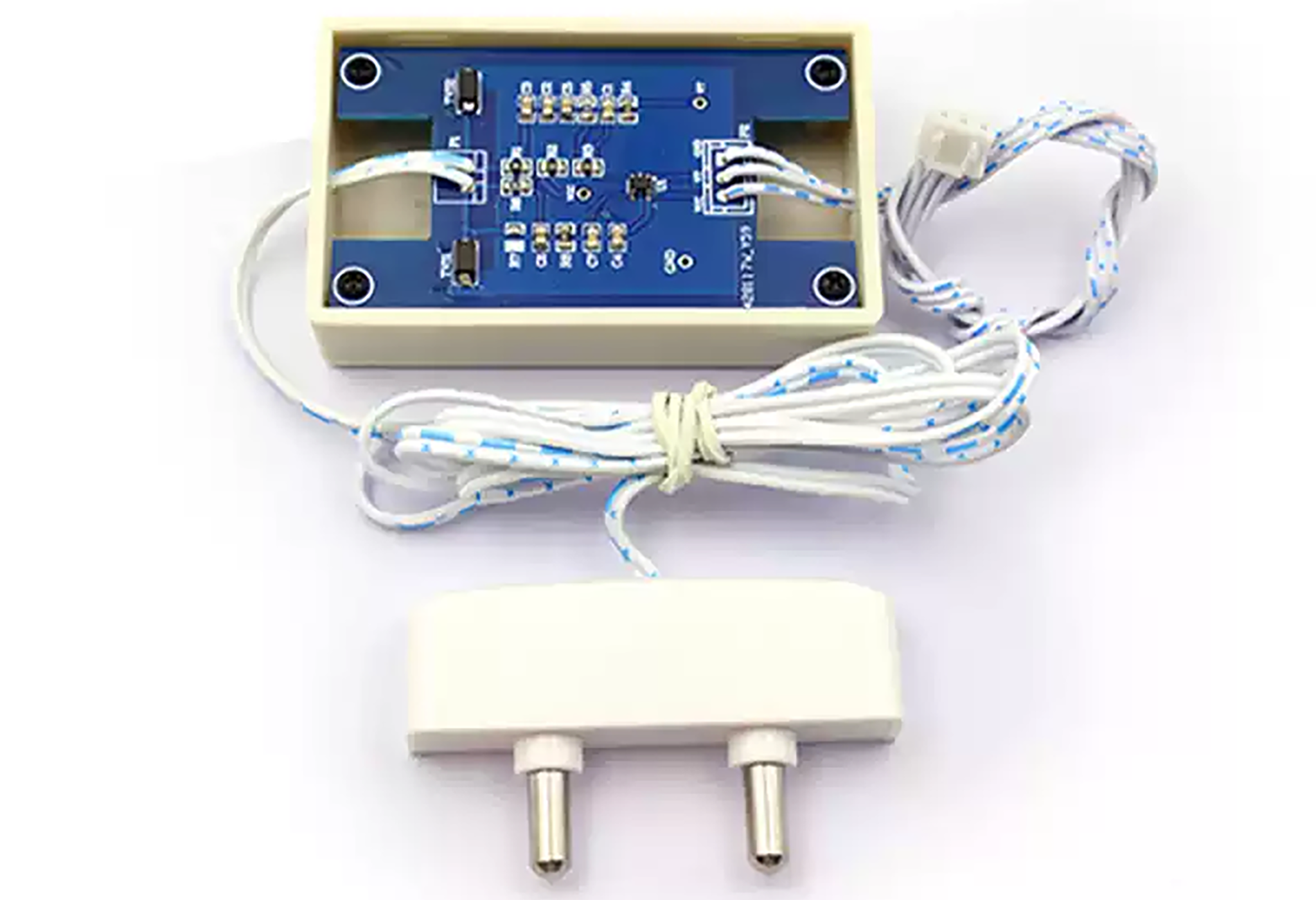
The SP303 Water Immersion Electrode only outputs tens of kiloohms of resistance. To convert this into a usable signal, a matching signal processing board is needed. The board’s input connects to the probe’s output; after signal conversion, it outputs a digital signal (normally high level, switching to low level when triggered). Note that the output terminal must be set as a floating input during detection.
Demo Video
Installation
The SP303 Water Immersion Electrode has pre-drilled mounting holes and can also be fixed with double-sided tape. The probe can be attached to the detection location—multiple installation methods are available for convenience, depending on specific needs.
Dimension
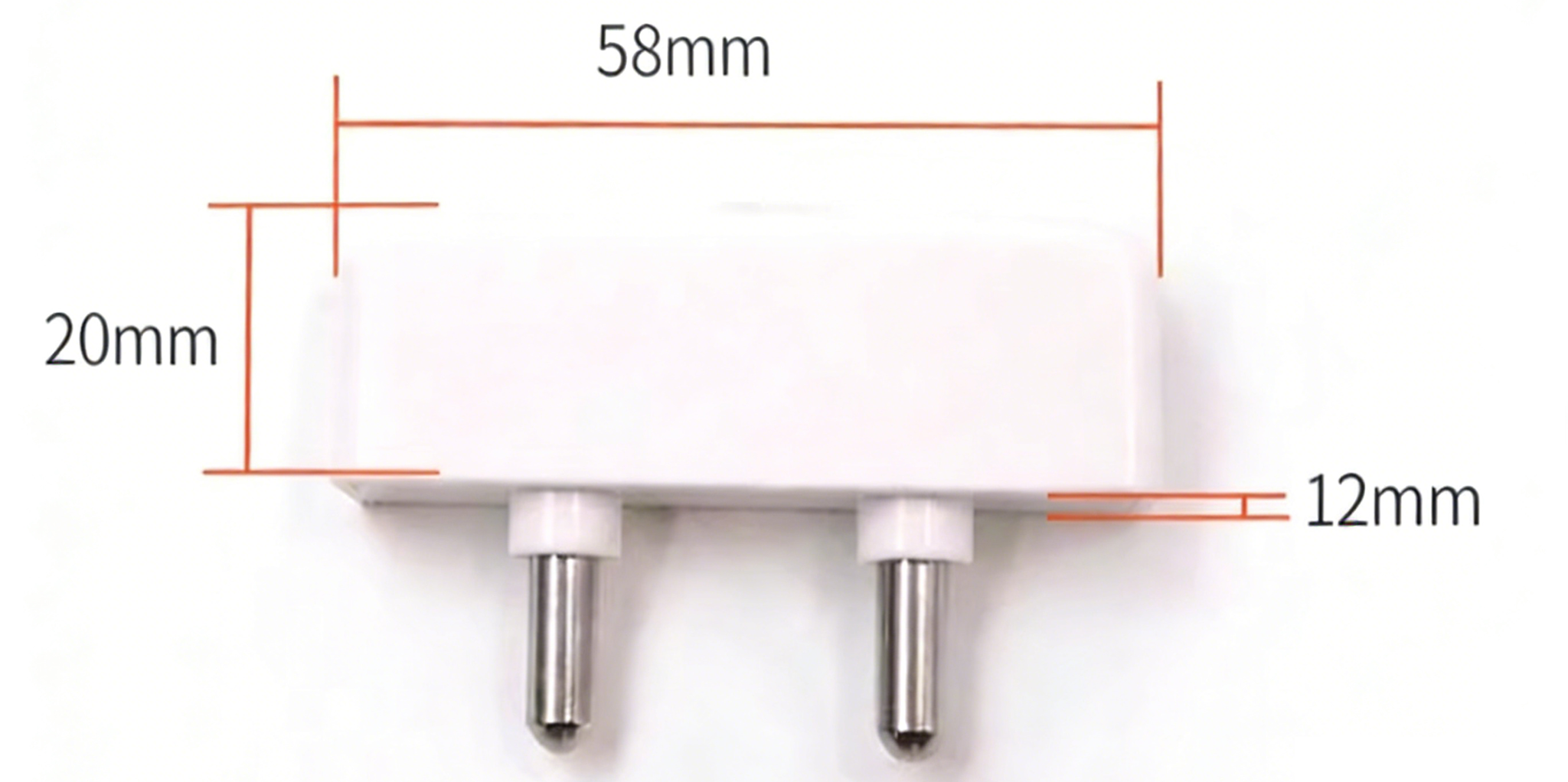
The SP303 is compact and fits general environmental detection needs. See the dimension diagram below:
Pin Description Diagram
Place the probe at the water level detection point. The signal processing board has a 3-pin terminal: the middle pin is the signal wire, and the left/right pins are the positive/negative power terminals. It is used with a signal input control board.
Electrical Parameter Table
| Parameter |
Value / Description |
| Supply Voltage |
2.0 V – 5.5 V |
| Operating Current (Water Detected) |
5 μA |
| Operating Current (No Water) |
2 μA |
| Output Logic |
No water: High level / Water detected: Low level |
| Usage Notes |
The detection output pin must be configured as a high-impedance (floating) input.
|
FAQ
What liquids can the SP303 detect?
The SP303 Water Immersion Electrode can detect conductive liquids such as tap water, rainwater, and condensed water.
Does the SP303 Probe require power supply?
The SP303 Probe itself is powered by the signal processing board and does not need an independent power supply.
What are the common application scenarios?
- Air conditioning condensate pans
- Basements, warehouses
- Pump rooms, near pipelines
- Kitchens
- Other leak-prone areas or spaces requiring water level detection
Why does false alarming sometimes occur?
False alarms may be caused by overly humid environments, line interference, or placing the probe on a metal surface (which causes conduction). Please check the environment to ensure normal use.