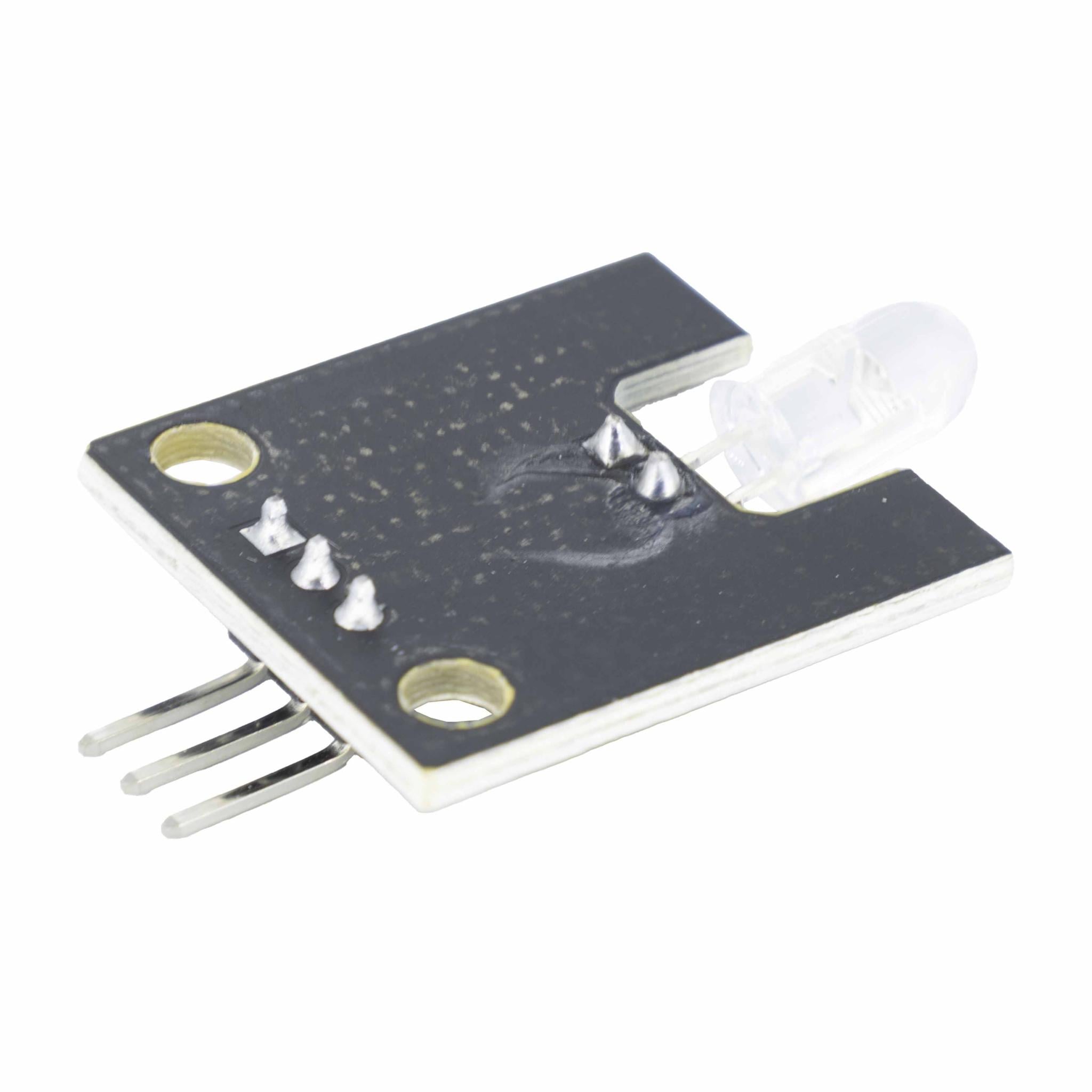
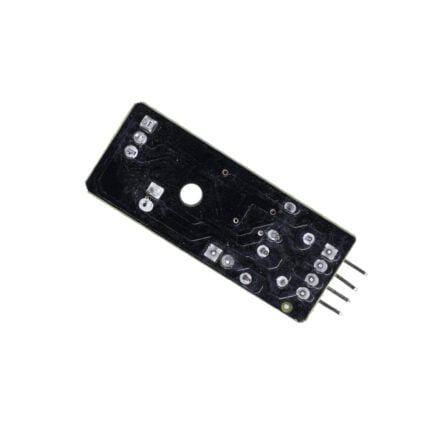
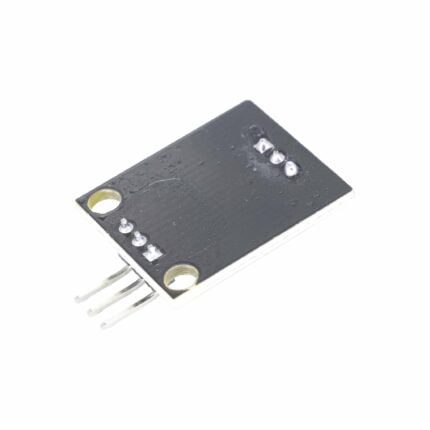
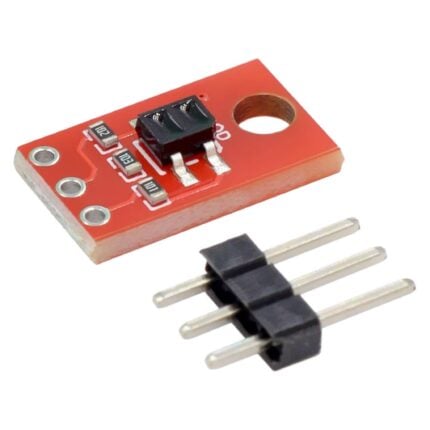
IR Infrared Module
$1.001 pcs
| Dimensions | N/A |
|---|---|
| Brand |
easyelecmodule |
working principle of IR Infrared Transmitter Module
The infrared transmission process is essentially a three-step linkage of “signal encoding + carrier modulation + photoelectric conversion”, which forms a reverse echo with the decoding process of the receiving module:
1.Instruction input: A single – chip microcomputer (such as Arduino, STM32) outputs an original digital instruction signal (a sequence of high and low voltage levels) according to user operations (such as pressing a button).
2.Carrier modulation: The oscillation circuit inside the module generates a 38kHz high – frequency carrier wave. It superimposes the original instruction signal with the carrier wave (that is, “modulates”), so that the instruction signal has a “unique frequency label” to avoid interference from environmental clutter.
3.Photoelectric conversion: The modulated electrical signal drives an infrared emission tube (usually a gallium arsenide diode). The emission tube converts the electrical signal into an infrared light signal with a frequency of 38kHz and radiates it into space in a diffused manner.
4.Signal transmission: The infrared light signal propagates in space and is captured by the corresponding 38kHz infrared receiving module, thereby completing the subsequent decoding process.
Advantages of Capacitive IR Infrared Module
Infrared modules have many significant advantages. First, they have relatively high anti-interference ability. Because they use a specific 38kHz carrier frequency for signal transmission, they can effectively avoid interference from other noise signals in the environment, ensuring the accuracy and stability of signal transmission, and can still work reliably in complex electromagnetic environments. Second, the transmission distance is relatively long. Under certain conditions, infrared light signals can propagate over a long distance, meeting the needs of remote control between devices in different scenarios. Third, the cost is low. The manufacturing process of infrared emission modules is relatively mature, and the cost of raw materials is not high, making their overall price quite affordable and easy to be widely used in various electronic devices. Fourth, the power consumption is relatively low. During operation, infrared emission modules consume less electrical energy, which is crucial for some portable devices that rely on battery power and can effectively extend the use time of the devices. Fifth, installation and use are relatively simple. They usually have standard pins and interfaces, which are convenient to connect with various circuit boards, and can be quickly put into use without complicated debugging processes. These advantages make infrared modules widely used.
IR Infrared Module Transmitter pinout
An infrared emission module usually has three pins: DAT, VCC, and GND.
The DAT pin is a data input pin. It is used to receive digital command signals output by control devices like single-chip microcomputers. This signal will go through the processes of carrier modulation and photoelectric conversion inside the module, and finally be converted into an infrared light signal and emitted.
The VCC pin is the positive power supply pin. It is used to connect to an external power supply and provide a stable working voltage for the infrared emission module, ensuring that the module can work normally.
The GND pin is the power ground pin. It is used to connect to the negative pole of the external power supply to form a complete current loop. In practical applications, correctly connecting these three pins is the key to ensuring the normal operation of the infrared emission module. If the connection error causes the module to fail to transmit infrared signals or operate unstably.
Product Parameter Sheet for IR Infrared Transmitter Module
IR Infrared Transmitter Module | |
Working voltage | 5V |
Signal type | Number type |
Working temperature | -25℃-85℃ |
Infrared central wavelength | 850nm-900nm |
Infrared transmission distance | About 1.3 meters |
Infrared emission angle | About 20° |
Wavelength | 940nm |
Product Parameter Sheet for IR Infrared Receiver Module
IR Infrared Receiver Module | |
Working voltage | 5V |
output form | Digital signal output |
IR Infrared Module datasheet
Here we provide you with the infrared module datasheet for reference:
Shipping Cost
We only ship to the United States. Shipping costs are calculated based on the total order amount.
Shipping Method And Delivery Time
All orders will be processed and shipped within 72 hours of placing the order (excluding weekends and holidays). They will ship from Shenzhen, China, primarily via 4PX logistics. Depending on the destination and logistics conditions, other carriers such as DHL, FedEx, UPS, USPS, etc., may also handle the delivery. Estimated shipping time is 7-12 business days, with actual delivery occurring in 10-17 business days, depending on logistics conditions.
Payment:
We accept Visa, Master card, Maestro, American Express, JCB, Dinner's Club, Discover, Paypal, Apple Pay, Google Pay .

Reviews
There are no reviews yet.