What is TDS Sensor?
TDS (Total Dissolved Solids) refers to the total amount of all inorganic salts and small amounts of organic matter dissolved in water, measured in mg/L (milligrams per liter) or ppm (parts per million).A TDS sensor calculates the TDS value by measuring the electrical conductivity of water.
How does a TDS Sensor Work?
When inorganic salts or small amounts of organic matter dissolve in water, they form ions. The more ions there are, the higher the water’s conductivity—for example, saltwater has higher conductivity than purified water. Since TDS and conductivity have a linear relationship, measuring water conductivity allows us to derive the approximate concentration of dissolved solids using a conversion formula.
TDS sensors typically use the two-electrode method: a voltage is applied between the two electrodes, then the current is measured. By calculating the electrical conductivity from this current, the TDS value is obtained.
Composition of TDS Sensor
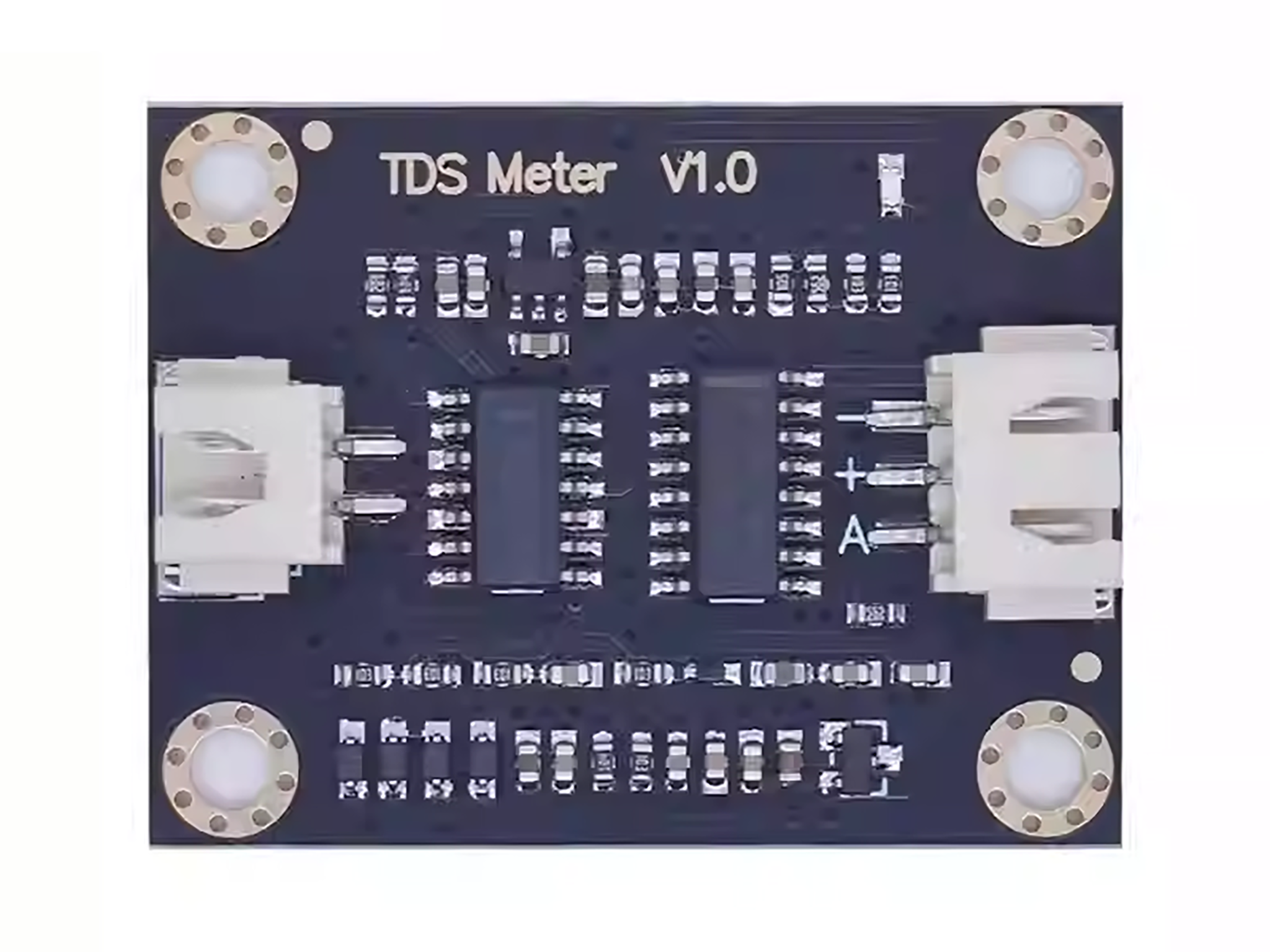
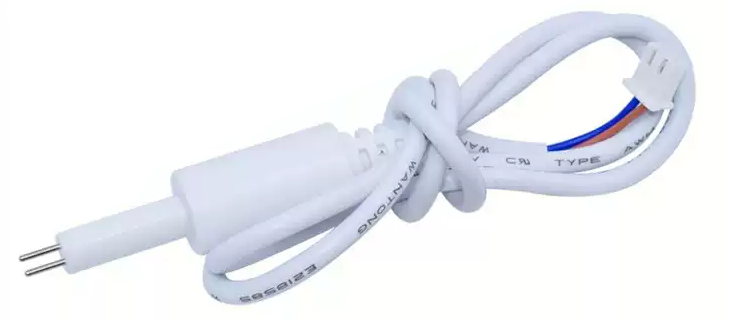
A TDS sensor usually consists of two parts: a probe and a signal processing circuit.
- Probe: Directly contacts water and requires good conductivity. It is often made of materials like stainless steel, graphite, or platinum, and is sealed waterproof—allowing long-term immersion in water.
- Signal processing circuit: Responsible for receiving the current from the probe, amplifying and filtering the signal, and processing the data to output a readable value. Most basic models output an analog voltage, while high-end models may support digital communication protocols such as UART, RS485, I2C, or SPI.
Note: TDS sensors are highly sensitive to temperature. Avoid measuring in high-temperature environments, as this can lead to significant measurement errors.
What is a TDS sensor for?
1.Water purification systems: TDS sensors are widely used to assess filtration efficiency. Effective filtration creates a clear difference between the TDS values of filtered water and tap water; a sudden drop in this difference indicates a malfunction in the water purification system.
2.Hydroponics: Used to measure the concentration of nutrient solutions. This prevents excessive salt levels, which could “burn” the roots of hydroponic plants.
3.Aquaculture: Essential for maintaining high water quality in freshwater fish and shrimp farming. TDS sensors monitor water quality to ensure it meets the needs of aquatic organisms.
TDS Sensor Demo Video
TDS values vary significantly across different water sources. This sensor plays a key role in DIY projects like hydroponic monitoring systems or fish tank water quality monitoring systems.
FAQ
What does TDS actually measure?
It measures the electrical conductivity of water, which is then used to calculate the TDS value.
How to use a TDS sensor?
Connect its output terminal to a microcontroller (like Arduino), immerse the probe in water, and power on the system. Convert the analog or digital signal received by the microcontroller using a formula to get the TDS value.
What is a good TDS for drinking water?
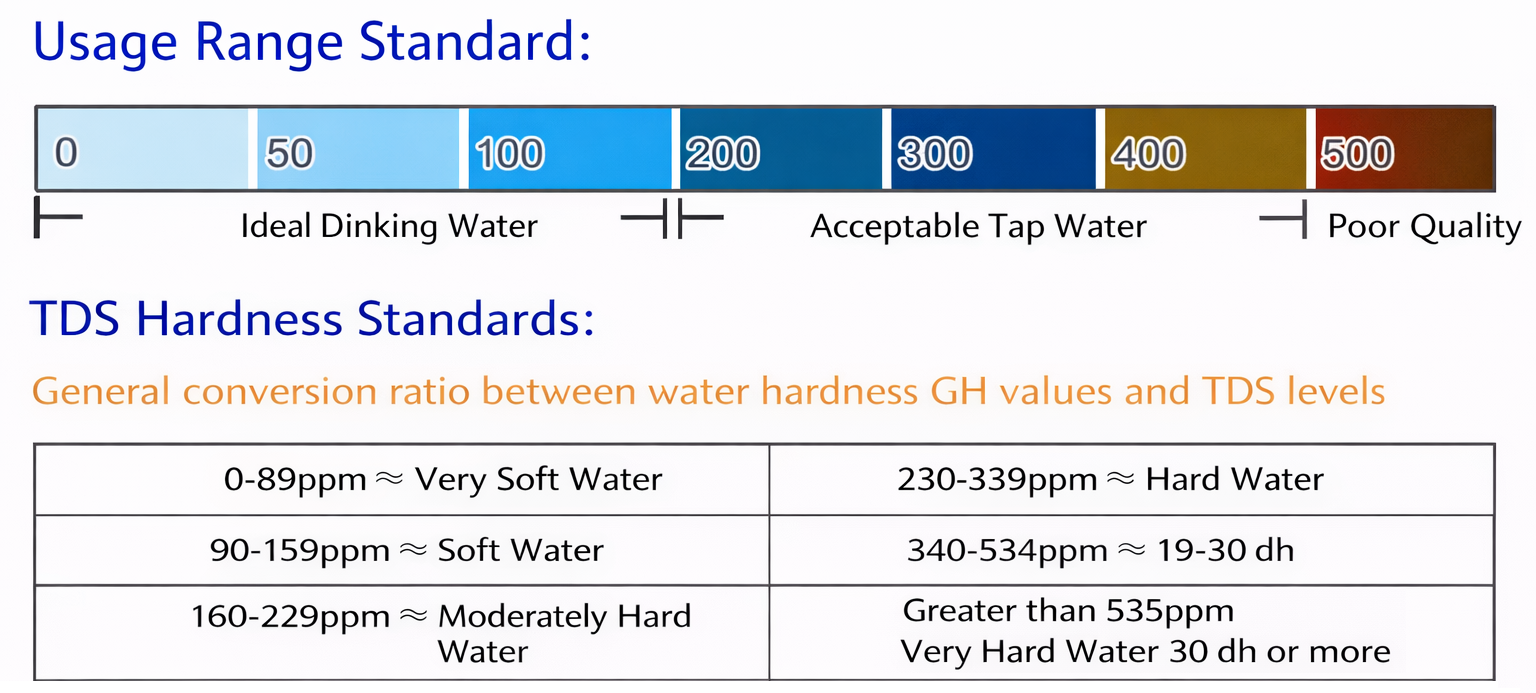
The ideal TDS value for drinking water is generally 50~150 ppm. Values too low (close to purified water) result in bland-tasting water, while values too high mean the water is outside the safe drinking range and should be treated before consumption.