

Blog
What is a ToF Sensor?
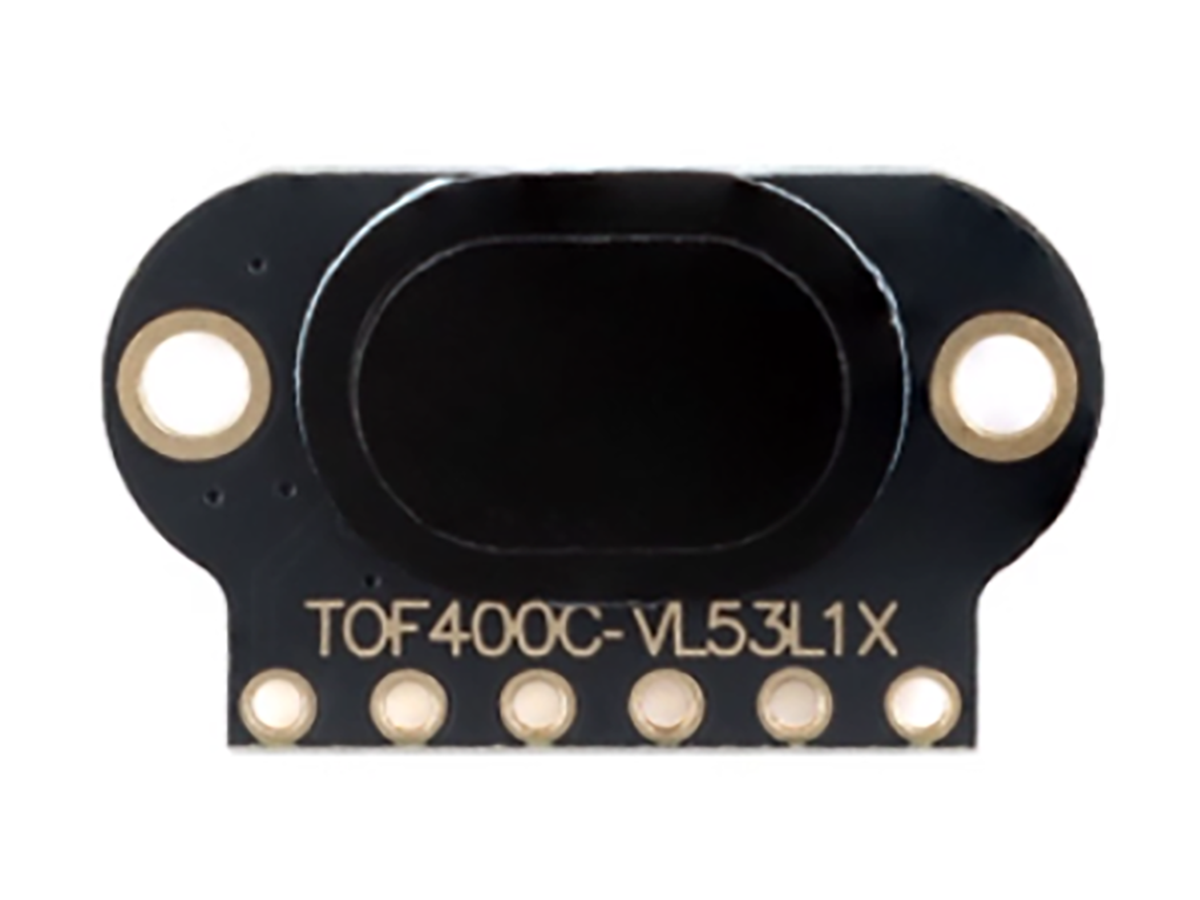
What is a ToF Sensor?
A Time-of-Flight (ToF) sensor is a distance-measuring device that operates on the time-of-flight principle. It works by measuring the time difference between emitting a light pulse and receiving its return, then calculating the distance using the speed of light formula. These sensors are widely used for distance measurement, obstacle avoidance, and object detection, offering a broad range of applications.
How does a ToF detector work?
1.The emitter sends out a pulse of light (usually infrared laser).
2.This light travels through the air until it hits an object and reflects back.
3.The receiver detects the returning light pulse.
4.The sensor’s internal chip measures the time difference between sending and receiving the pulse.
5.Using the speed of light, it calculates the precise distance to the object.
6.This distance data is then output as a signal.
What does a ToF sensor do?
ToF sensors have diverse applications across multiple domains. Primarily, they are employed in distance measurement—such as detecting environmental distances during autonomous driving to enable obstacle avoidance. Another key application is object detection, where these sensors are widely used in industrial production to verify object presence at designated positions, thereby reducing defect rates. Furthermore, highly integrated ToF sensors can be utilized in complex scenarios including environmental scanning and 3D modeling.
ToF Sensor VS IR Sensor
| Feature | ToF Sensor | IR Sensor |
|---|---|---|
| Working Principle | Emits light pulses and measures the time difference to calculate distance | Emits infrared light and detects the intensity of reflected light to determine proximity |
| Accuracy | High accuracy, typically millimeter-level distance measurement | Lower accuracy, only detects proximity of objects |
| Measurement Range | From a few centimeters to several meters | Typically from a few centimeters to several tens of centimeters |
| Applications | Precise distance measurement (autonomous driving, robot obstacle avoidance, 3D imaging, etc.) | Proximity detection, presence detection (automatic doors, temperature sensing, etc.) |
| Response Speed | Fast, suitable for dynamic environments requiring distance measurement | Fast, suitable for static or simple dynamic environments |
| Cost | Relatively high | Relatively low |
| Interference Resistance | Strong, suitable for complex environments | Prone to interference from environmental factors like sunlight and heat sources |
Three recommended ToF sensors
Here are three commonly recommended ToF sensors covering short, medium, and long ranges:
1.Short Range: ST VL53L0X
·An entry-level sensor from STMicroelectronics.
Very small size, measures up to 2 meters.
Uses I2C communication. Operates at 3.3V-5V.
Great balance of cost and performance for short-range applications.

2.Medium Range: ST VL53L1X(The sensor featured in this module)
Also from STMicroelectronics. Doubles the range of the VL53L0X to 4 meters.
Error is around 5mm. Features programmable modes to optimize accuracy.

3.Long Range: DFRobot ToF Laser Ranging Module
Designed for outdoor use, with a range from 5cm to 15 meters.
Supports multiple interfaces (UART/I2C). Higher price point, suitable for long-distance detection where ultimate precision isn’t critical.
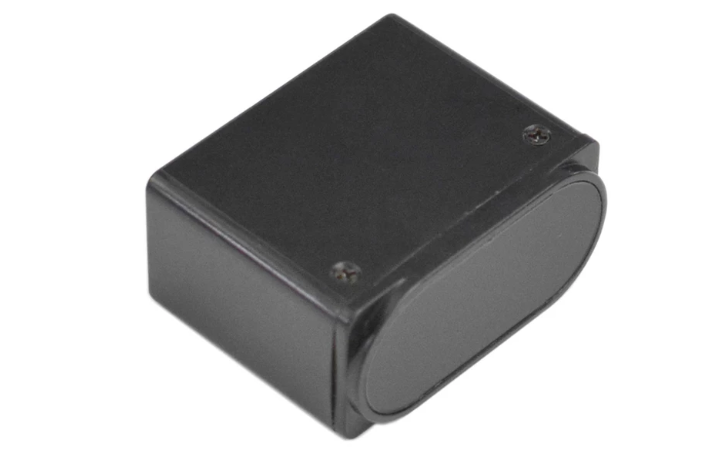
Commonly used ToF sensors (multi-functional)
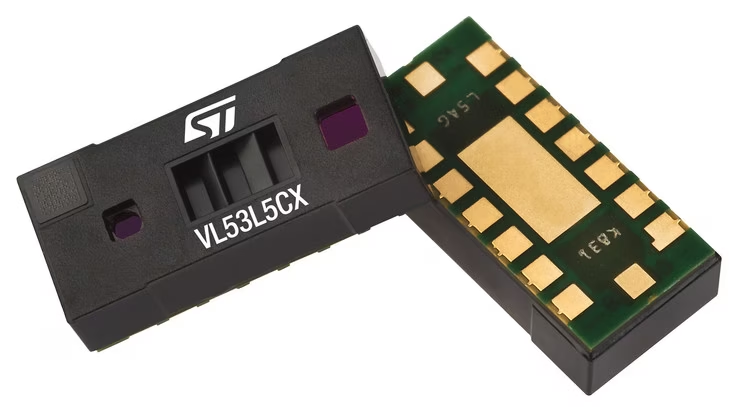
VL53L5CX 8×8 ToF Array Sensor: Developed by STMicroelectronics, this 8×8 multizone ToF array offers moderate to long-range measurement capabilities, ideal for depth perception and robotic vision in complex environments.
TMF8801 ToF Distance Ranging Sensor: A product of ams-OSRAM, featuring single-zone detection with a measurement range of up to 2500 mm (2.5 m), designed for high-performance applications requiring precise single-point distance measurement.

The TMF8701 ToF Distance Ranging Sensor:manufactured by ams, is a compact module designed for short-range applications (1 cm to 60 cm), ideal for near-field detection.

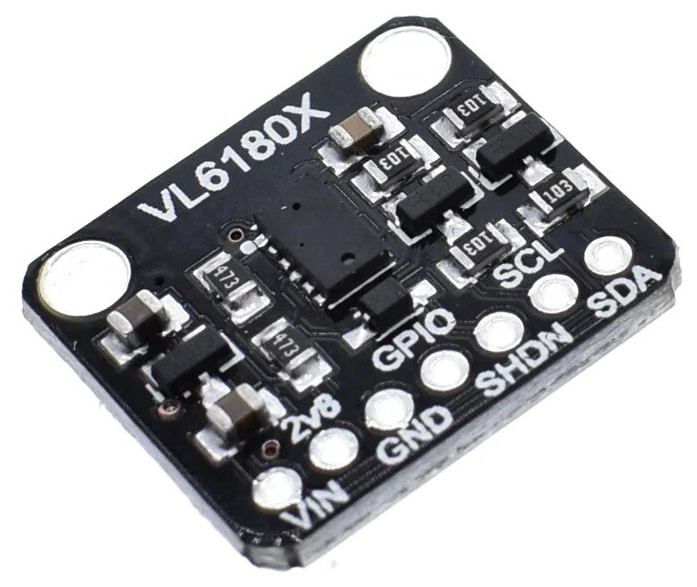
VL6180X ToF Sensor Module:A short-range ToF module manufactured by ST, ideal for close-range gesture recognition and space-constrained embedded applications.
VL53L3CX ToF Distance Ranging Sensor:Produced by ST, this mid-range ToF model is also listed in ST’s product catalog.

M5Stack TOF Unit Module:Modular and easy to integrate with development boards (like Arduino, ESP32), ideal for rapid prototyping and DIY projects.

Use example
The ST VL53L1X serves as an example, offering both cost-effectiveness and performance, making it a solid choice.
The system uses an Arduino Uno, a regulated power supply, and an LCD1602A display to show the specific values.
FAQ
Is ToF the same as LiDAR?
No.The differences are shown in the table below
| FEATURE | TOF | LIDAR |
|---|---|---|
| Principle | Uses light pulses (typically infrared) to emit and measure the reflection time. | Uses laser light (laser pulses) to emit and measure the reflection time. |
| Range | Typically from a few centimeters to a few meters (short range). | Ranges from a few meters to hundreds of meters, some models can exceed 1000 meters (long range). |
| Resolution | Low resolution, suitable for short-range measurements. | High resolution, suitable for long-range and high-precision measurements. |
| Applications | Proximity detection, gesture recognition, object detection, indoor navigation. | Geospatial mapping, autonomous vehicles, forestry monitoring, environmental scanning, 3D modeling. |
| Light Source | Infrared light. | Laser light. |
| Cost | Relatively inexpensive, suitable for consumer applications. | More expensive, suitable for industrial and high-end applications. |
| Size | Typically smaller, suitable for embedded devices and portable applications. | Usually larger, suitable for professional devices and complex applications. |
| Accuracy | Lower accuracy, but sufficient for short-range applications. | High accuracy, capable of generating detailed 3D environmental data. |
| Speed | Fast response, suitable for dynamic environments. | May require more time for high-precision and long-distance measurements. |
| Typical Use Cases | Robotics, gesture recognition, proximity monitoring. | Autonomous vehicles, 3D environment modeling, geospatial mapping, drone mapping. |
How much do ToF sensors cost?
Prices generally range from a few dollars to tens of dollars. More complex sensors for advanced applications can cost hundreds. Price depends on the required performance and features. Simple detection sensors are cheap, while those for scanning and 3D modeling are more expensive.
Are ToF sensors safe for eyes?
Yes, they are generally safe. ToF sensors use infrared light, which is invisible to the human eye. The emitted light pulses are low-power and operate at wavelengths considered safe, meaning even prolonged exposure is not harmful.