Types of 0.96-inch Screens
Generally divided into two major types: SSD1306 and ST7789/ST7735.
What is the SSD1306?
SSD1306 is a type of OLED screen, quite common among 0.96-inch screens. It has extremely wide applications in the fields of electronics enthusiasts and electronic DIY, and can be said to be one of the most widely used screens in the DIY field. SSD1306 displays content by controlling the on and off of luminescent materials, so it only supports monochrome display. However, due to its simple control logic, it has a relatively high refresh rate, extremely high contrast (theoretically infinite for pure black display), extremely low power consumption, and a small size.
What is the ST7789?
ST7789 is a type of LCD screen, widely used in 0.96-inch screens, with a resolution of 240*240. Its biggest feature is supporting color display.It communicates with single-chip microcomputers (such as Raspberry Pi, Arduino) through an SPI interface, and can efficiently display graphics and text. When displaying outdoors, the backlight layer is always on, so the display is clear. It has low cost, long service life, and basically no screen burn-in problem.
Comparison
| Item |
SSD1306 |
ST7789 |
| Display Technology |
OLED (self-emissive) |
TFT LCD (with backlight) |
| Typical Resolution |
128×64 / 128×32 |
240×240 / 240×320 |
| Display Color |
Monochrome (white / blue / yellow) |
Full color (16-bit, 65K colors) |
| Interface Type |
I²C / SPI (4-wire / 3-wire) |
SPI (4-wire) |
| Operating Voltage |
3.3V / 5V (depending on module) |
3.3V (some support 5V logic) |
| Driver IC |
SSD1306 |
ST7789 / ST7789V |
| Refresh Rate |
Low (suitable for text/icons) |
High (suitable for animation/video) |
| Contrast |
Very high (pure black background) |
Average (backlight leakage) |
| Viewing Angle |
Excellent |
Good (IPS versions are better) |
| Power Consumption |
Very low (almost none when static) |
Higher (backlight consumes power) |
| Backlight |
None (self-emissive) |
Yes, adjustable brightness |
| Typical Size |
0.96″ / 1.3″ |
1.3″ / 1.54″ / 1.77″ / 2.0″ etc. |
| Library Memory Usage |
Small (<1KB buffer) |
Larger (needs framebuffer or partial refresh) |
| Typical Applications |
Text, icons, sensor readouts, status displays |
Color UI, animation, dashboards, games |
| Common Arduino Libraries |
Adafruit_SSD1306 / U8g2 |
Adafruit_ST7789 / TFT_eSPI |
| Advantages |
Energy-efficient, high contrast, sharp display |
Rich colors, high refresh rate, high resolution |
| Disadvantages |
Monochrome, small size, possible burn-in |
Higher power, slightly higher cost, needs backlight |
| Typical Price Range |
¥10–25 (0.96″) |
¥20–45 (1.3″–1.54″) |
Compare Short
A comprehensive list of 0.96-inch screen types
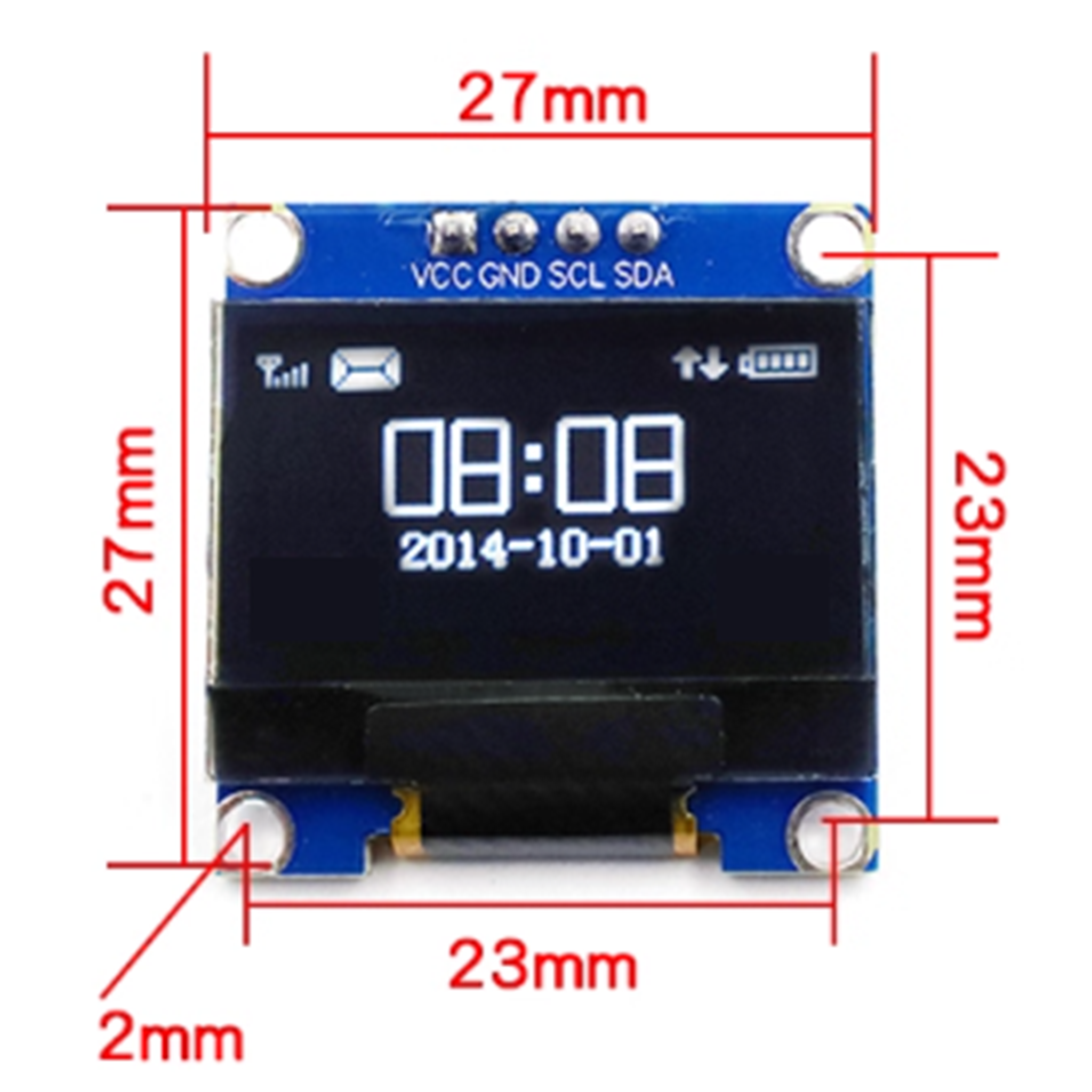
SSD1315 Version
Interface Definition:
1、GND – Power Ground
2、VDD – Positive Power Supply (3.3V ~ 5V)
3、SCK – IIC Clock Line
4、SDA – IIC Data Line Parameter:
Other Color Version
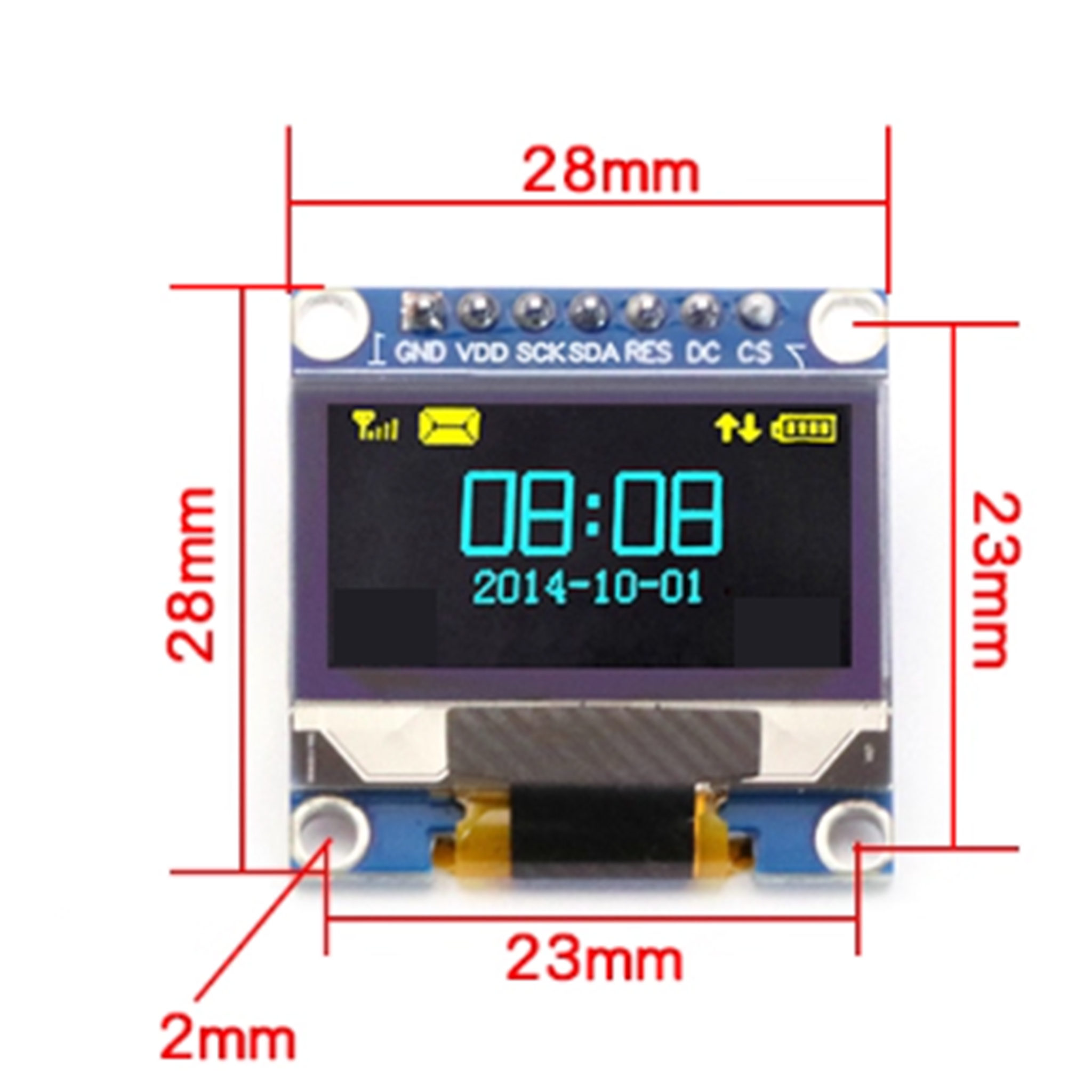
0.96-inch 7Pin SSD1306 (SPI or IIC)
Interface Definition:
1、GND – Power Ground
2、VCC – Positive Power Supply (3.3V ~ 5V)
3、SCK – Clock Line
4、SDA – Data Line
5、RES – Reset Line
6、DC – Data/Command Control Line
7、CS – Chip Select Line Parameter:
Other Color Version
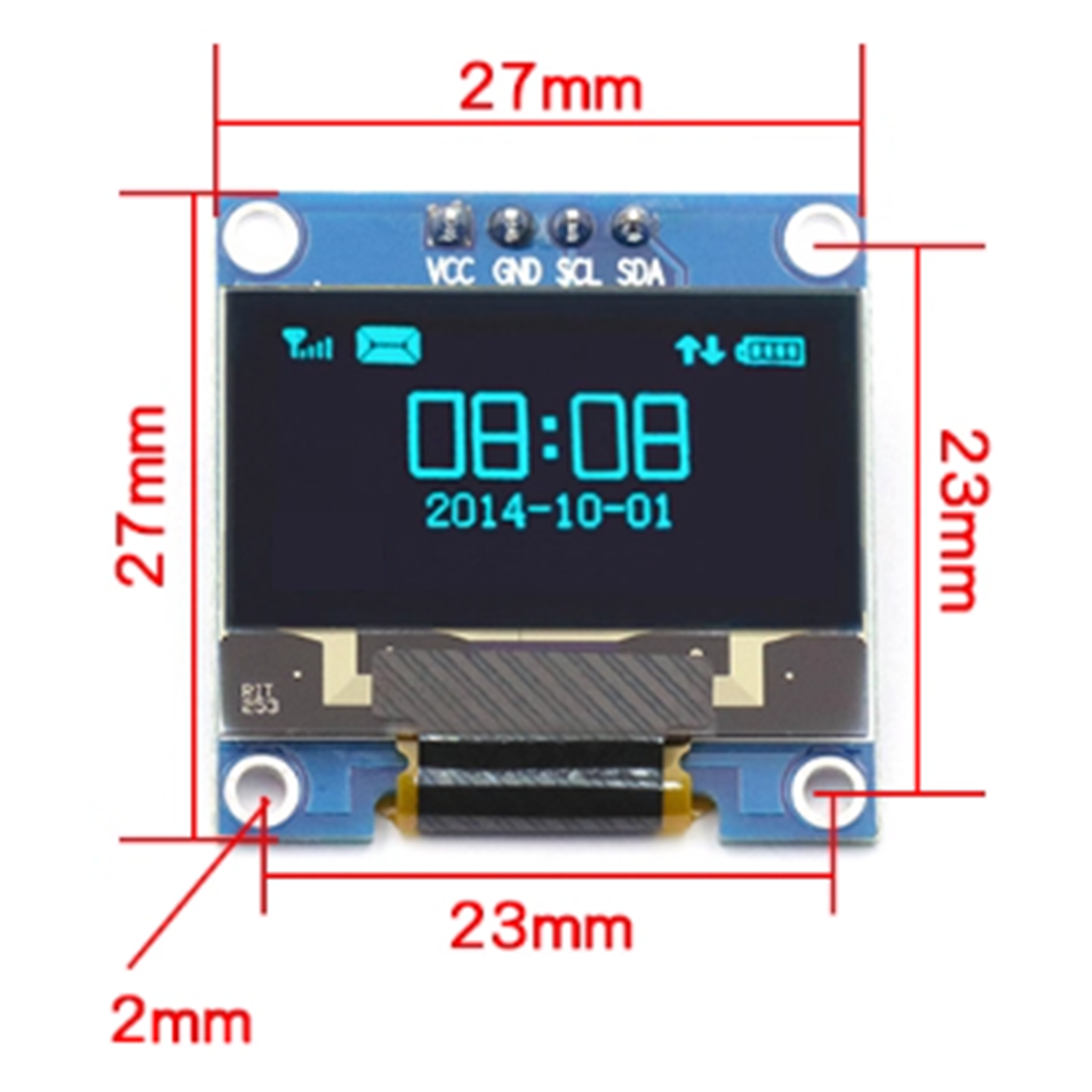
0.96-inch SSD1306 4PIN (IIC)
Interface Definition:
1、VCC – Positive Power Supply (3.3V ~ 5V)
2、GND – Power Ground
3、SCL – IIC Clock Line
4、SDA – IIC Data Line Parameters:
Other Color Version
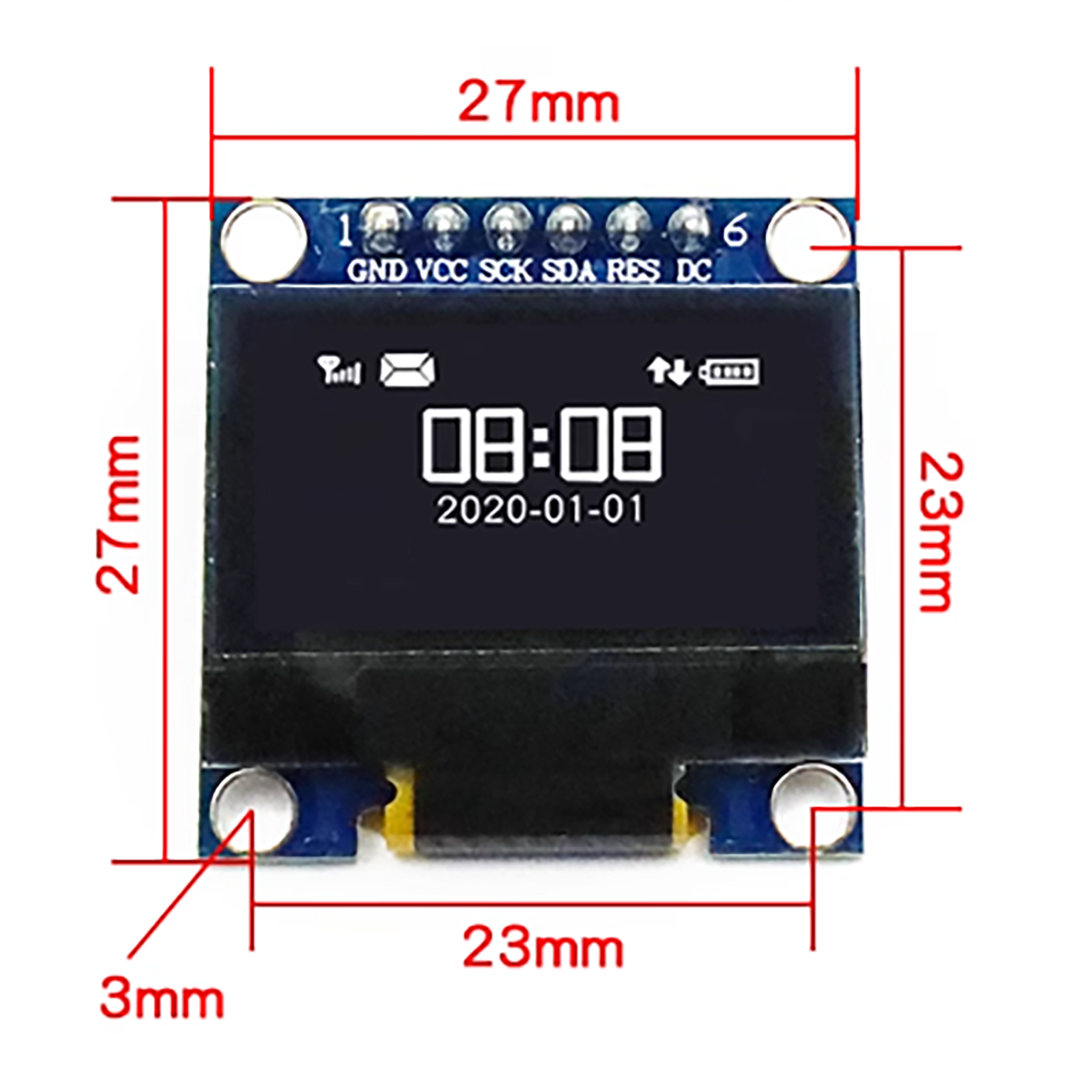
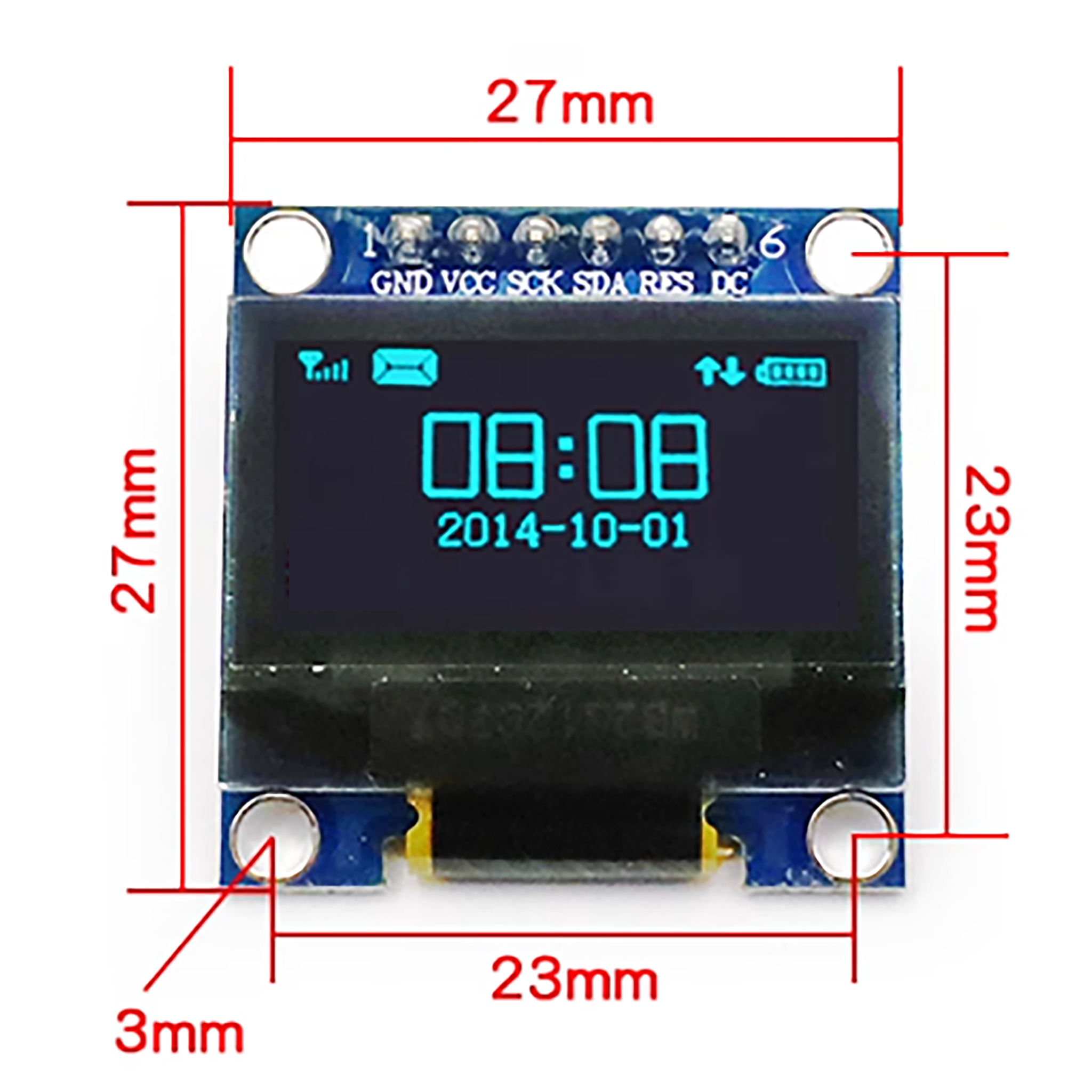
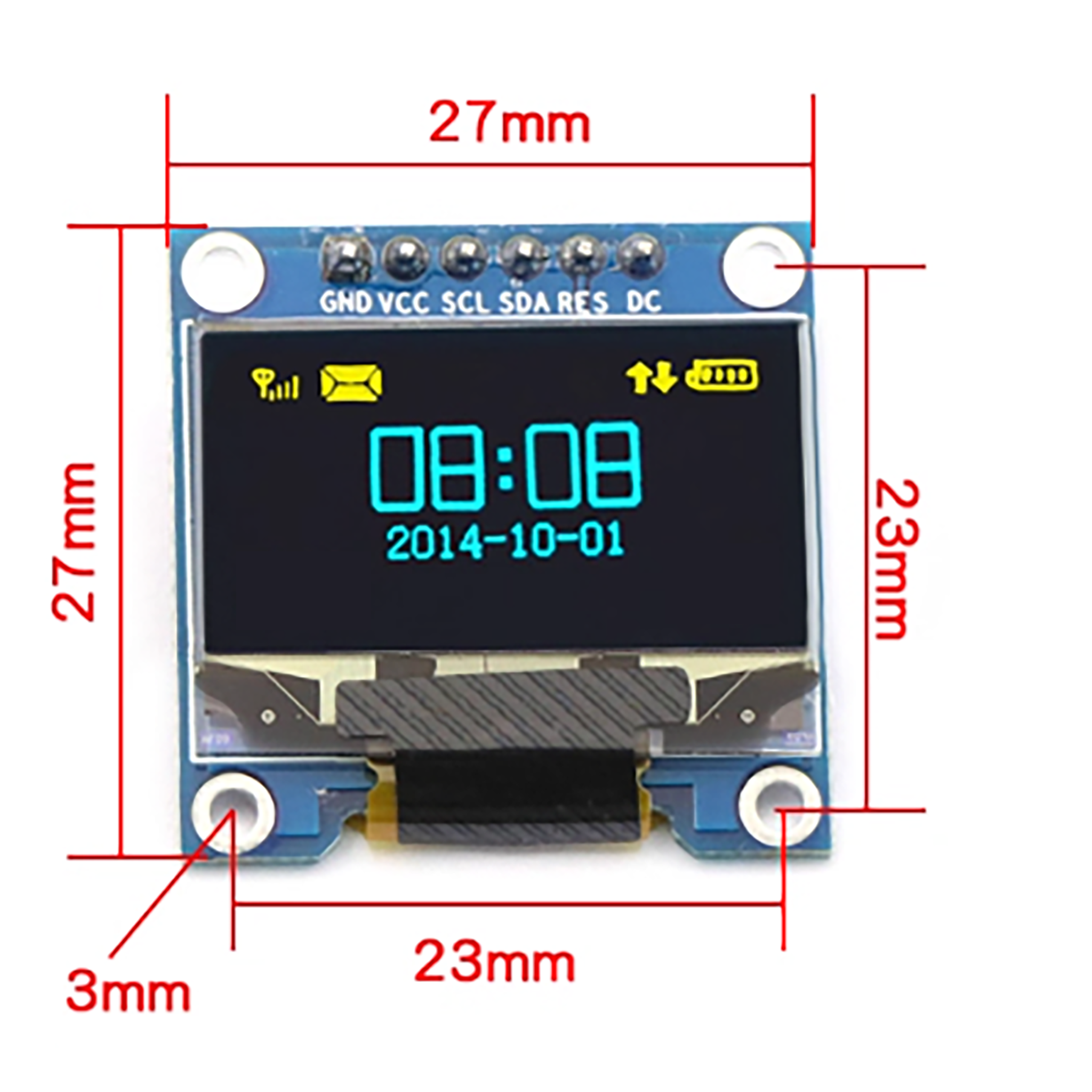
0.96-inch SSD1306 6PIN (SPI or IIC)
Interface Definition:
1、GND – Power Ground
2、VCC – Positive Power Supply (3.3V ~ 5V)
3、SCK – IIC Clock Line
4、SDA – IIC Data Line
5、RES – Reset Line
6、DC – Data/Command Control Line Parameters
0.96-inch White SSD1306 IIC with 4*4 Buttons
Interface definition:
VCC: 2.2V ~ 5.5V
GND: Power ground
SCL: CLK clock (High level 2.2V ~ 5.5V)
SDA: MOSI data (High level 2.2V ~ 5.5V)
4×4 Keypad interface: R1/R2/R3/R4/C1/C2/C3/C4
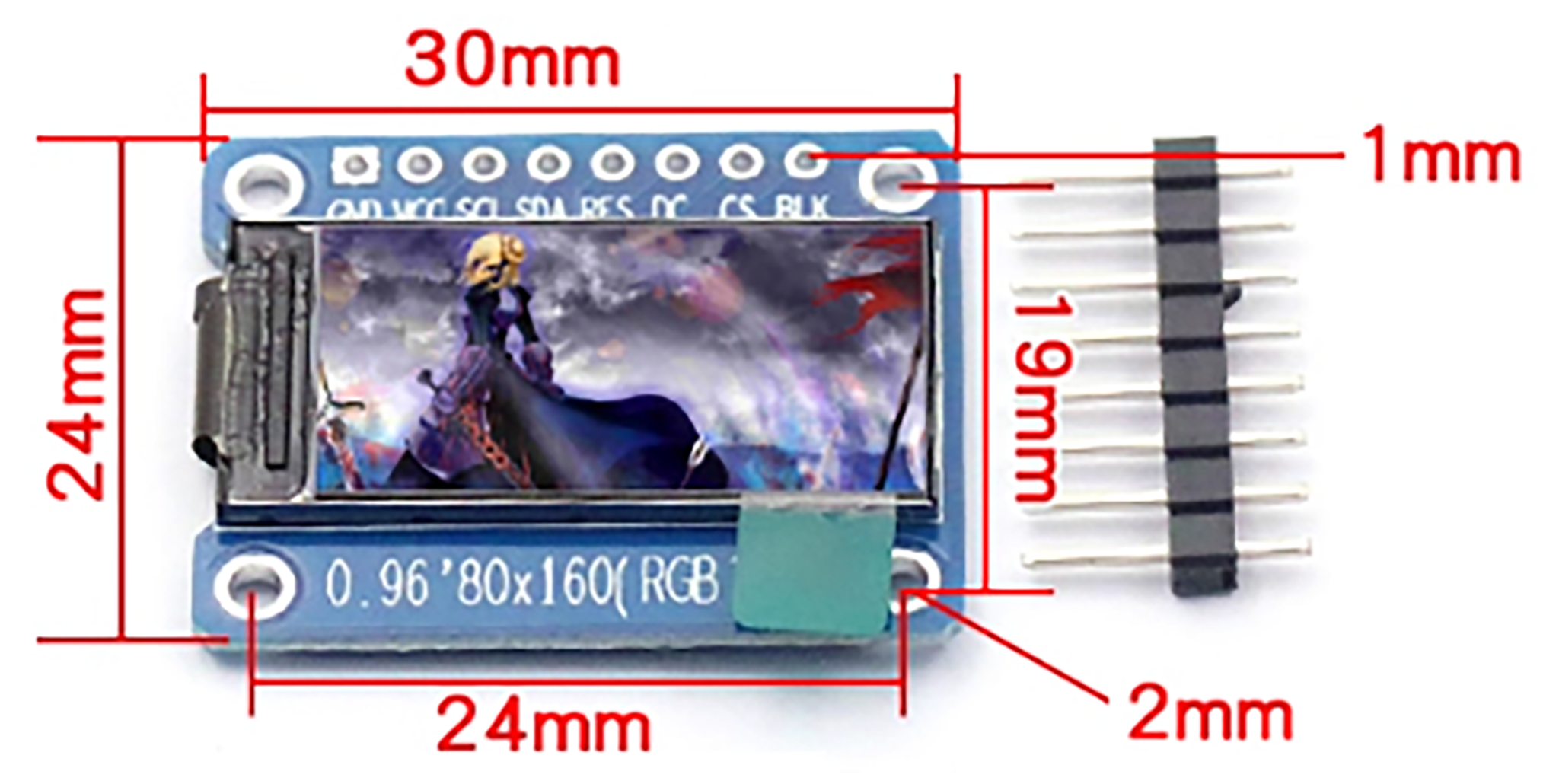
Full Color Screen 0.96-inch ST7789
Interface definition:
GND: Power Ground
VCC: Positive Power Supply 3.3V ~ 5.0V (DC)
SCL: SPI Clock Line
SDA: SPI Data Line
RES: Reset Line
DC: SPI Data/Command Selection
CS: Chip Select Line
BLK: Backlight Control, default floating, low level turns off backlight parameters
FAQ
Is SSD1306 5V or 3.3 V?
It is best to use 3.3V to drive SSD1306. Using 5V as the power supply can easily damage the module. However, some SSD1306 displays have been made compatible with 5V voltage, so 5V can be used as the power supply.
Are there different SSD1306 sizes?
OLED screens driven by SSD1306 come in various sizes. The most common ones are 0.96-inch and 1.3-inch screens with a resolution of 128×64. In addition, there are narrower 0.91-inch 128×32 “strip screens” and other small-sized screens such as 72×40.
What communication protocols use SSD1306?
SSD1306 supports IIC and SPI protocols, which are simple and convenient to use. It can be used by just connecting two or three communication protocol lines and power lines.