

Blog
18150 Lithium battery protection board
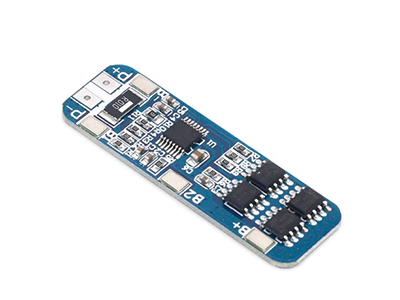
What is lithium battery protection board
Lithium battery protection boards are mainly used to protect the safety of lithium batteries during charging, discharging, and storage, as well as to extend their service life. When lithium batteries are subjected to overcharging, over-discharging, overcurrent, short circuits, or other such conditions, their service life will be severely impaired. However, lithium battery protection boards can effectively address these issues and ensure the safety of lithium batteries.
The applications of lithium battery protection boards
Most devices that use lithium batteries cannot do without protection boards. For example: Consumer electronics: Mobile phones, laptops, tablets, power banks, etc., all come with lithium battery protection boards to extend their service life. Power tools: Electric drills, angle grinders, lawn mowers, etc. Electric transportation: Electric bicycles, electric vehicles (with extremely complex BMS). Others: Drones, smart home devices, energy storage systems, etc.
The principle of lithium battery protection boards
The core principle of a lithium battery protection board is to monitor the real-time voltage and current of the battery. When conditions such as overcharging, over-discharging, overcurrent, or short circuits are detected, it cuts off the circuit through its internal MOSFET switch to prevent damage to the battery, or even fire and explosion. This ensures safety and can extend the battery’s service life.
A commonly used 18150 lithium battery protection board

This lithium battery protection board uses original imported “Seiko” components for its main IC. It comes with protection functions against overcharging, over-discharging, overcurrent, and short circuits, and is applicable to 3.7V lithium battery cells of various capacities and shapes. It adopts Japanese Seiko protection ICs, high-quality MOSFETs from brands like VISHAY, AOS, and IR, as well as FR-4 boards with low temperature coefficients. Boasting an exquisite design and comprehensive testing, it has a compact size, making it suitable for many scenarios requiring high integration and low cost. It can meet various performance requirements and ensure the absolute safety and reliability of battery packs.
Electrical Performance of 18650 Lithium Battery Protection Board
| Model | HX-3S-01 |
|---|---|
| Overcharge Voltage Range | 4.25-4.35V±0.05V |
| Dimension | 50*16*1.0mm |
| Overdischarge Voltage Range | 2.3-3.0V±0.05V |
| Maximum Operating Current | 5-8A |
| Operating Temperature | -40 to +50°C |
| Maximum Instantaneous Current | 9-10A |
| Storage Condition | -40 to +80°C |
| Quiescent Current | Less than 6µA |
| Useful Life | More than 30000 hours |
| Internal Resistance | Less than 60mΩ |
| Short Circuit Protection | Protectable, delayed self-recovery |
| Normal Self – Consumption | 10.0 – 30.0 | ICC | 20.2 | 22.3 | 24.5 | uA |
|---|---|---|---|---|---|---|
| Overcharge Protection Voltage | 4.35 – 4.10 | VOCP | 4.15 | 4.23 | 4.27 | V |
| Overcharge Recovery Voltage | 4.20 – 4.00 | VOCR | 4.10 | 4.15 | 4.20 | V |
| Overdischarge Protection Voltage | 2.80 – 2.30 | VODP | 2.35 | 2.50 | 2.75 | V |
| Overdischarge Recovery Voltage | 3.30 – 2.80 | VODR | 2.80 | 3.2 | 3.3 | V |
| On – Resistance | 60.0 – 10.0 | RDS (ON) | 10.0 | 33.2 | 39.3 | mΩ |
| Overcurrent Protection Current | 10.0 – 6.0 | COIP(VOUT) | 6.50 | 8.00 | 9.50 | A |
18650 Lithium Battery Protection Board Pinout
As shown in the diagram below, this is a 3-series 3.7V lithium battery protection board. B1, B2, and B3+ are respectively connected to the positive poles of three different 18150 or other 3.7V batteries. Finally, connect the negative pole of B3 to B3-. When charging or discharging is needed, wires can be connected to the Input/Output position.

Schematic Diagram of 18650 Lithium Battery Protection Board

18650 Lithium Battery Protection Board PCB diagram

How to use 18650 Lithium Battery Protection Board ?
3-series combination display:

2-parallel 3-series combination display

FAQ
What is the 80 20 rule for lithium batteries?
The “80/20 rule” for lithium batteries means that when using and maintaining lithium batteries, it is recommended to keep their charge level between 20% and 80% to extend the battery’s service life.
What is the difference between a BMS and a battery protection board?
A battery protection board is a basic safety device that primarily protects against dangerous conditions such as overcharging, over-discharging, overcurrent, and short circuits. It has a single function and is suitable for small battery packs. In contrast, a Battery Management System (BMS) is more complex. Besides including the safety functions of a protection board, it also features advanced capabilities like cell balancing, state monitoring (e.g., charge level, health status), data communication, and adaptive control. It is suitable for large and complex battery packs, enabling more precise management and optimization.