Have you ever wondered how a mobile phone achieves vibration? And why sometimes the vibration sensation is strong while at other times it is weak?
This article will take you to understand the vibration motor module and satisfy your curiosity journey.
What is vibration motor module?
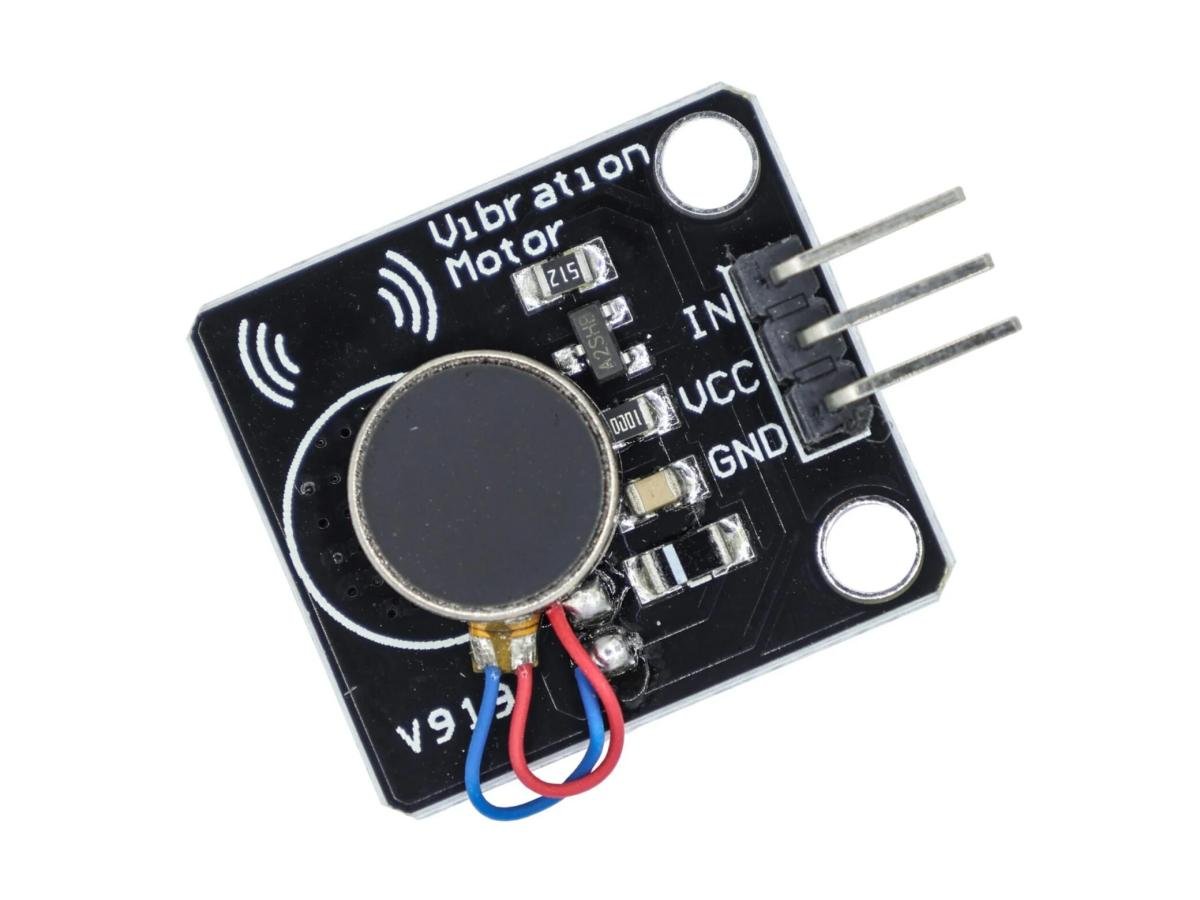
The miniature vibration motors of the vibration motor module are DC brushed motors. There is an eccentric wheel on the motor shaft. When the motor rotates, the center of mass of the eccentric wheel is not on the rotation center of the motor, causing the motor to be in a constant state of imbalance. Due to the inertia effect, vibrations occur.
The vibration motor module uses high-quality mobile phone vibration motors, suitable for the production of vibration sensation interactive products, wearable smart devices vibration alerts, and can be used as a small vibration motor for non-hearing indicators. When the input is a high voltage, the motor will vibrate, just like your silent mode mobile phone.
Working Principle
The vibration motor module usually consists of two parts: the motor and the vibration device. The motor serves as the power source to drive the vibration device to move, while the vibration device converts the rotational motion of the motor into linear or rotational vibration motion through mechanical structure. The working principle of the micro vibration motor is to achieve the vibration effect by installing an eccentric wheel on the motor shaft and utilizing the centrifugal force generated by its high-speed rotation.
Vibration Motor Module Pin Function
Pin | Definition |
VCC | Positive pole |
GND | Grounding |
IN | Digital high/low level input |
Parameter
Rated voltage | DC 5.0V |
Working voltage | DC 3.0 – 5.3V |
Rated speed | Minimum 9000 revolutions per minute |
Rated current | Maximum 60mA |
Starting current | Maximum 90mA |
Starting voltage | DC 3.7V |
Insulation resistance | 10Mohm |
Compatibility | Compatible with UNO R3/Mega2560 |
Size | 23.0mm * 21.0mm |
Module Feature
- Adopting high-quality mobile phone vibration motor, the vibration effect is obvious.
- MOS amplification drive, which can be directly controlled through the digital port of Arduino.
- The vibration intensity of the motor can be controlled by PWM.
- This module can conveniently complete the conversion from electrical signals to mechanical vibration sensation.
- Suitable for the production of vibration sensation interactive products, such as wearable smart devices for vibration alerts, etc.
- Very suitable for DIY projects.
Vibration Motor Module Arduino
- Vibration Motor Module Pinout
VCC ——> 3.3V
GND ——> GND
IN ——> D3
(1) Function: Controls the vibration motor to operate in a cycle mode of vibrating for 1 second and then stopping for 2 seconds. Outputs high and low level signals through D3 pin, and prints the running status via serial port.
(2) Function: Gradually increase the vibration intensity of the vibration motor through PWM control, start from 0% intensity, increase by 5% every 50 ms, reach the maximum vibration intensity within 5 seconds, stop for 1 second, and then repeat the cycle. It is suitable for scenarios that require smooth vibration transitions (such as game feedback or progressive reminders).
Application Video
Vibration Motor Module Purchase Link
FAQ
1、How does a vibration motor work?
Eccentric Rotating Mass Motors: These motors have an eccentric mass attached to the rotating shaft, which creates a centrifugal force that causes vibration. Voice Coil Motors (VCMs): These motors use a voice coil, which is a conductor suspended in a magnetic field, to create vibration.
2、How to check if a vibration motor is working?
1.Direct power-on test
Connect the motor with the rated voltage (eg. 3V/5V). Normally, there should be obvious vibration and buzzing sound.
2.Multimeter detection
(1)Resistance: Measure the resistance between terminals (normal range 5 – 100Ω). Open circuit or short circuit indicates damaged coil.
(2)Open-circuit and closed-circuit: If there is a beeping sound, the circuit is normal.
3.Visual inspection
(1) Listen to the sound: A smooth buzzing sound is normal. Abnormal noises (friction/impact sounds) may indicate bearing damage.
(2) Check the appearance: Broken wires, loose bolts or deformed casing require immediate handling.
⚠️ If none of the above tests respond, the motor may be damaged. It is recommended to replace it.
3、What is the lifespan of a vibration motor?
We’re often asked about how long our vibration motors last. The industry standard is 100k cycles of 1 second on followed by 1 second off.